

How do you solve a problem like sectarianism?
Celtic Conundrums/2
Lila Haines
When I suggested in ‘A Celtic Troika?’ that Northern Ireland still has a way to go before its political culture can be considered normal, I didn’t expect an attempted Garvaghy Rd march to explode into the headlines, as if in confirmation.
And yet, I wasn’t too surprised.
Maybe because I’m old enough and Irish enough to remember earlier sectarian confrontations on the same road 30 years ago. And other horrors during the years euphemistically termed ‘The Troubles’ – 16,200 bombings, almost 37,000 shootings, at least 3,532 deaths – and in case you’re interested, Republican paramilitaries were responsible for 2,058 of them, Loyalist paramilitaries for 1,027 and British security forces for 365.
Or because there’s adequate evidence that the scars and traumas of the ‘Troubles’ still fester, and that communities remain divided despite considerable progress since the 1998 Belfast/Good Friday Agreement (GFA) signalled an end to that bloody era.
A controversial road
Back in 1995, the Garvaghy Road was the scene of a high-octane attempt to force a 12th July Orange Order march past a nationalist community. Residents staged a sit-down. Police blocked the Orange marchers. Ian Paisley, founder of the DUP and later NI First Minister, was in his element leading the confrontation.
The Drumcree conflict, as it was known (in reference to the local church where the marchers gathered), recurred annually for several years, sparking considerable violence and leading to 21 killings in the area, including the murder of three young children.
It nearly derailed the peace process, and it looks as if its 2026 iteration might spark the fall of the NI Assembly. Not that all the parties in that devolved legislature seem averse to such an outcome.
The same but different?
Sectarian divisions still run deep in Northern Ireland – mostly quietly and out of sight, but not always. And the region’s politics, though not all parties, mostly reflect those divisions.
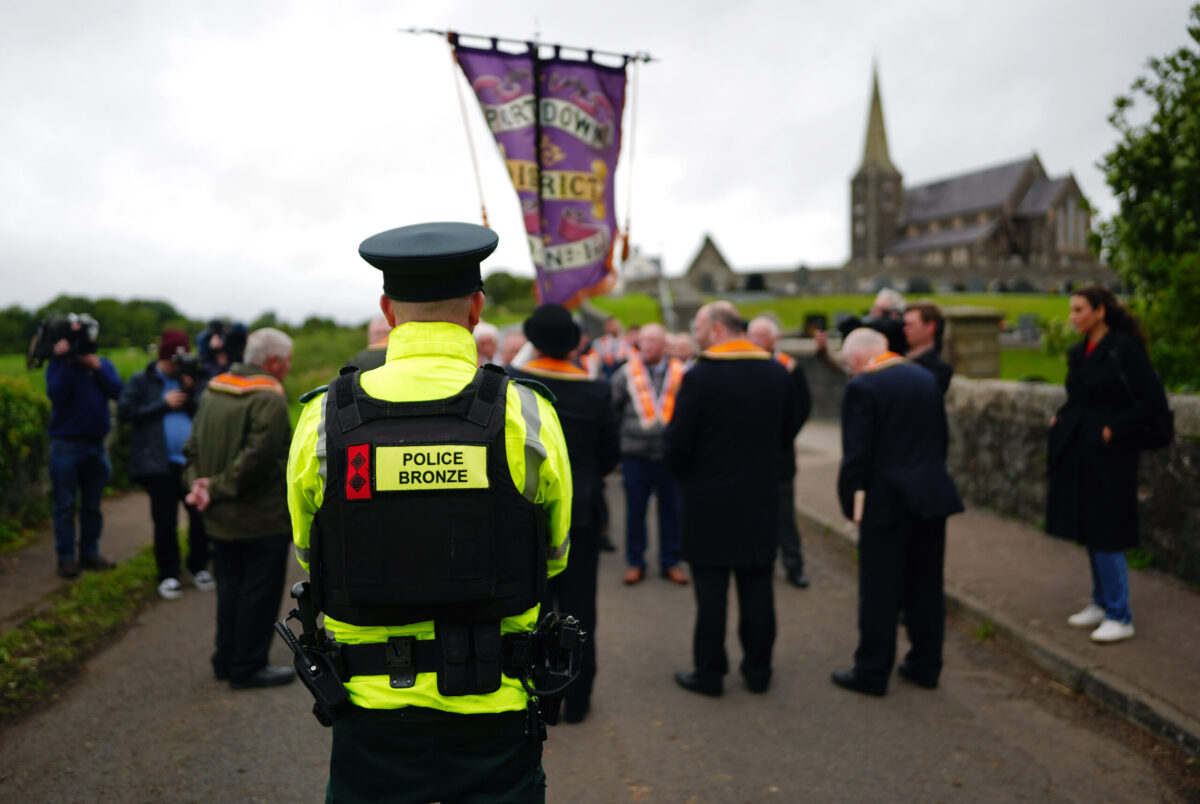
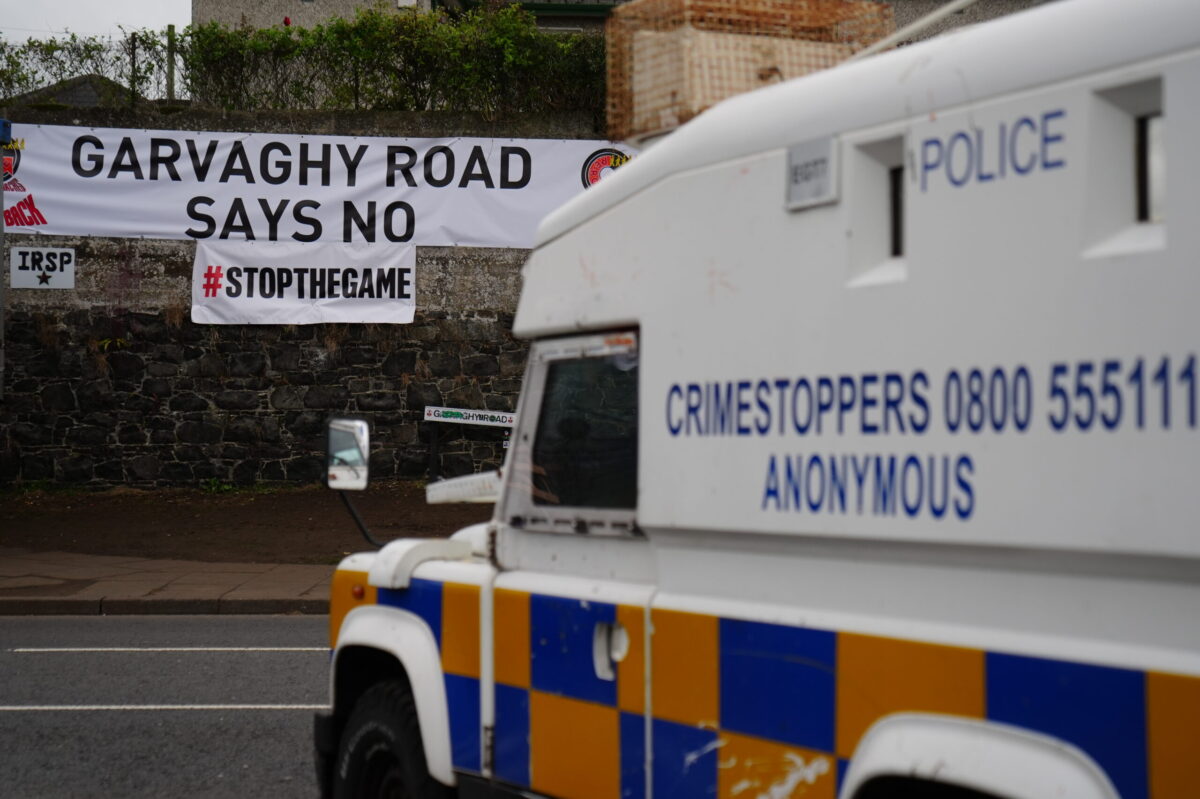
The latest standoff about a proposed Orange Order march past a mostly nationalist community on the Garvaghy Road on the outskirts of Portadown in Co Armagh has similarities with earlier sectarian confrontations.
A mainly Catholic community feels threatened and traumatised by the proposed march, even though a mere 35 middle-aged men would be doing the marching. Politicians have turned up to support, or stir up, ‘their’ side. Intransigence on both sides suggests this could be a long standoff and have potentially serious implications for devolved democracy in the region.
The men behind the standoff
There are hardliners on both sides of the standoff.
The Orangemen reportedly decided on legal action to enforce a march this year on the advice of Jamie Bryson, a controversial loyalist activist suspected of wanting to engineer a power grab in the Orange Order to strengthen Loyalism.
The residents’ spokesperson, Breandán Mac Cionnaith, has a reputation for inflexibility. A member of Éirígí, a party that split from Sinn Féin, he was jailed for his part in blowing up the British Legion Hall in Portadown.
But, so far, no modern-day Ian Paisley has emerged to urge the 35 selected Orange marchers to charge the police barricades. And the protests have been peaceful and even musical.
A waning power
As for the Orange Order itself, it’s a power on the wane. Founded in 1796 to further the aims of Protestantism and protect the link with Britain, at a time when the United Irishmen were trying to unite ‘Protestant, Catholic and Dissenter’ to establish a Republic, it was highly influential in 20th-century unionist politics.
In 1965 it had around 70,000 members, but numbers are estimated to have fallen to fewer than 30,000 by now. The annual 12th July parades are the central feature of Orange culture, often having a festival or carnival atmosphere nowadays, but Garvaghy is a reminder of a darker heritage.
Peace treaty principles
So, how do you solve a problem like sectarianism? In post-conflict societies it’s understandably complex.
The makers of the 1998 Belfast/Good Friday Agreement recognised the depth of the challenge and embedded rules aimed at promoting cross-community consensus by managing the competing aims of unionism and nationalism.
The Assembly is required to operate on the basis of consociationalism, a form of power sharing between ethnic, religious or other opposing groups.
Upon election, Members of the Legislative Assembly (MLAs) must designate themselves as either unionist, nationalist or ‘other’ and certain key decisions require cross-community support.
The First Minister and Deputy First Minister must come from different parties – and they are equal in status, despite the titles. Since 2007, the job share has been between the DUP and Sinn Féin. The SDLP is currently the official opposition.
Has this ensured good governance for Northern Ireland? Briefly and broadly, not nearly often enough.
The Assembly hasn’t always functioned – it’s been suspended five times since it was established, most significantly between 2002 and 2007 and between 2017 and 2020. The Garvaghy Road standoff has again raised the spectre of a shutdown, and the chatter in NI media is about ‘when’, not ‘if’.
The current Executive may be the most dysfunctional yet. The big problems it’s failed to tackle include the poisoning of Lough Neagh by industrial agriculture, the A5 Western Transport Corridor, housing, reform of NI Water, and redevelopment of Casement Park (the latter of particular interest to nationalists). It hasn’t even set a budget for the current financial year.
With relations between SF and the DUP having deteriorated badly, and elections scheduled for May 2027, it was never likely that community cohesion would come close to the top of their to-do lists – does the Executive think that’s something best left to local groups to promote or squabble over?
‘Naimhde nua i ré nua’ / New enemies in a new era
More recently, a new phenomenon has emerged – paramilitaries engaging in racist attacks. ‘Naimhde nua i ré nua’ – ‘new enemies in a new era’ as a friend from Belfast dubbed it.
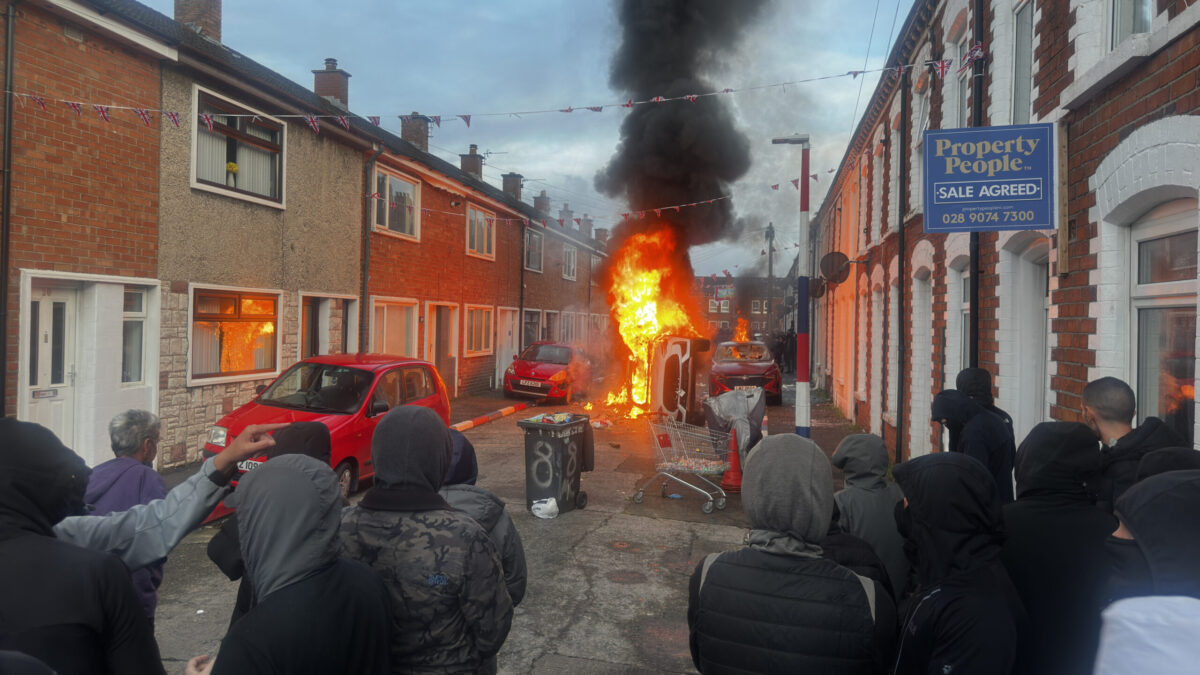
Even the serious racist riots in Belfast in June this year, with known connections to sectarian paramilitaries, don’t seem to have received the attention they should have from elected representatives – though not all representatives, I should stress.
This despite the Independent Reporting Commission (IRC) drawing attention the previous December to a ‘particularly serious manifestation’ over the last two years: the emergence of a ‘link between paramilitarism and racist violence connected to the issue of immigration’.
Police Service of Northern Ireland (PSNI) statistics confirm the rise of racism. They received reports of 2,561 race incidents and 1,615 race crimes in the year to 30 June 2026 – the highest levels since the data series began in 2004/05.
Sectarian incidents and crimes rose too, though less than usual. It would not be particularly surprising if the level were to rise again in the wake of the Drumcree standoff.
And give a thought to the citizens of Portadown, at least a quarter of whom were born in places other than Northern Ireland, a proportion much higher than the NI average.
One might expect politicians in a society that suffered so badly from decades of political violence to be concerned about a link-up between ‘traditional’ paramilitarism and racists. But it seems to have slipped off their radar since the latest Drumcree standoff hit the headlines – to the extent it was ever on the agenda for more than the more serious amongst them.
Good vibes?
Possibly the most interesting interview I read recently was with Young Spencer, a rapper from the Lower Shankill – in case you don’t know, that’s deep Loyalist territory – who performed in August at a sell-out concert headlined by Irish-language rap group Kneecap.
He’s worried about the impact of the Garvaghy Road standoff: ‘It’s really starting to separate people again in my community. Tensions are rising,’ he said.
But he remains ‘confident in the future generation and its abilities – regardless of what happens politically’.
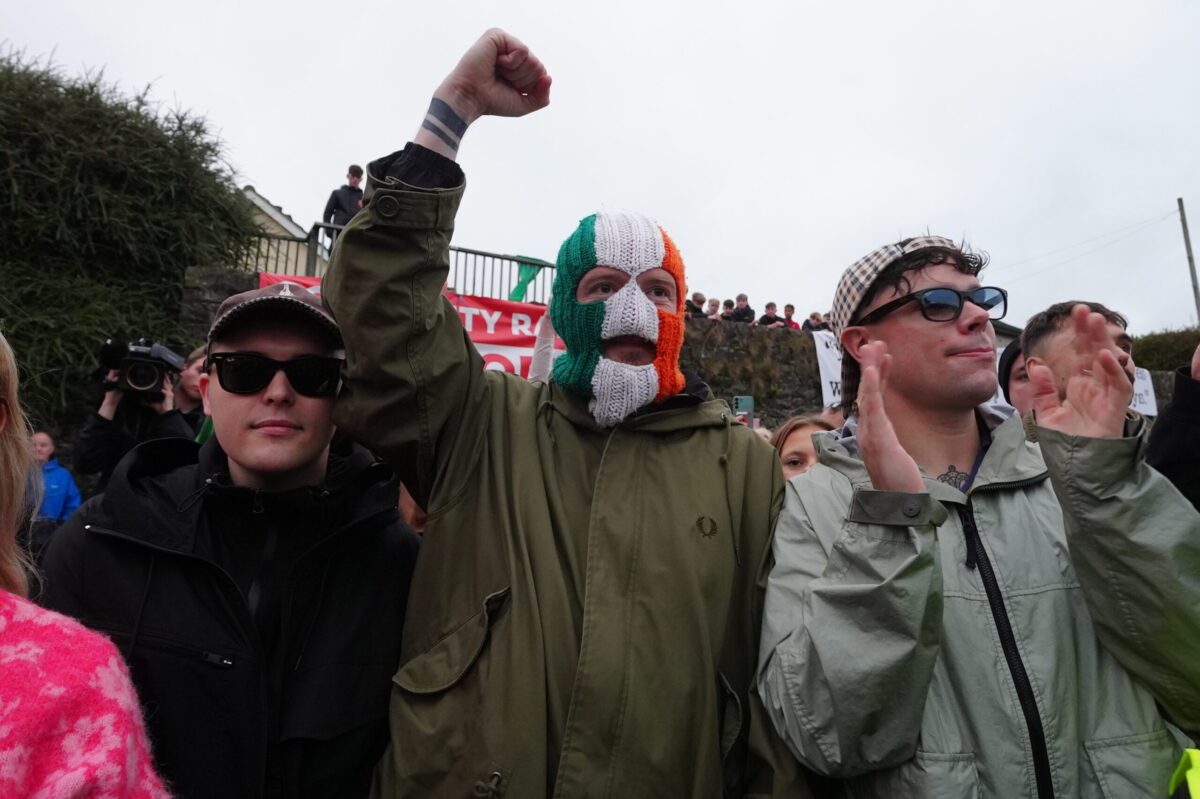
So maybe it’s OK that parents cushioned their children from the realities of the ‘Troubles’, so that the peacetime generation can forge their own paths, enjoying Kneecap, speaking Irish or playing drums in Orange parades without meaning harm to anyone. That may be a big part of how to solve sectarianism.
Lila Haines is a Wales-based Irish writer whose publications include ‘Radicals & Realists: Political Parties in Ireland’ (Welsh Academic Press, 2022), which includes chapters on the main Northern Ireland parties. She is currently working on an analysis of the ‘Celtic fringe’ phenomenon.
Support our Nation today
For the price of a cup of coffee a month you can help us create an independent, not-for-profit, national news service for the people of Wales, by the people of Wales.
Get more trusted Welsh news
Choose Nation.Cymru as a preferred source in Google News to see more of our journalism.


