

Making Tracks: Treorchy
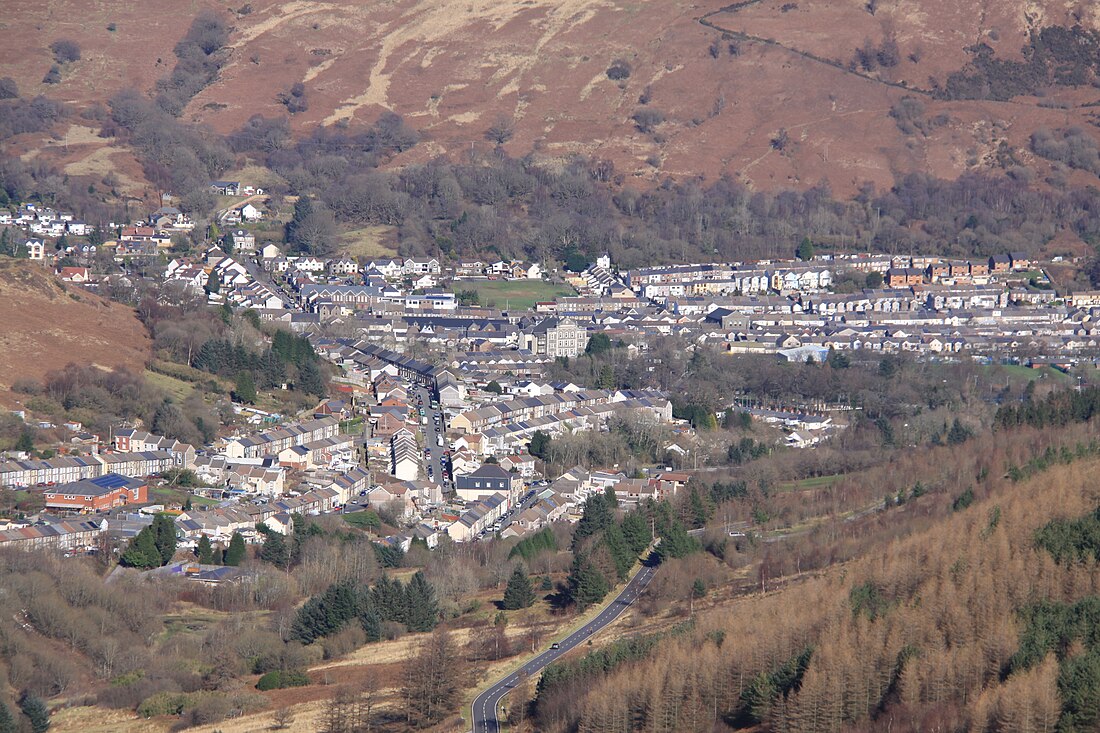
Jon Gower finds war heroes, convivial cafes and a TikTok sensation up the Rhondda.
Two years ago Adrian Emmett, who runs the White Lion pub in Treorchy wanted to create something on social media involving his customers.
He duly devised The Lion Challenge: “It’s a simple, two minute quiz with simple questions,” he explains, “more about reaction time than the correct answer and it’s gone from being a quiz to a sort of two minute reality TV show.”
Adrian has made 2000 short videos so far with a staggering 350 million views around the world on TikTok this past year. Adrian thinks that one of the things that really resonates is the valleys accent.
“The Irish, Scottish and English accents are global but there isn’t a pop star or film stars with our deep valleys’ accent, other than Tom Jones and he’s mellowed out a bit.”

The questions in The Lion Challenge are very simple and the answers can be painfully funny. The pressure to answer quickly can prove too much. One regular swiftly names Wales as one of the countries in Great Britain but her friend struggles to name one of Jesus’ disciples. “Isaac,” she suggests, then tries “Alan?”
One of the customers thinks the capital of Belgium is “Sprouts.” There are question rounds in Welsh and the regular contestants are real characters blessed with a ready sense humour. It’s easy to see how readily they shine as TikTok stars.
As the Lion Challenge has gone absolutely viral they’ve created a physical board game of the same name, proudly proclaiming “Made in Treorchy” on the cover.
Despite it’s being aimed at a worldwide audience, question-setting Adrian has given the questions a bit of a Welsh slant. “I’ve snuck a few questions in such as ‘Who is the best British footballer of all time?’ The answer’s Gareth Bale. I know it’s subjective and people will be saying Wayne Rooney or George Best but the question master’s always right!
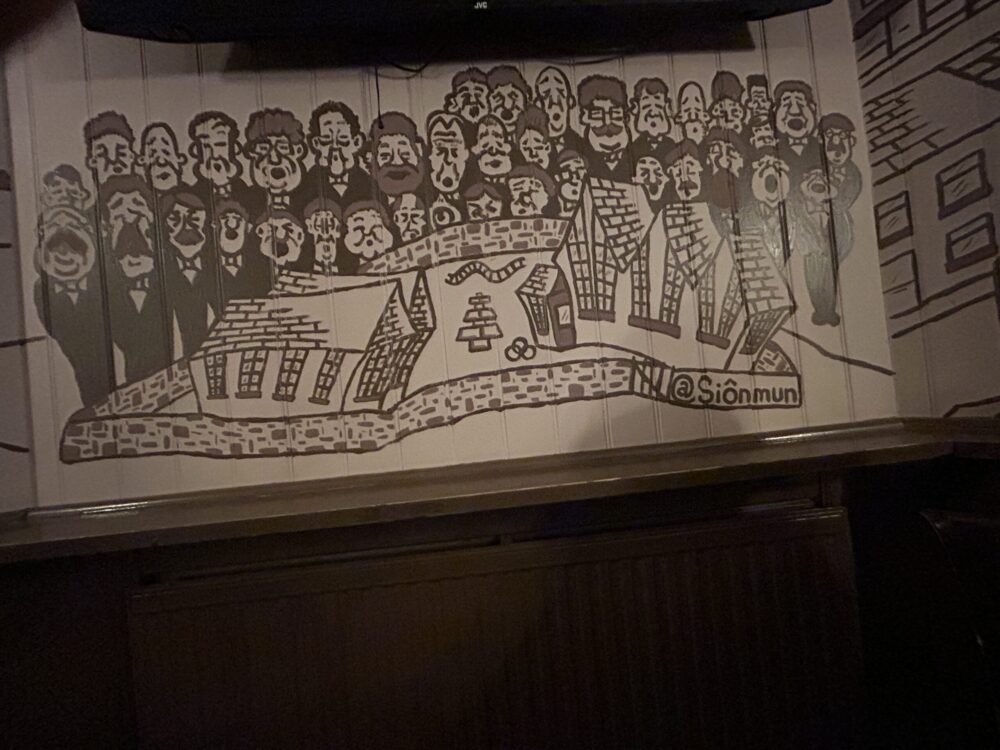
So, which is the best male voice choir in the world? Treorchy of course. The choir come in here after choir practise and have a bit of a sing song, with pint in hand. So there can be 200 or 250 people in here after a concert, multiple choirs all bursting into song.”
Adrian first started to work in pubs when he was nine years old, clearing the empties in beer garden outside Treorchy Workingmen’s Social Club, known as the Pig and Whistle, where my mother worked.
He started working behind the bar when he was fourteen and took over as relief steward during the summer when he was sixteen.
When he went to Bristol to do business studies he started to work in nightclubsand ended up running them in places such as Nottingham and Glasgow. Fifteen years ago he returned to Treorchy, where the White Lion was boarded up and opened it up again.
At the time Treorchy wasn’t all that different from many other valley towns, it was slowly slipping away. In 2013 one of the major local employers, Polikoffs’s – which later became Burberry – had just closed its doors forever. The factory, opened in 1939, once employed 1500, mainly young women, who would sew and press garments.
Polikoff’s had its own railway sidings which allowed bales of clothes to be delivered directly as well as wagon loads of coal to feed the boilerhouse.
Finished items of clothing were also dispatched by rail, using Treorchy goods station and sometimes Trealaw, while urgent parcels would be sent via Treorchy passenger station.
Adrian explains that Treorchy weathered the economic inclemency of such factory closures by coming together as a High Street. “Eighty independent businesses under the Chamber of Trade competed for the title Champion High Street and we won against places that had marinas and money.”
Adrian now wants to change the direction of travel in the valleys. He wants people coming up the valleys rather than down towards Cardiff: “There are four trains an hour which means it’s easier for people from Cardiff to get to us, to Treorchy, Porth, Tonypandy. What we are doing in the valleys’ towns is making it worth the while for people to travel here.
“Historically you always went down the valley. Each town as you went down got bigger and better and shinier and in Pontypridd the roads were paved with gold, until you got to Cardiff. We need to change that to ‘We’re going up the valleys.’”
Treorchy people are very proud of their town, as Adrian underlines. “We have fantastic views – the scars of the coal mines have gone – so the former tips are now rolling hills. And when people ask for directions locals don’t tell them where to go, they grab them by the hand and show them the way. It’s the people that make the place and we’ve got some fantastic people who live here.
“Our future is tourism in the valleys. Cardiff is a fantastic city but it’s taken all our wealth and all our talent for generations. With the train system being so accessible why wouldn’t people going to events in the stadium come to stay in this lovely gem of a town where you can meet real Welsh people?”
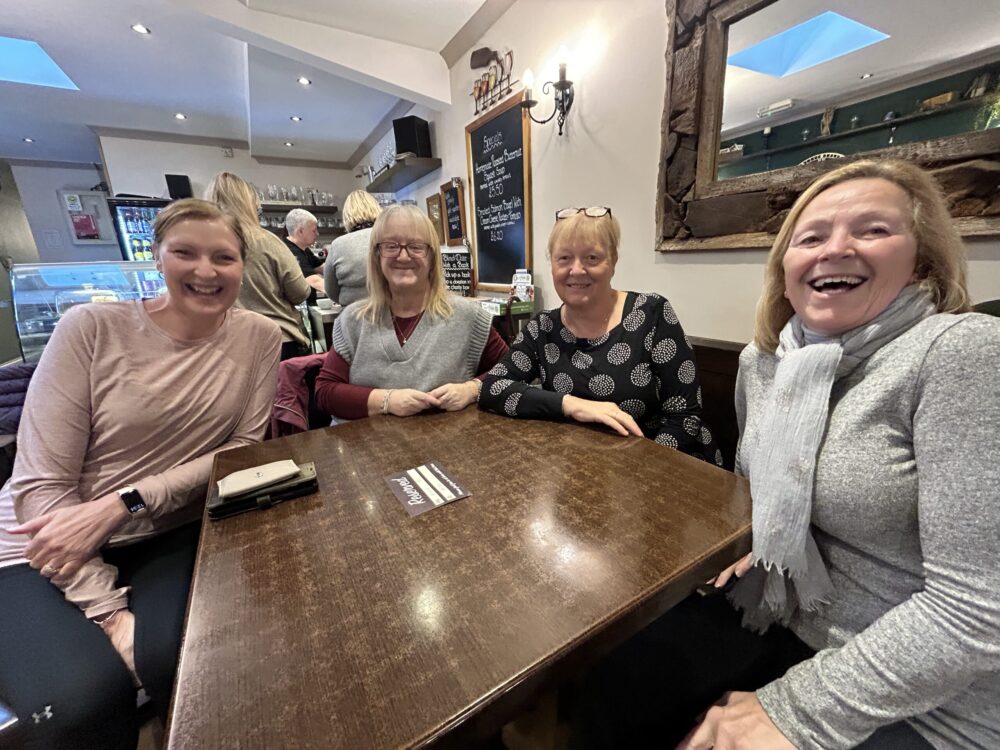
Some of those people meet in Hot Gossip, a comfortable High Street cafe run by Sara Bailey. She knows literally hundreds of customers as she’s lived in Treorchy all of her life. “A lot of customers are on their own but they can walk in here and find someone they know. There’s one table – you’ve just missed them – and they’re all widowed but they always know, whatever day it is, that there’s somebody sitting on that table that they know. I always feel as if this is an extension of my home. It’s my social life as well as my working life.”
“When we opened fifteen years ago my father said you couldn’t have opened at a worse time. On the morning we opened I’d just chalked up ‘Bacon, goat’s cheese and caramelised onion panini’ on the blackboard outside when and one old lady standing at the bus stop told said to her friend, “Goat’s cheese in Treorchy! That’ll never last.”
That was fifteen years ago. Sarah explains that “When we were awarded the High Street of the Year that put us on the map – people just wanted to come up and have a look, so people travel to Treorchy a lot more now.”
Apparently Hot Gossip isn’t named after the dance troupe on the “Kenny Everett TV Show” but there is a lot of animated chatter.
I introduce myself to a quartet of affable ladies, asking if they often come to Hot Gossip?” One asks me if that’s a chat up line? It would be a poor one, indeed.
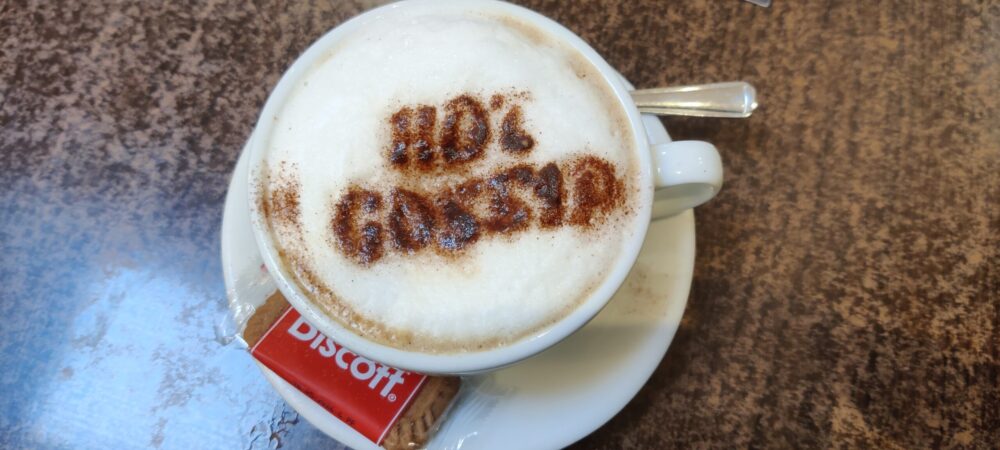
Melanie Cartwright, Eleanor Harris, Lynette Evans and Ceryl Bateman meet here every Monday. “And we are hot!” they exclaim. The four will often stay and share hot gossip all afternoon, maybe staying five hours.
Between them, they know almost everybody in Treorchy. Lynette, especially, seems to know everyone who comes in through the cafe door.
Like her father she worked on the railways, working for decades as a conductor for British Rail and subsequently for Transport for Wales, so she met a lot of people.
They’re a bubbly and very welcoming group of friends. Eleanor announces herself as both the Honorary Secretary of Treorchy Rugby Club and the unofficial ambassador for Treorchy. “I’ve travelled all over the world, gone to New York, most countries in the Middle East, Malaysia, Singapore, Australia, New Zealand and South Africa and everybody knows about Treorchy. It is the centre of the universe. Wherever you go there is always a Welsh connection and then you drill down and there will be a connection, a road to Treorchy.”
On the radio
There are other ways of disseminating news other than by word of mouth in a cafe such as Hot Gossip. I quietly slip into the studio at Rhondda Radio as Paul Matthews is announcing the upcoming song on his three hour show, “Fresh Air.” “That’s the Corgis’ ‘If I Had You,’ an absolutely brilliant song that is and you’ll hear that a lot with Phil Doyle when he’s on on Saturday morning. I know he loves that song so I’m going to play it especially for him. Anyway we’ve now got Wolf Alice and a song called ‘White Horse’…”
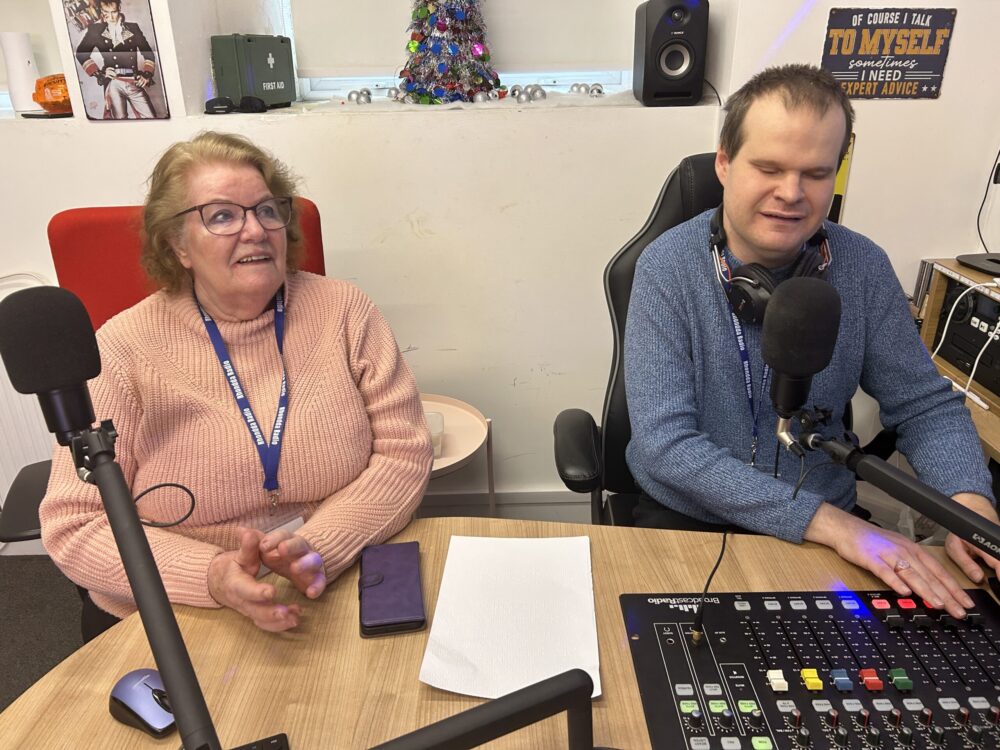
Paul is one of the most experienced presenters on the station and it shows in his confident, quickfire delivery. He is visually impaired so preparing to blow some Fresh Air into the valleys involves hours of homework as he generates his scripts the night before using a braille embosser.
“I started back in February 2014. I was very nervous in the beginning but I’m fine now. In the first half of the show we play what we’re told but in the second hour I choose all the music I know and love.” One of his current faves is “Giant” by Calvin Harris and Rag ‘n’ Bone Man. “It’s from a few years ago but it’s a good one,”Paul suggests, with crisp DJ enthusiasm.
Fellow presenter Denise Richards, sitting by Paul’s side during the broadcast, used to be a university lecturer in Oxford before retiring to Rhondda.
She also presents a weekly classical music show: “People enjoy cinema music, the soundtracks to films such as E.T. I don’t play the heavy stuff. It’s all light classical. I live up in Cwmparc and in the summer, when everybody’s got their windows and doors open you can hear me all around Cwmparc on a Sunday lunchtime!”
Wayne Crichton is the Station Manager for Rhondda Radio which broadcasts 24 hours a day, with night-time programmes recorded in advance. “As it stands we’ve got thirty six volunteers. Nobody gets paid. We all enjoy what we do.
“We broadcast via a microlink to the former Blaengarw coal tip where it gets transferred to an FM and DAB signal, which bounces across to Tylorstown, so we’ve got two masts. We cover the whole of the Rhondda – Fach and Fawr – and people are listening in countries such as Spain, Australia and New Zealand. Rhondda Radio offers a massive array of shows, presented by people from all walks of life.”
Billy Cash recently started presenting “A Night With Billy Cash” on Saturday nights, building on some acting experience with Porth-based Spectacle Theatre company.
Described as a radio show of retro and vintage music, Billy say “It is a really good opportunity to have, to create new skills. As for the music, you’re most likely to hear stuff from the eighties, including Bon Jovi and Brian Adams because they’re my brother’s favourite singers.”
Relevant heritage
Darren Macey, who works as a Heritage Operations Manager for Rhondda Cynon Taff has a social historian’s pride in the area and in its collective spirit. He wants to shift heritage in the Rhondda from nostalgia into relevance. “When I started the job it was all about men going down the mines and white men dying but it’s important to commemorate so much more, such as co-operatives, the acceptance of Belgian refugees in the First World War or Basque refugees during the Spanish Civil War. Welcoming evacuees from British cities, support for the Civil Rights movement: that’s who we are – collectivism and collective action. That’s why I think we’re important.”
Harry Dobson
Recently one of Darren’s colleagues, Rhiannon Seymour, an archaeologist and R.C.T’s Historic Monuments and Memorials Officer went out to Spain where she worked on the dig of a mass Civil War grave. Darren tells me about one of the Rhondda men who sacrificed their lives, Harry Dobson from Tonypandy.
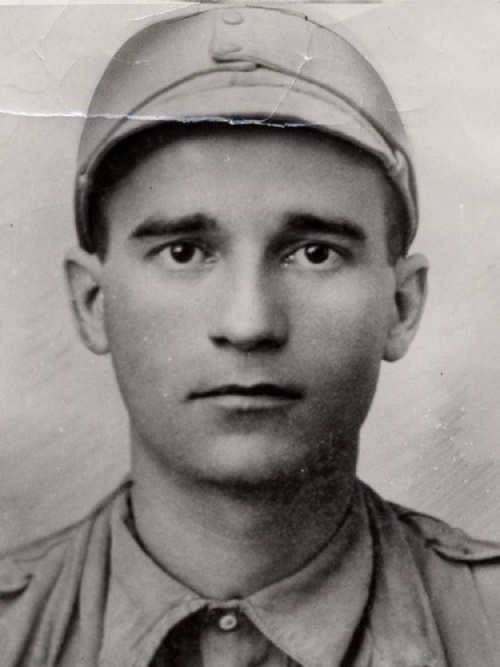
“He was arrested after the battle of De Winton Field in Tonypandy in 1936, while he was kicking Oswald Mosley’s goons out of the Rhondda. He served three weeks in prison in Swansea and allegedly the first thing he said when he got out was ‘How do I get to Spain?’” Unemployed miner Dobson died in the Battle of Ebro, fighting General Franco’s fascists in 1938. As Darren explains “We’re working with groups in Catalunya and the Basque country to create joint memorials for all the Brigaders from other countries who fought in the Spanish Civil War.”
Bread of Heaven
“Cwm Rhondda”, also known as “Bread of Heaven” is one of the most famous hymns in Wales and it was curiosity about its origins that led Darren Macey to a history degree at the University of Glamorgan. John Hughes’ hymn is nothing short of anthemic:
“Guide me, O thou great Redeemer,
Pilgrim through this barren land;
I am weak, but thou art mighty;
Hold me with thy powerful hand:
Bread of heaven, bread of heaven
Feed me till I want no more.
Feed me till I want no more.”
Darren tell me “I’ve recently been supporting Rhian Hopkins who’s the driving force behind saving Capel Rhondda in Hopkinstown. You can’t understand the Welsh psyche today, even though we’re mostly agnostic, without understanding Nonconformity, without understanding how chapel culture binds us, particularly that mid 19th century idea of gwerin, a classless Welsh society.”
There are, of course, other hymns, and arias. Appropriately enough Max Boyce will be performing in the Parc and Dare Hall in Treorchy in May, reminding us of his seminal recording “Live at Treorchy Rugby Club” from 1974. Darren enthuses: “It’s an absolutely iconic album. This sounds a bit grand but I put Max Boyce up there with Woody Guthrie and Pete Seeger because of the topics he touched on in “Live at Treorchy…”, in songs such as “Ten Thousand Instant Christians” and “Duw It’s Hard…”
Such songs do encapsulate social history so well:
In our little valley
They closed the colliery down
And the pithead baths is a supermarket now
Empty gurneys red with rust
Roll to rest amidst the dust
And the pithead baths is a supermarket now.
End of the line
The historian and author of “Up the Rhondda,” John Geraint had never been to the end of the Treherbert line by train so he was happy to join me for the short trip from Treorchy.
Along the way he explained some local names: “ ‘Tre’ or ‘Tref’ is obvious, meaning a town, so you have Treorchy, Trehafod and so on but Treherbert is a bit of an odd mixture. Where does the Herbert come from? Well, Herbert was one of the family names of the Bute family, including the Marquess of Bute, who happened to have the mineral rights to the coal that was under the valley floor here.
And it turned out to be the best steam coal in the world and made his fortune, although he had a fair bit of money to start with. Treherbert was originally called Cwmsaerbren, which you might think is a rather nicer name.”
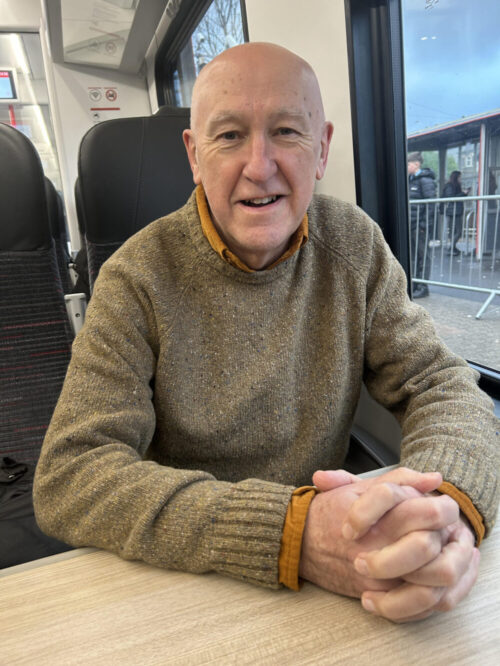
As we slow into Ynyswen station John describes the two waves of development of Rhondda coal. “It started in the 1830s but that was mainly shallow levels of coal at the mouth of the valley at Dinas, driven by a businessman called Walter Coffin. But from about 1855 onwards the deep steam coal reserves of the Upper Rhondda were discovered and the Bute family and then David Davies, Llandinam, the Welsh entrepreneur, started exploring.
“From that point the population just exploded. From fewer than 500 people in about 1815, the population of the Rhondda boomed to almost 170,000 by the time of the First World War.
Every inch of the valley floor was covered with voracious swaggering humanity, as I once described them. I think there are lessons to be learned from Rhondda’s history and from the way Rhondda people are and the deep imprint of communitarian values that have been left to us.”
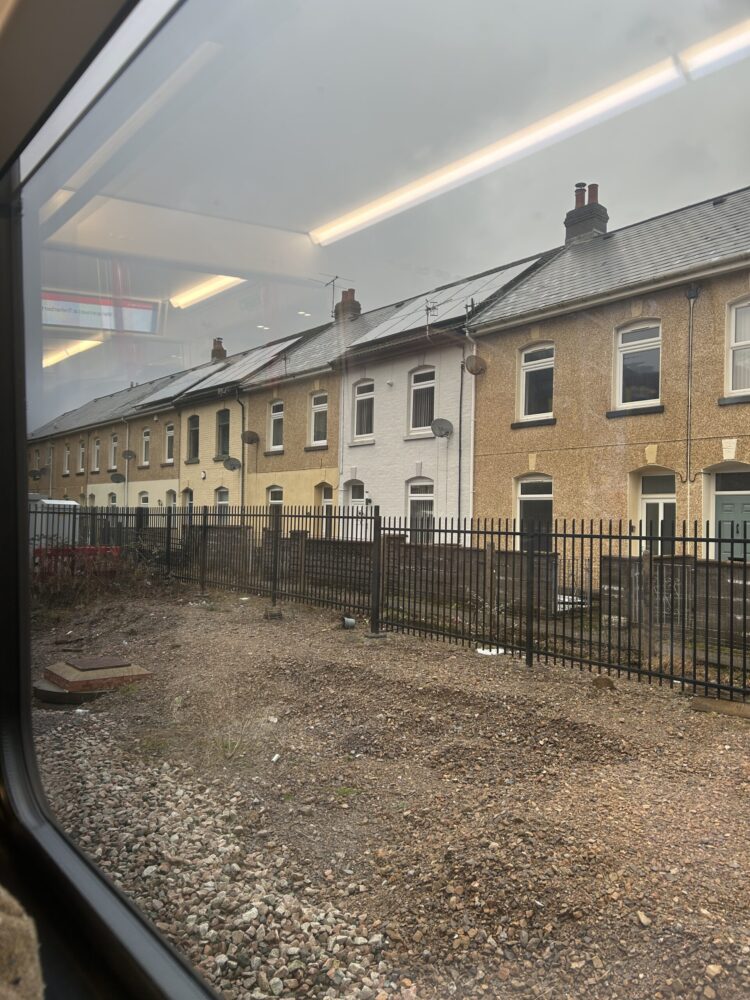
We get off the train in Treherbert, stepping onto a station which reminds John of the area around the Gotthard tunnel in Switzerland. “There’s something about the grandeur of the landscape here. We’re just below Penpych, a 445 metre high mountain and there’s this wonderful end of the valley.
“There is something continental about the lay out of the station, with the electric lines and the very smart looking platforms. It’s the end of the line but it’s also the start of something, I think. It’s the start of Rhondda’s future.”

Jon Gower is Transport for Wales’ writer-in-residence. He will be travelling the breadth and length of the country over the course of a year, reporting on his travels and gathering material for The Great Book of Wales, to be published by the H’mm Foundation in late 2026.
Support our Nation today
For the price of a cup of coffee a month you can help us create an independent, not-for-profit, national news service for the people of Wales, by the people of Wales.


