


Teithiau Tom: Along ‘The Cut’ from Brecon to Talybont
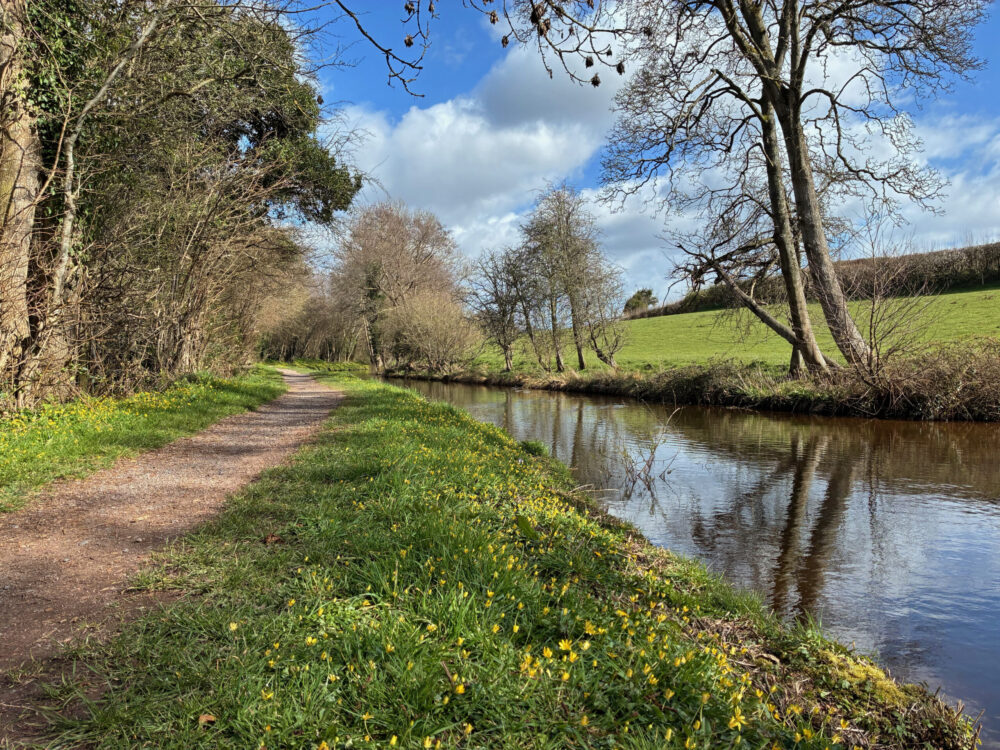
Tom Maloney
One of my fondest childhood memories is of family walks along the canal towing path on balmy summer evenings when time seemed to stand still. These happy little jaunts were my introduction to the Mon and Brec Canal and the joy has remained with me all my life.
Sometimes you take things for granted, that significant things will always be there, so it was something of a shock to learn that the existence of the canal was in doubt last year due to issues around the supply of water.
Like so many people I was relieved to learn that funding had been put into place to secure the future of this wonderful waterway that is so much a part of the landscape now that to imagine it not being there would be tragedy indeed.
With a navigational length of around 35 miles, you may describe the Mon and Brec as a ‘pocket sized canal’ when compared to the Grand Union Canal which is 137 miles in length and the Uk’s longest.
As the name ‘Mon and Brec’ suggests this little water highway was originally two canals. Although joined together at Pontymoile in 1812, they were separate business entities in the beginning being grandly named ‘The Monmouthshire Canal’ and ‘The Brecknock and Abergavenny Canal’.
To get some idea of the broader context of the time America went to war with the UK and Napoleon invaded Russia!
This was the boom time for canal construction and although they are so well suited to our leisure needs today, they were born out of the needs of industry and agriculture. A canal boat, pulled along by horse power was a huge transport revolution for the time.
So … let’s take a little look at what you can see and enjoy, starting at Brecon Canal Basin.
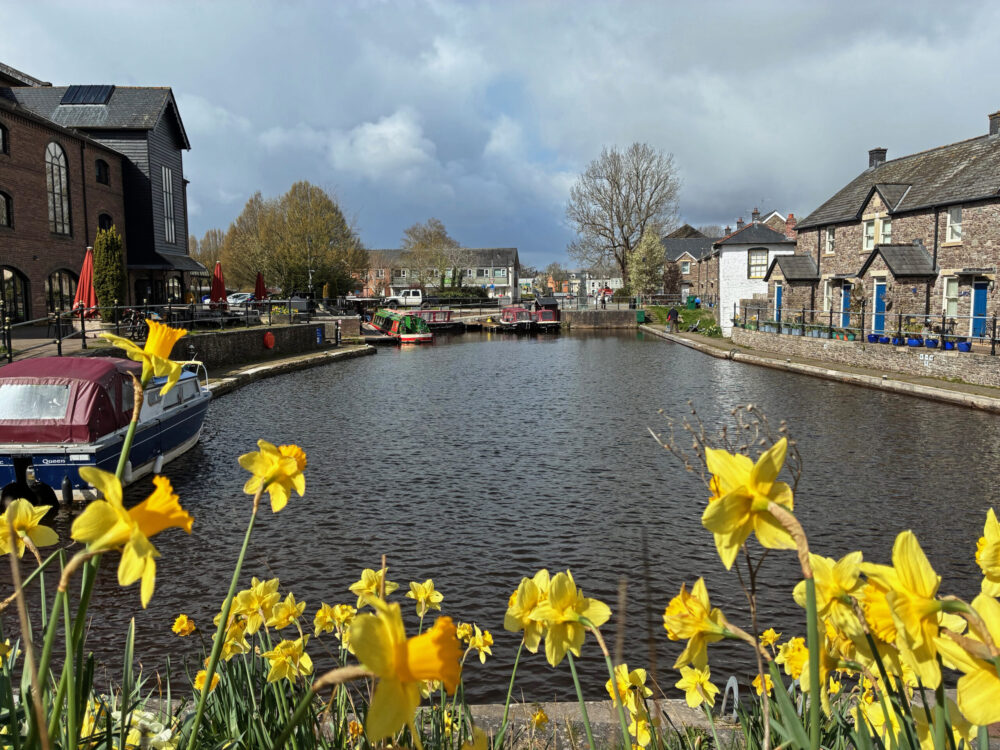
Brecon is as pretty a Welsh market town as you could expect to see and the tranquillity of the canal basin is a beautiful starting point for this walk, though everything is not as it seems.
Cwrt Conway, the traditional stone terraced cottages, which blend so well in this historic location opposite the theatre are in fact a relatively new addition, being officially opened on the 16th August 1999.
It is probably more likely that the canal here would have looked more in keeping with commercial wharfs and warehouses, but I like the houses better today.
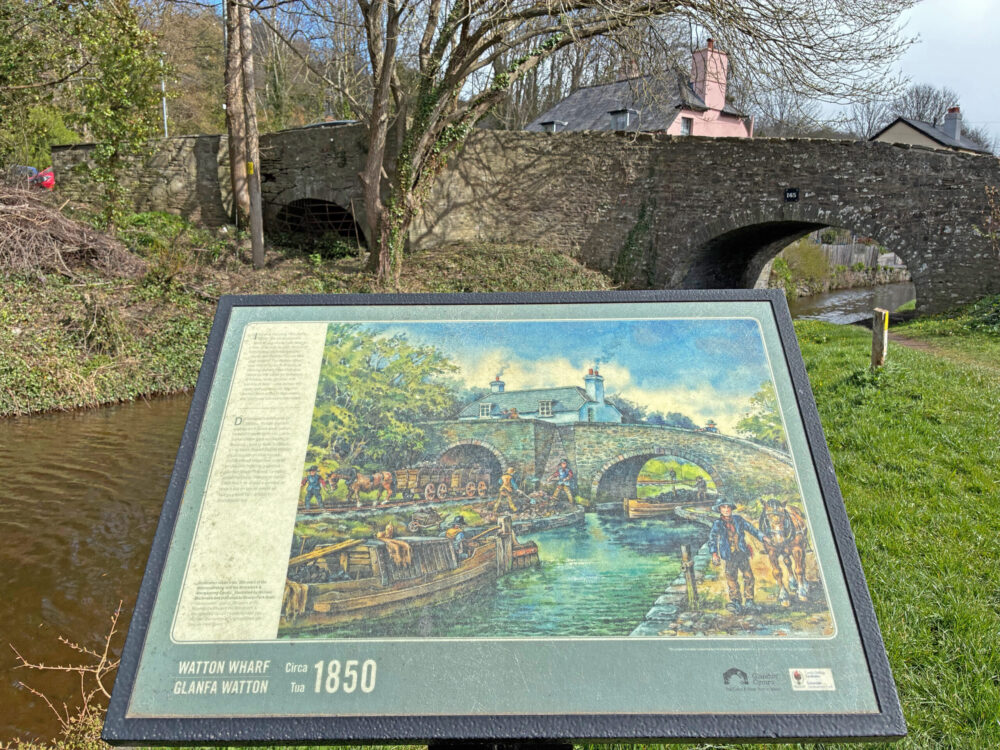
Not very far away along the towing path the history of the canal is beautifully brought to life at Watton Wharf with a well displayed illustration of Canal Bridge 165 and the old tram road that ran alongside by the artist Michael Blackmore. Pictures like this, as they say, paint a thousand words.
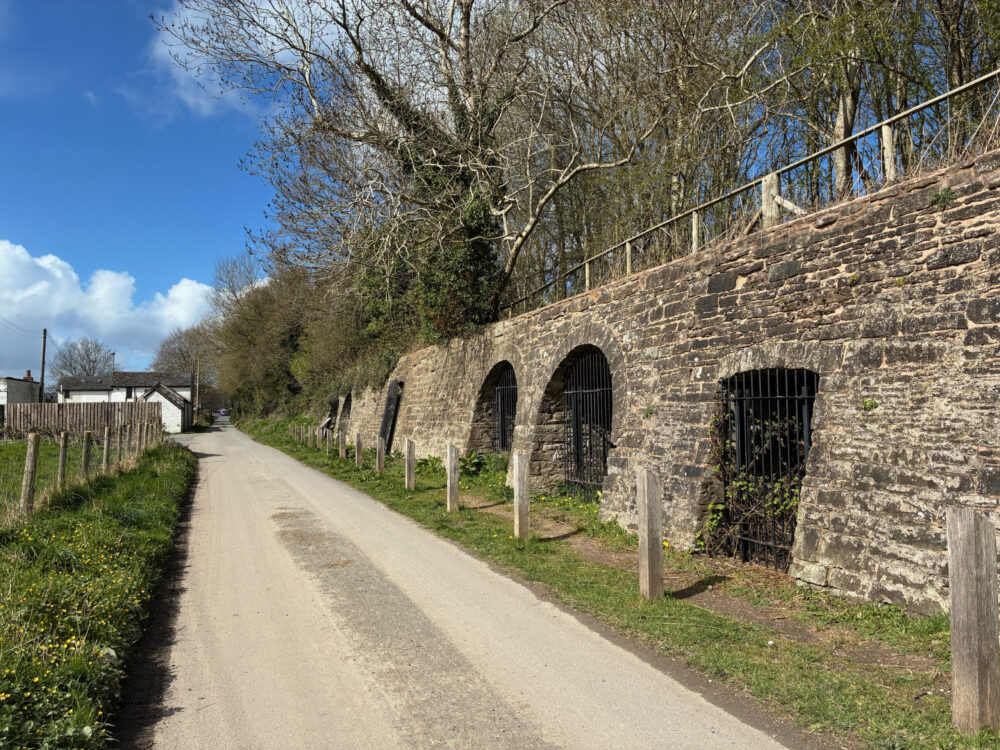
And just how big the scale of the enterprise that grew up around the canal is still abundantly visible in the restored lime kilns just a few steps away, though you will need to take a short detour down a little lane to see these, but they are well worth a view.
It must a have been a smoky place to be indeed when the kilns were in operation burning limestone to create quicklime for use in fertiliser and building mortar. The temperatures inside the kilns were intense and the work back breaking.
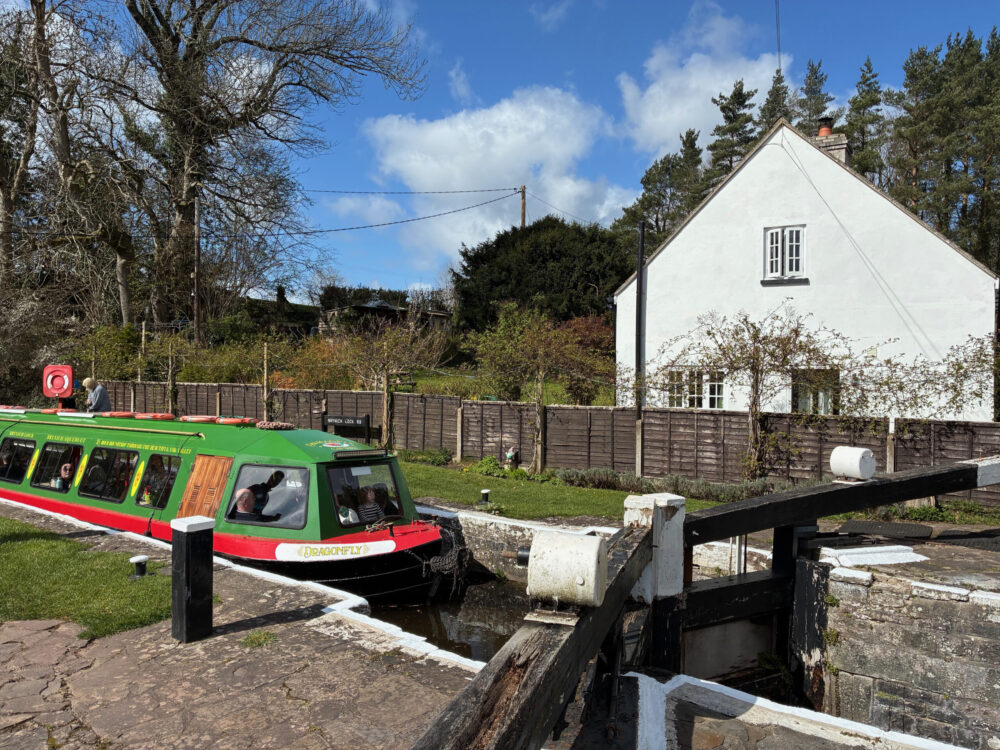
But, enjoying this walk is not just about what has been, it is very much about ‘the now’ as well and I was fortunate to catch a sight of ‘The Dragonly’ canal boat, which heads out from Brecon Basin navigating the lock at Brynich.
It is an amazing water lift and while I have to admit I have seen boats being lowered and raised here a few times, it was still an exciting, unplanned moment for me.
There is something so, so special about seeing the technology of yesteryear still working perfectly well.
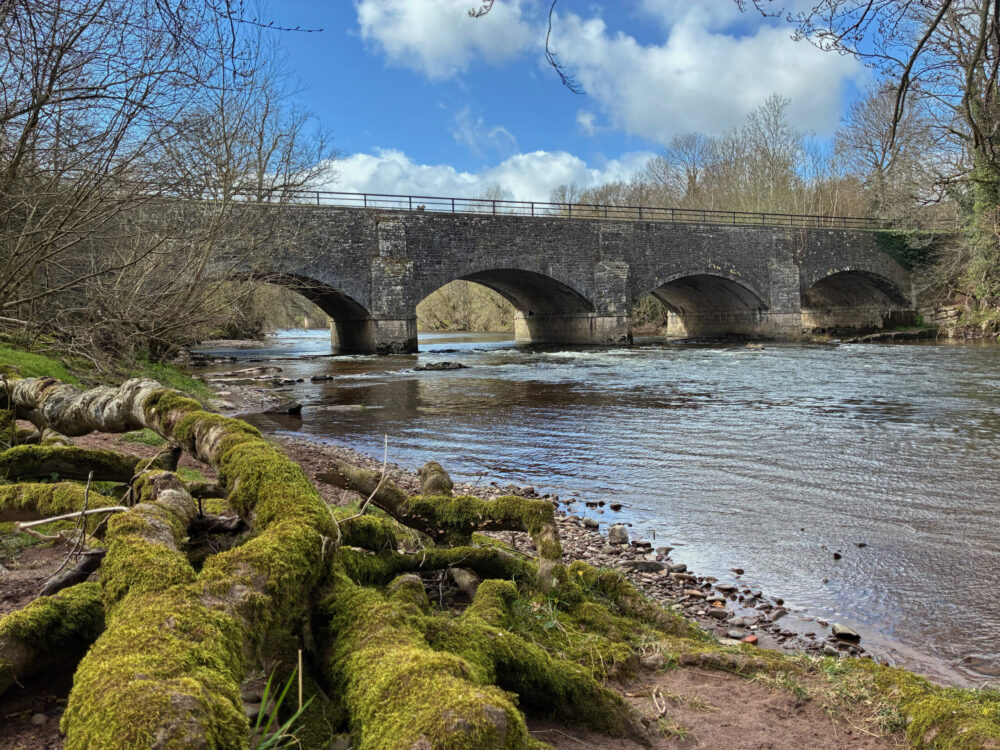
One of the wonders of the canal has to be the aqueduct at Brynich, built to allow the passage of the waterway over The River Usk.
Its graceful arches span the width between the banks with strength and purpose and there is something quite magical in my eyes about a bridge for water transport being constructed over a river.
Again, it is so rewarding to take a side path off the canal to a viewing point where you are able stand and take in the whole of the structure from the Usk.
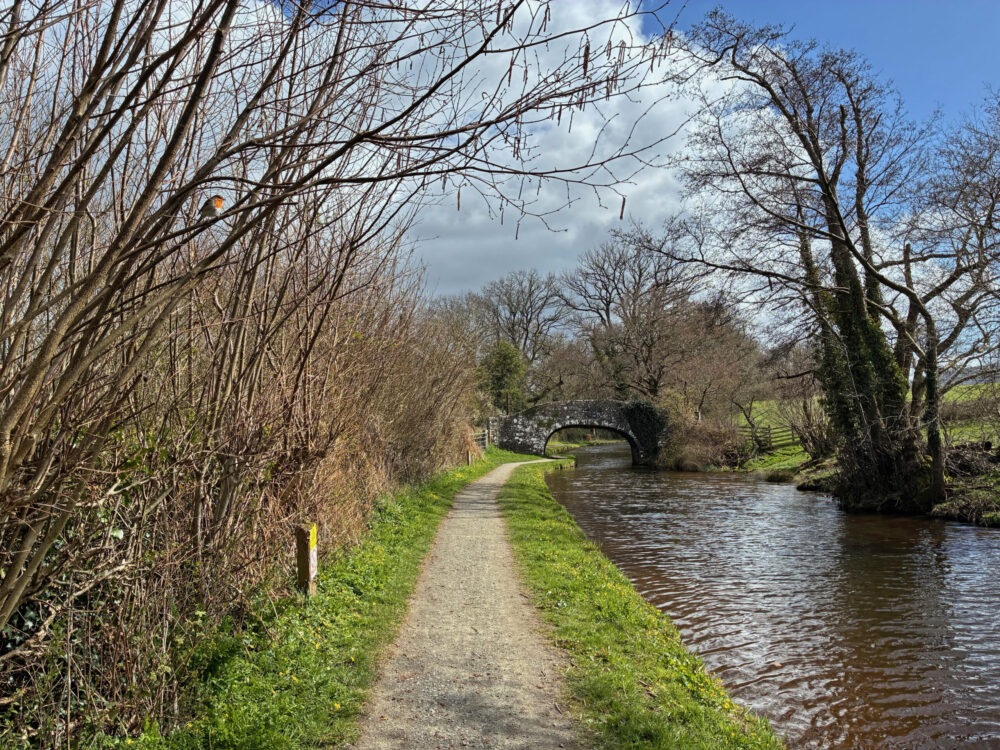
After taking a fond leave of Brynich, I made my way along the canal towing path once again and thanks to Brynich Turn Bridge 162 found myself crossing over to the other side of the canal.
It is all these seemingly little things that make canal walking so much pleasure and it was immediately noticeable how the ambience of the surroundings changed as well. The noise of traffic receded into the distance and except for the occasional cyclist I was at one with all that Mother Nature had on offer.
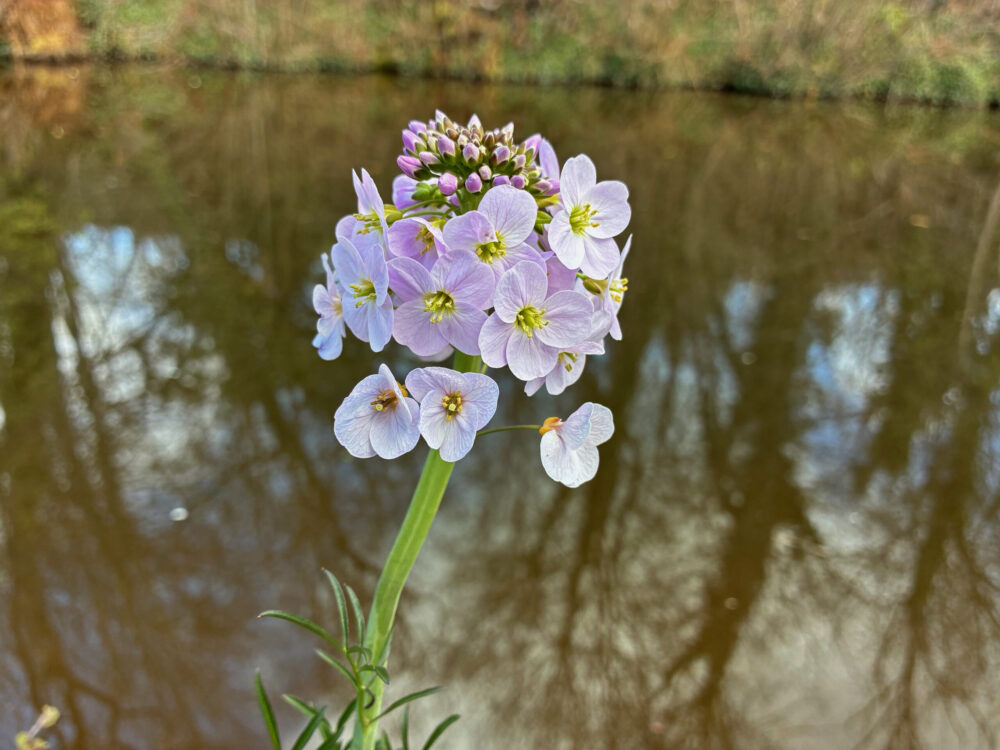
Golden blooms of Lesser Celandine were much in abundance and they are such a joy to the eye, but the dainty little wild flower that captured my attention on this occasion had to be ‘Lady’s-smock’ (Cardamine pratensis), though like so many other wild flowers it goes by other names as well, including ‘Cuckooflower’.
Look for this one close to the water, it thrives on the damp canal bank and its pastel lilac white flowers give the origin of the name ’Lady’s-smock’ with several sources dating the name to Tudor times and its resemblance to a milkmaids’ smock or ‘shift’.
Sadly, I have to admit that I have only developed my interest in wildflowers relatively late in life and to me names like this suggest that people used to be much closer to nature than we are today. Every day is a learning day!
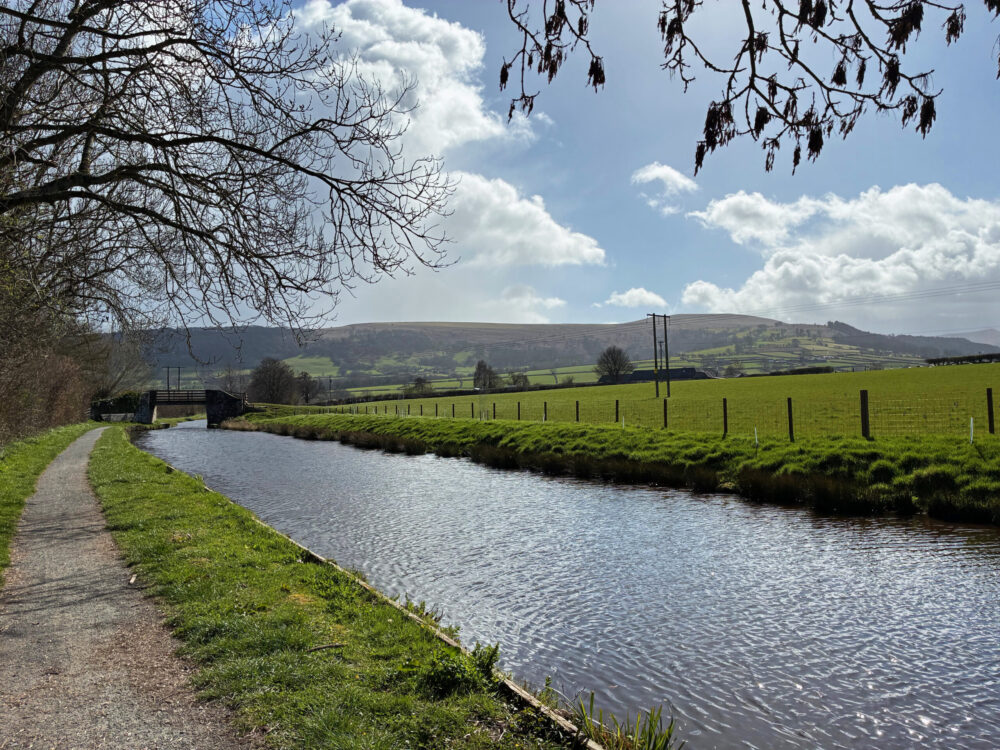
For a short while, not far from Pencelli, trees are relatively few and far between and the canal really opens up with magnificent views.
The thought occurred to me that this is probably as close to how the canal would have looked originally as it gets. The tree lined banks that are familiar to everyone now would in all likelihood have been kept free of tree growth due to the impact that they would have had on navigation.
The fall of Autumn leaves or even indeed the fall of a tree would have seriously impeded the passage of horse-drawn boats and without the machinery that we can call upon nowadays, maintenance would have been a hundred times more difficult.
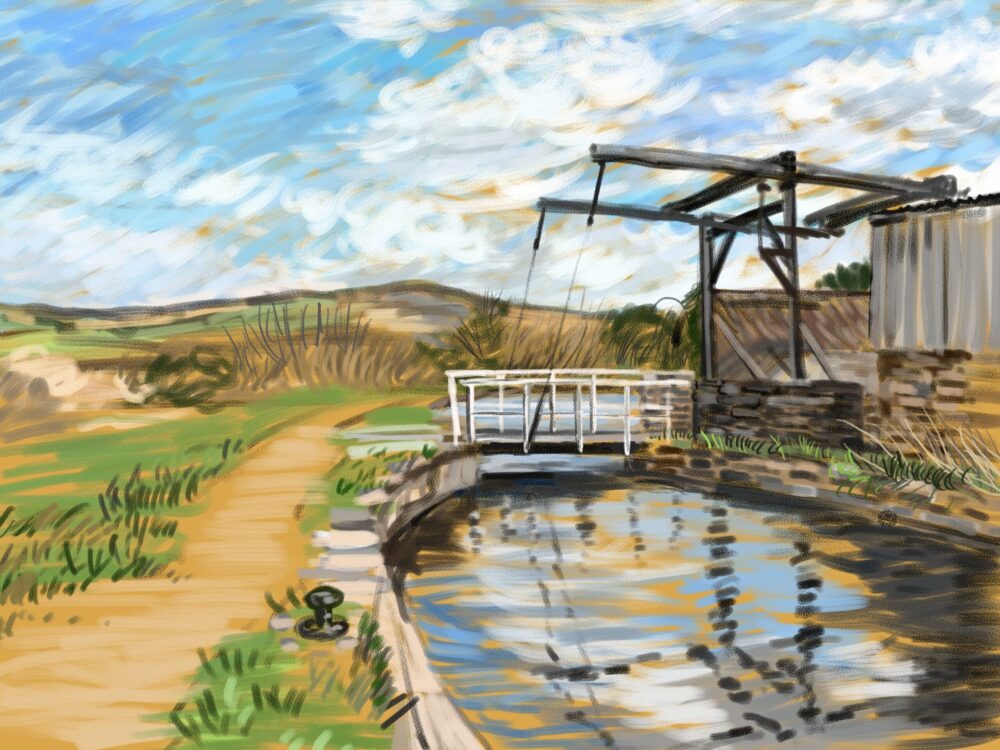
Paintings by the great artists often come into my mind along walks and this was a day for one of my all-time favourites, Vincent Van Gogh.
He is of course famous for his portraits and sunflowers, but his landscapes are to my mind also absolutely fantastic.
The drawbridge at Pont de Langlois along the Arles-Bouc Canal inspired several beautiful masterpieces by the great man. It was the perfect location for his bold, direct painterly style and I feel sure he would have liked the stretch of canal between Pencelli and Talybont very much as well.
He would certainly have had plenty of choice of where to set up an easel as there are a number of lift bridges along this part of the Mon and Brec and they all sit well in the landscape.
Court Farm Lift Bridge 155 spoke to me so much of Vincent Van Gogh that I could not resist the opportunity to pay a little homage to an artist that has given me so much pleasure over the years.
Creating artwork inspired by the great artists is a wonderful learning opportunity and my admiration for Van Gogh’s artistry, especially his mark making and free use of paint was once again reaffirmed, even more so when you consider that he preferred to paint ‘en plein air’, directly from his subject outdoors.
I started my walk at Brecon at around 11:00 am and reached Talybont at about 4:00pm and did not see the time go at all.
I am sure that I could have completed the walk in a quicker time as it is only about 6 miles along the flat really, but that would have taken away so much from the pleasure.
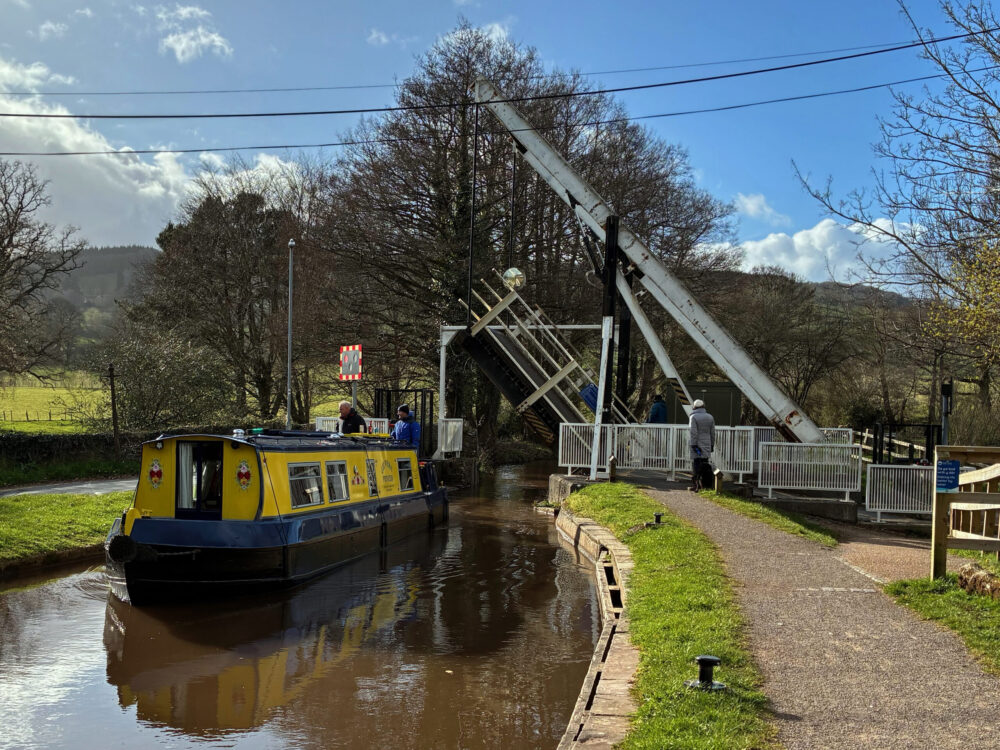
As finales go, I could not have asked for a better end to the day than to see Talybont Drawbridge 144 raised imperiously to allow the passage of canal boat resplendent in its yellow and blue livery, it’s colours a spectacle of joy in the late afternoon light.
More to follow about the Mon and Brec in later articles.
Some Useful Information
Travel To Brecon
There are plenty of parking spaces in Brecon, with one car park situated close to the canal basin near the theatre, but on this occasion, I took the service bus from Abergavenny to Brecon and I am very glad that I did.
One thing that I had not quite realised when I planned the journey is that there are two bus services; the X43 and the 43, one being a more direct service.
My journey from Abergavenny to Brecon was on the 43 Service. This bus stopped off at so many of the lovely villages that can be found in this part of Wales including Llangatock, Talybont and Pencelli.
I really enjoyed not driving and being able to see over the hedgerows to the landscape beyond.
I returned on the X43. This is the more direct service, but no less magical as a scenic route. To be honest I loved both and cannot recommend them too highly.
As I waited in Talybont, tired after the walk it was so good to see the bus approaching the village exactly on time.
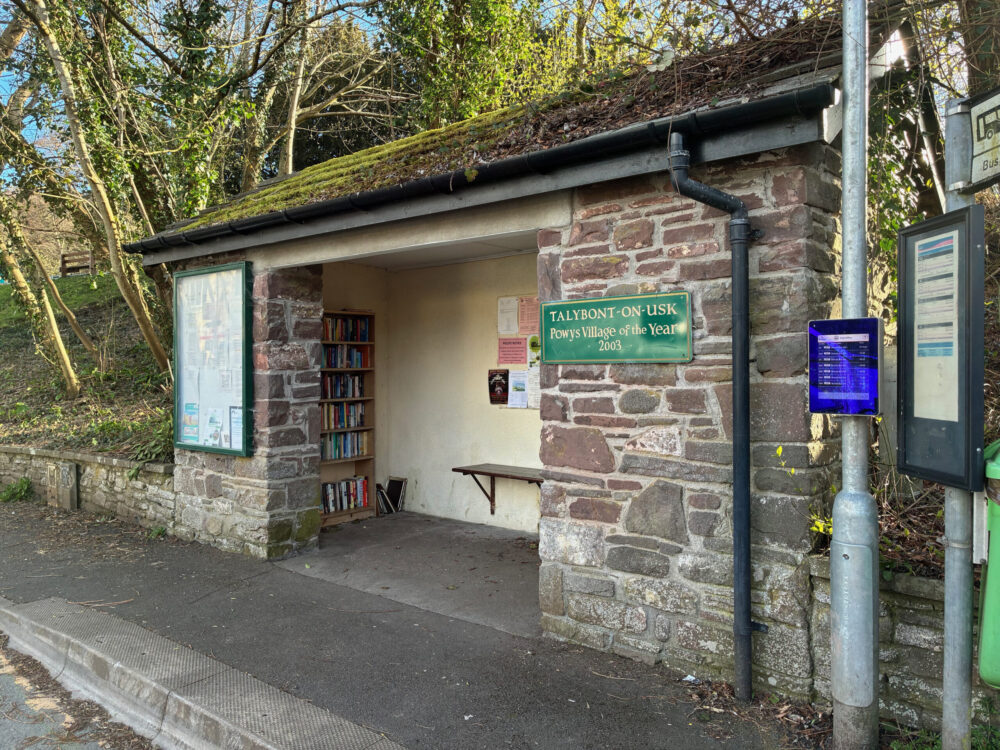
It should be mentioned that the community have done such a beautiful job here on transforming a humble bus stop into a superb community hwb with a book swap. I loved seeing the tall book cases inside lined with ‘good reads’. Pentref hyfryd – a lovely village!
Photographs
All the photographs for this article were taken on the 28th March 2026
Useful Information
X43 and 43 Bus Timetable
Dragonfly Cruises, Brecon
https://bannaubrycheiniog.org/businesses/dragonfly-cruises/
https://www.dragonfly-cruises.co.uk/
Sources:
The Mon & Brec Canal
Future of historic canal secured – Nation Cymru
https://nation.cymru/news/future-of-historic-canal-secured/
The Canal and River Trust
Brecon Canal Basin
https://historypoints.org/index.php?page=brecon-canal-basin
Lady’s-smock wild flower / Cuckooflower
https://www.wildlifetrusts.org/wildlife-explorer/wildflowers/cuckooflower
Vincent Van Gogh – Bridge at Arles
https://www.fondation-vincentvangogh-arles.org/en/vincent/
https://vangoghroute.com/france/arles/bridge-of-langlois/
Support our Nation today
For the price of a cup of coffee a month you can help us create an independent, not-for-profit, national news service for the people of Wales, by the people of Wales.


