


Interview: Małgola, yes! How a Polish musician began creating in Cymraeg
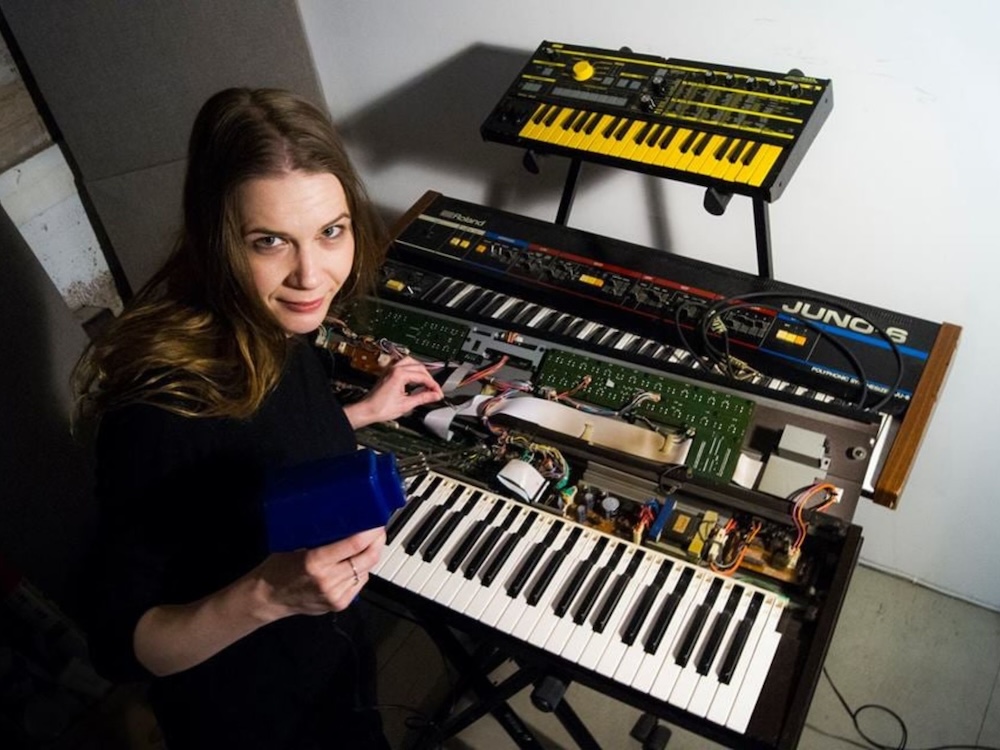
Gosia Buzzanca
Nothing shows more integration with a chosen country than beginning to create art in its language.
And nothing proves the impact of Welsh energy on artists than an artist who left their homeland specifically to fulfil their creative dreams in Wales.
Małgorzata Gulczyńska first visited Cardiff in 2016 and the city made such an impression on her that she decided to move to Wales.
Małgorzata works full time but her real passion lies in making music.
She is a Horizon supported composer, songwriter and producer creating under the name Małgola, No!
I caught up with her, curious about her background, inspiration and plans for the future.
Tell us a little about yourself.
I was born in Gniezno, the first capital of Poland back in 966. Gniezno is located in the western-central part of the country called Greater Poland.
Not sure about it being ‘greater’ in anything but it sure is great enough for me. I’m 34 years old but I certainly don’t feel it.
When did you decide to come to Wales?
I’ve always wanted to have the experience of living abroad.
In my mid 20s I got into Super Furry Animals and Gorky’s Zygotic Mynci and from there I got sucked into the miwsig Cymraeg universum.
I began to explore more and more of the Welsh music scene and in 2016 visited Cardiff for the first time. I think it was around then that I knew this was the place I wanted to move to.
And were you always making music?
I don’t think so. There was always music in our house. My parents loved pop culture and had a massive record collection, impressive for any 1990s Polish household. I was exposed to music almost 24/7.
I used to go to primary music school but I don’t recall creating any music of my own until I moved on to junior high at the age of 12.
My dad died during the summer holidays between my primary and junior high. That’s when I started a real relationship with the piano and to write songs.
How was the shift from being creative in Poland to being creative in Wales?
Before leaving Poland I was still at uni and only working part time. While in Wales I’ve taken up a full time job almost straightaway.
Being creative within irregular uni/work hours is different to being creative after a long shift. So I always find it tricky to differentiate whether it’s the move to another country or it’s the shift from being in my late 20s to being in my mid 30s that made the most of a difference to me.
When it comes to comparing the music scene in Poland and Wales, what struck me at first is the obviousness that in the UK it’s not unusual to be an incredibly skilled musician which makes the industry very competitive.
The Polish music industry is very competitive too, but for all different reasons. However, in general the music industry has changed drastically all across Europe within the last 10 years.
People don’t go to local shows that often since they can experience music and “socialise” online. Social media created some ridiculous expectations of what a musician/creative is supposed to be and act like. Showcase festivals, streaming services – they all promote safe, familiar sounding music.
I have no intention of being any part of this environment, it doesn’t make any sense and has no value to me.
There are, however, some exciting opportunities available here in Wales that would never be available for a self-taught musician like me in Poland.
What about language, do you find it a barrier or a step up for your creativity?
It looks to me that where the industry wants to gatekeep, they will, and it hasn’t much to do with language. Fortunately for Wales, there are a lot of organisations and programmes that see value in diversity and they do all they can to break any language barriers.
To me, language was never a massive barrier anyway as my English was pretty good before I even moved to Wales. But I definitely became more fluent which helps – especially since I want to be more creative and clearer to be understood in my lyrics and during my shows.
I also like the idea of using many languages in music, especially European languages since it is such a small part of the world.
I’ve eagerly started learning Welsh and even released my first song in Cymraeg last year. It’s called ‘Pethau bach’.
In my opinion learning any new language always broadens perspective and imagination which inevitably has an impact on creative work – and music work in particular, since spoken language is based on sound and rhythm.
Tell us about how your career has bloomed since being in Wales, what support did you receive so far?
It took me a good few years to get to know the support ecosystem for creatives in Wales.
My first encounter was with Ty Cerdd – music centre Wales, whose greatest quality I think is getting to really know the artists and seeing their potential where other institutions fail to do so.
Ty Cerdd provides equitable and diverse opportunities responding to the actual needs of musicians – whether or not formally trained, emerging or experienced, immigrant in Wales or Welsh native.
I was very lucky to have taken part in programmes like CODI and Pathway To The Orchestra, which fed into my practice and collaborative skills.
I also worked with Ty Cerdd on a couple of international and local projects and every single time they are gamechanging opportunities.
Last year I was very blessed to have received funding from Gorwelion and Help Musicians, the latter requiring more advanced skills in application writing and aimed at professional musicians working within the industry.
The support included funds that made recording my new album possible, as well as some professional mentoring.
I was also supported by Arts Council Wales International for an R&D project in 2021 and I got some funding on behalf of my workplace to run community music workshops for children.
Wales is very very privileged to have the budget and at the same time is very open to support interesting projects. It can be challenging sometimes to write a good application, but most institutions do their best to break down any barriers.
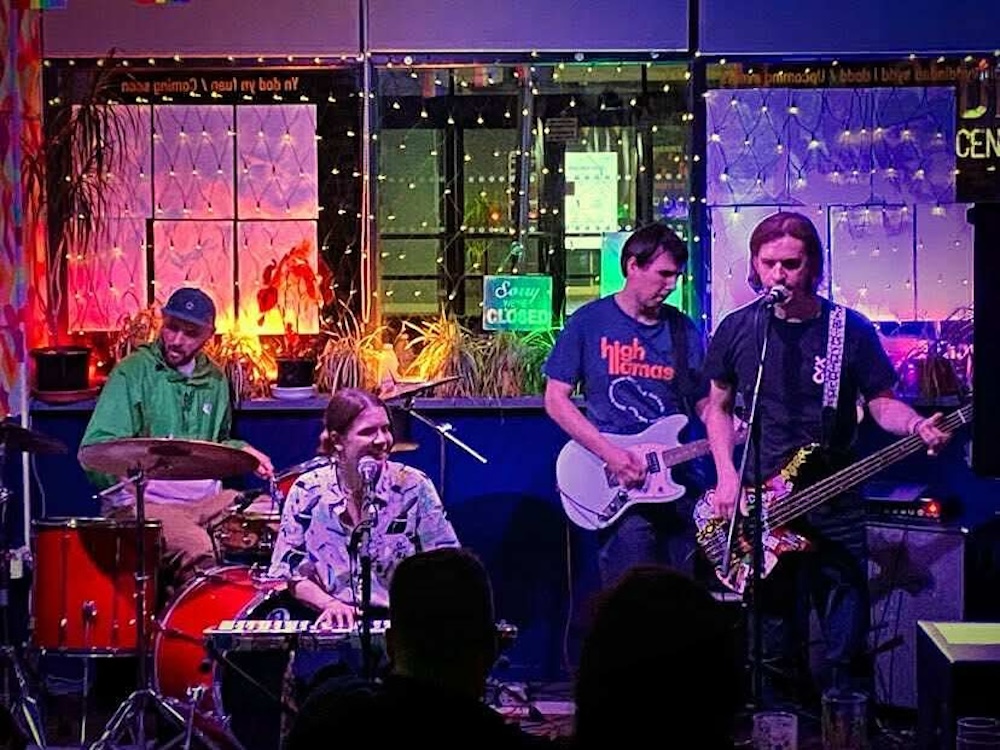
Last but not at all least, some very important support in my musician career in Wales came from ‘the grassroots’ people. Liz Hunt used to run the most inclusive and dearly missed venue The Moon, where I performed the most often, and it was Liz who offered me the very first opportunity to play live since I moved to Wales.
Dilwyn Llwyd is the manager of Neuadd Ogwen in Bethesda who invited me to play at the local Ara Deg festival in 2019 and then to join my greatest music hero Gruff Rhys on his 2025 ‘Dim Probs’ tour.
Lastly, there are promoters like Andy Jones who gives all Welsh musicians a fair chance to be seen at his FOCUS Wales festival, and plenty of promoters and less formal collectives local to Cardiff who are very friendly and open to all kinds of music.
Sadly, a lot of grassroots venues have vanished from Cardiff and a lot of DIY promoters have been forced to stop their activity. Even though Wales has some means to help them, we are in very challenging times where running a music venue isn’t sustainable any more.
I worry about the state of the industry and I feel sorry for all of the musicians who are now deprived of the opportunities that I and other fellow musicians were still lucky to have only less than 10 years ago.
How would you describe your music to new audience?
I’ve been wondering about my music quite a lot lately, as for years I had troubles defining it. I am a female songwriter who has been taking the most inspiration from male musicians like Elliott Smith, Burt Bacharach, Brian Wilson and Paul McCartney.
My songs definitely fit into a “pop” genre tag, but it’s not the kind of radio friendly pop people may imagine. Most of my songs are sentimental piano ballads, but I can never only stick to one musical vibe as I love to experiment with sounds and genres.
I think I use music as a means of channeling emotions. I like to sing about lived experience or observed situations but mostly focusing on human relationships and feelings. And there is always a mixture of real deep sadness in my songs, but just as often I smuggle in a pun or a glimpse of optimism.
Likewise, in the music department there are lots of unexpected shifts and progressions. Just like myself, my music is just full of contradictions.
What has been your proudest achievement so far?
For many years I’ve been struggling with stage fright and a very damaging lack of confidence.
For the last two years I’ve been working very hard to merge my musicianship into all areas of my life in order to help me understand who I am both as a person and as an artist, and to allow myself to transmit it when I’m on stage.
I am very proud to see the results that my work is bringing – from being more open in professional and creative relationships to becoming a better performer.
It’s still work in progress but the change has already been massive and the opportunities it brings are endless. It’s so exciting!
Do you think your lived experience of being an emigrant changes you as an artist?
Oh it definitely does. As I mentioned previously, my lived experiences inspire most of my music: come to think about it, I developed the need to write songs after experiencing grief to begin with.
With regards to the experience of immigration, I think it comes down to immigration changing you as a person in the first place, which inevitably changes you as an artist as a result.
To me it would be changes in areas like the sense of belonging, like realising I don’t ever completely belong anywhere but in my own head, no matter where I travel to. Or a general change of perspective, like what you find really important in life or the fact that the world really isn’t that big after all.
Then there’s the little changes that go almost unnoticed, like, perhaps subconsciously, embracing family traditions, or not being ashamed of my accent. These themes and sounds that go with it transpire through my songs.
For example, I was never able to write songs in Polish language – until I felt very homesick in Wales in 2019 and I wrote half of my first Polish language album “Jaskinia Chrabiej Czaszki” in just one afternoon.
What are your plans for 2026?
My main aim is to find a record label and release my new album that I recorded last year. I want to play more shows and promote it as well as I can.
I also hope that this year I will find the right balance between work and rest, because I’ve been notorious for getting involved in too many projects and then burning myself out.
I want to be more present, stop wasting time on social media, read more books, listen more attentively, become calmer, expect less and enjoy more – and be able to sleep!
Will we have a chance to see you play live this year?
I have a few gigs coming up: in Newnham on the 14th of March (with my band) and in Bangor on the 2nd of May (solo show).
The new album called “Aries” is on its way however no specific release date yet. There will be singles and music videos leading to the release.
Follow Małgola, No on Instagram and stream her music on Spotify.
Support our Nation today
For the price of a cup of coffee a month you can help us create an independent, not-for-profit, national news service for the people of Wales, by the people of Wales.
Get more trusted Welsh news
Choose Nation.Cymru as a preferred source in Google News to see more of our journalism.


