


Yr Hen Iaith part 93: ‘The Welshness of its characters’: the Fiction of Daniel Owen
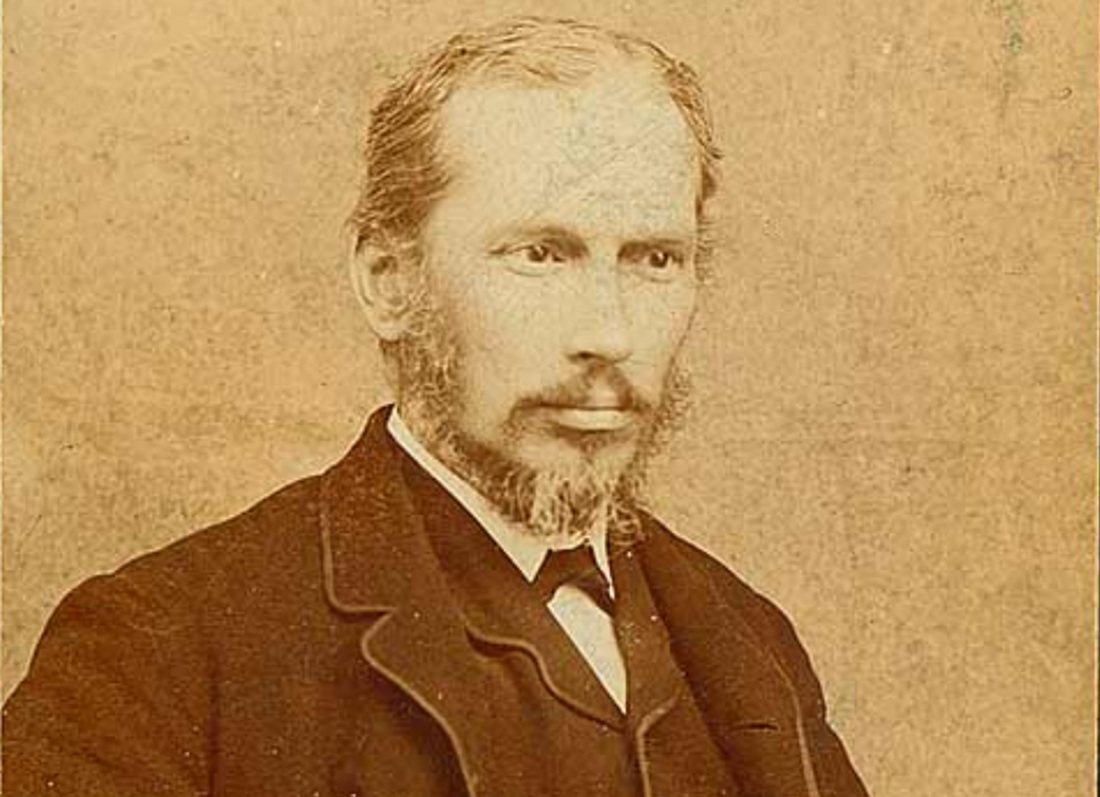
Jerry Hunter
Nid i’r doeth a’r deallus yr ysgrifenais, ond i’r dyn cyffredin.
‘It is not for the wise and the intellectual that I wrote, but for the common person’
Just about any discussion of Daniel Owen’s work will include this quotation. It’s even inscribed on the pedestal supporting the writer’s statue in his hometown, Yr Wyddgrug (Mold).
The sentence appeared originally in the preface which Owen penned for his novel, Rhys Lewis in 1881.
If the novelist used these words to insist that he was writing for the ‘common’ Welsh reader, the preface also says something very different about this book specifically and Owen’s fiction in general: Os oes rhyw rinwedd yn y llyfr, Cymreigrwydd ei gymeriadau ydyw hwnnw, a’r ffaith nad ydyw yn ddyledus am ei ddefnyddiau i estroniaid. (‘If there is some virtue in the book, it is the Welshness of its characters, and the fact that it is not indebted to foreigners for its materials.’)
The most common kind of fiction published in Welsh up to that point had been translations of overtly religious material – a trend which we can trace back to the 1688 Welsh version of Bunyan’s Pilgrim’s Progress.
In the nineteenth century, a great deal of this material was in service of the Temperance movement. Daniel Owen himself started cutting his teeth as a writer by translating an American temperance novel, Ten Nights in a Bar Room. But by the time Rhys Lewis appeared, he was not only writing Welsh-language fiction: he was creating originally stories about Welsh people, Welsh places and Welsh concerns.
As we saw three episodes ago, the novel as a literary form was frowned upon in Welsh Nonconformist culture. Daniel Owen was expanding the foothold carved out by Gwilym Hiraethog, and yet he still had an eye on the hostility which such writing might engender. Thus the next sentence in his preface addresses the Nonconformist view that reading for reading’s sake alone is sinful and that a book should contain useful knowledge: Os oes ynddo rywbeth a’i duedd heb fod i adeiladu yn gystal â difyru y darllenydd, ni phâr hynny fwy o ofid i neb nag i’r Awdwr. (‘If there is something in it which does not build character as well as entertain the reader, that will not cause distress to anybody more than to the Author.’)
Many of those Nonconformists who avoided novels nonetheless enjoyed a great deal of narrative prose – as long as it was deemed to be godly.
The biographies and autobiographies of ministers were the Welsh best-sellers which filled the niche occupied by novels today. It is no coincidence that Daniel Owen presented his first big novel, Rhys Lewis, as a Nonconformist minister’s autobiography.
The full title makes this clear and even names the chapel where the eponymous servant of God supposedly served: Hunangofiant Rhys Lewis, Gweinidog Bethel (‘The Autobiography of Rhys Lewis, Minister of Bethel’). It’s difficult to think of a better way of luring sceptical nineteenth-century Methodists to indulge in the guilty pleasure of reading a novel.
Acceptable reading habits
The novel’s first chapter intensifies the ruse, as Rhys Lewis tells us that he himself has adhered to reading habits deemed acceptable in his culture: Yn ystod fy oes darllenais amryw gofiannau, ac ni allaf byth fesur na phrisio’r difyrrwch a’r lles a gefais trwy hynny (‘During my life I have read varies biographies, and I can never measure nor put a price on the enjoyment and the benefit I had from that.’)
He claims that his own writing impulse stems from this cultural norm, having ‘thought many a time how good it’d be . . . to have a true record of the life of a common man like myself’ (Meddyliais lawer gwaith mor dda fuasai gennyf gael cofiant cywir o fywyd dyn cyffredin fel fy hunan). He vows ‘to tell the truth’ ([d]weud y gwir), thus intensifying our reading pleasure, as we are assured that we are digesting ‘facts’ about the life of ‘a real man’.
Daniel Owen can be located in several interlocking contexts. He grew up in an increasingly industrial Flintshire, and his family experienced the sharp end of that industrialization: his father and two older brothers were killed when the Argoed coal mine flooded.
Raised a Calvinistic Methodist, the young Daniel Owen had hoped to become a minister and even studied at Y Bala’s theological college for a while before leaving and returning to Mold, where he worked as a tailor before eventually opening his own shop.
Religious hypocrisy would be one of the main themes of his fiction, and he was not above making his own denomination the target of these satirical attacks.
If anything, satire is the salient current running through his writing, and many aspects of Welsh society come under the penetrating gaze of his authorial lens.
Y Dreflan
His earliest original work of substance, Y Dreflan (‘The Small Town’), was published serially in the monthly, Y Drysorfa, before appearing in book form in 1881.
Y Dreflan’s satire of committee-laden civil society is as relevant in Wales today as it was in Daniel Owen’s time:
Y mae yn y Dreflan ddigon o fyrddau i ddodfrefnu palas lled helaeth. Mae yma Fwrdd Lleol, yn gyfansoddedig o ddeuddeg neu ychwaneg o ddynion wedi llwyddo tipyn yn y byd, ac yn cyfarfod â’u gilydd y dydd Mawrth cyntaf o bob mis, i edrych yn ddoeth ar eu gilydd, ac i gyfarch eu gilydd yn foesgar[.]
‘There are in the Small Town enough boards to furnish a fairly expansive palace. There is a Local Board here, composed of twelve or more men who have succeeded some in the world, and who meet each other the first Tuesday of each month to look wisely at each other and to greet each other courteously.’
And if later work would lampoon the Nonconformist chapel culture to which Owen himself belonged, Y Dreflan provides a humorously scathing look at a small town’s Anglican church:
Gwir nad oes genym yr un arglwydd esgob yma; ond y mae genym ficer sydd yn meddwl ei hunan cystal ag esgob, ac y mae hynny yn ateb yr un dyben yn union. [ . . . .] Mae y ficer yn ŵr tewdrwm, yn Eglwyswr o’r Eglwyswyr, ac yn myned hyd ei linyn mewn defodaeth. Mae ganddo ddau giwrad – un yn Sais pur, ond wedi dysgu methu siarad Cymraeg. Cymro glân ydyw y llall[.]
‘It’s true that we don’t have any lord bishop here; but we have a vicar who thinks himself as good as a bishop, and that ticks the same box perfectly. [. . . .] The vicar is a fat and heavy man, a model Anglican, and emerses himself thoroughly in ritualism. He has two curates – one a real Englishman, but who has learned to fail to speak Welsh. The other is a real Welshman.’
Satire
This satire goes beyond the Church and is applicable to other aspects of Welsh experience. I can’t read this passage without thinking about things which have happened (or not happened) in Welsh institutions where I’ve worked when a person was hired on the condition that they’d learn Welsh and yet never did learn the language and were never forced to fulfill that contractual obligation.
Daniel Owen plays with the reader’s expectations: we are introduced to a curate who is Sais pur, ‘a real Englishman’ before stopping our train of thought with the word ond, ‘but’, leading us to think that this curate from over the border has in fact learned Welsh. We are then hit with that playfully negative phrase – wedi dysgu methu siarad Cymraeg (‘has learned to fail to speak Welsh’).
A Methodist given to exposing the hypocrisy he saw in Methodist chapels, Daniel Owen was also a business owner given to satirizing the crass capitalistic ethos of the petite bourgeoisie.
He combines both satirical strands in Y Dreflan, describing a businessman’s cyffes ffydd (the ‘confession of faith’ to which chapel-goers adhered), the first two points of which are:
- Mai dyledswydd benaf dyn ydyw edrych ar ol number one, ac edrych ar ol pobl eraill neu beidio fel y bydd yn dewis, ond o’r ddau mai peidio sydd oreu.
- Mai prif ddyben dyn ar y ddaear ydyw gwneyd arian, a dwyn pobpeth arall yn is-wasanaethgar i hyny.
‘1 That a man’s chief duty is to look after number one, and then look after other people or not as he wishes, but of the two not [looking after others] is best.
‘2That a man’s chief purpose on earth is to make money, and to make everything else secondary to that.’
The English phrase ‘number one’ is in the original Welsh text, telling us that his fictional businessman talks like that.
A similar linguistic register is found in most of Owen’s books, ensuring that the very language we read grounds us in a north-east Wales exposed to England and the contemporary English slang which, this fiction suggests, came into the Welsh language on the current of the crassest aspects of contemporary capitalistic society.
Further Reading:
Robert Rhys, Daniel Owen (2000).
Episode 90 in this series: https://nation.cymru/feature/yr-hen-iaith-part-90-uncle-roberts-hearth-uncle-toms-cabin-and-welsh-reading-habits/
Support our Nation today
For the price of a cup of coffee a month you can help us create an independent, not-for-profit, national news service for the people of Wales, by the people of Wales.
Get more trusted Welsh news
Choose Nation.Cymru as a preferred source in Google News to see more of our journalism.


