

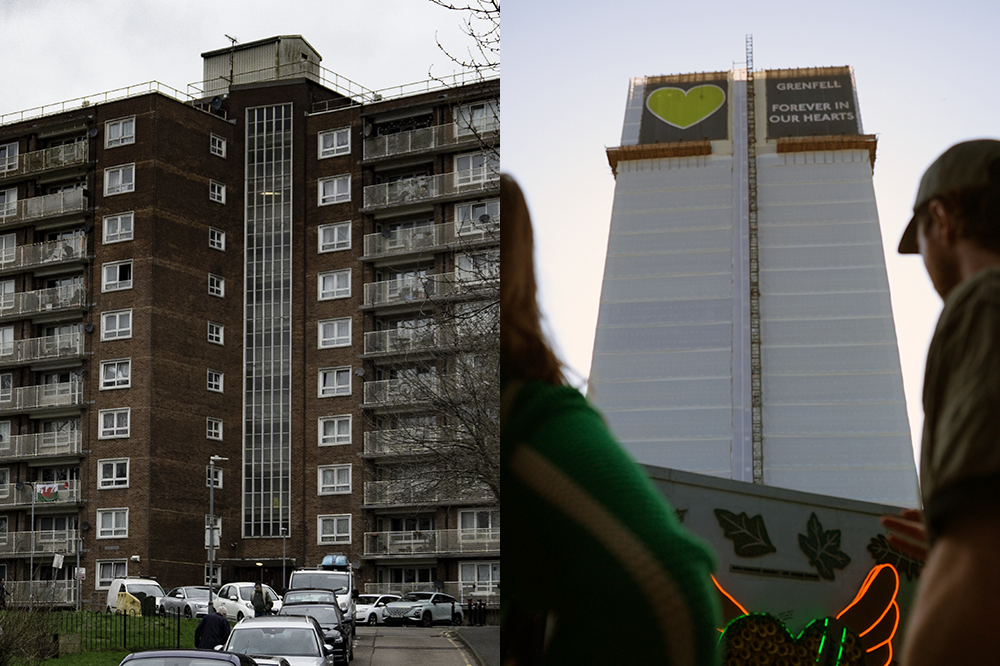
Flammable cladding will remain on Welsh tower blocks a decade after Grenfell disaster
Kyle Bright
Residents in high-rise council flats in Wales will still have flammable cladding on their homes ten years after the Grenfell Tower fire, despite works to remove and replace the cladding having started two years ago.
It was found that highly flammable materials on the exterior of the 24-storey Grenfell Tower accelerated the spread of the tragic fire, killing 72 people in 2017.
Yet nearly nine years on, remedial works on tower blocks in Cardiff remain incomplete – with works to finish the job not expected to start until the end of 2027.
One of these tower blocks is Beech House, located on the Hollybush Estate in the north of Cardiff.
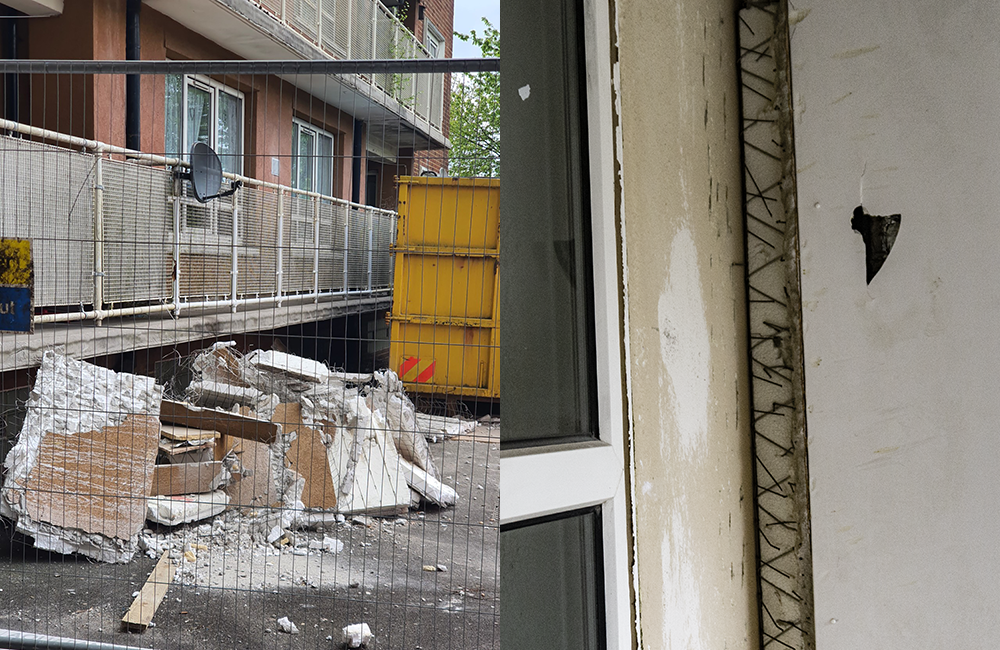
Works to sort out the cladding on Beech House began in early 2024, but flammable materials still remain on the buildings, with works coming to a pause.
Previous work has left the outside of flats with no insulation, holes in the exterior, and fire-risk materials inside of crevices for two years.
The materials on the building are not identical to the materials used on Grenfell Tower but pose a fire risk to residents as it does not comply with fire standards.
While the council is offering payments to residents until remedial works continue, residents have reported the lack of outside cladding has led to mould and damp spreading within their homes.
Speaking to one resident, who did not wish to be named, they said that residents are “fuming” with the council’s lack of pace over the upkeep of the building.
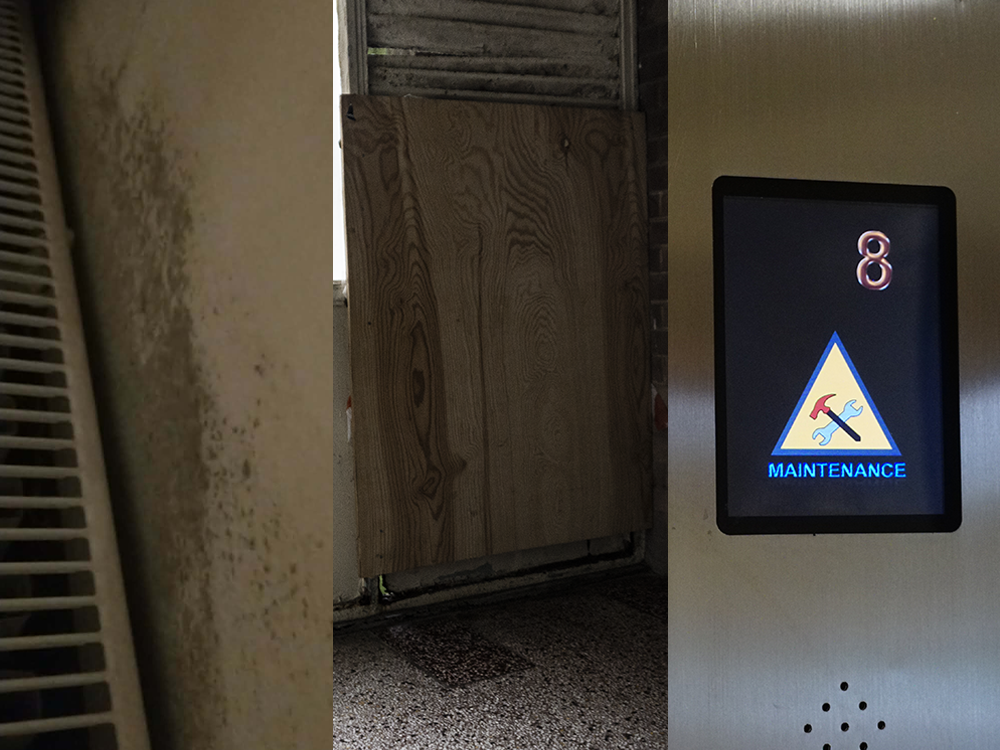
Residents showed us examples of poor maintenance within the building. Communal areas were in a state of disrepair, with blocked off bin chutes, broken lifts and washroom equipment left out of order for months at a time.
A spokesperson from Cardiff Council said that the safety of residents in these high-rises will “always” be its priority.
They added: “We continue to invest significantly in fire safety across our housing stock, particularly in high-rise homes. This builds on a programme of improvements introduced in recent years to ensure homes meet the highest possible safety standards.
“We work closely with South Wales Fire and Rescue Service to ensure all safety measures reflect the latest national guidance and best practice. Our aim is simple: to ensure every tenant feels safe and secure in their home.”
Regarding broken facilities within the building, the council says an urgent works order was put in place, with efforts to repair the lift now underway, and alternative arrangements to the bin chute are being organised.
Hollybush Estate Tenants and Residents Association (HETRA), who represent the residents in the Beech House high-rise, declined to comment on the situation.
The future for Welsh tower blocks
Subsequently, the council has scheduled proposals to appoint a contractor to carry out recladding works on the tower blocks, which will be discussed at Cardiff Council’s cabinet meeting on Thursday 19 March.
However, the Council claims that these works are not expected to commence until late 2027, meaning that flammable cladding is to remain for at least another two years on the high-rises.
They come as part of a wider programme that will improve energy efficiency, replace windows, door and balconies, along with new sprinklers and mechanical upgrades.
For wider Wales, the Building Safety (Wales) Bill was passed in the Senedd earlier this month, which aims to implement new arrangements for the management of multi-occupied residential buildings, including the consideration of fire safety provisions for high rises.
In terms of fire safety, fire risk assessments by a professional are to be made mandatory, with the tallest buildings required to have comprehensive safety assessments.
It will also force landlords or owners to repair any damage that could lead to the spread of fire as soon as possible.
For residents, it aims to give them more control in dealing with fire safety issues, with the ability to apply to the residential property tribunal to force landlords to act.
When the Bill passed through the Senedd, the Cabinet Secretary for Housing and Local Government, Jayne Bryant called it a “landmark moment” for building safety.
She added: “This legislation delivers a new building safety regime for residents across Wales, regardless of building type, height or tenure — going further than anything that exists elsewhere in the UK.”
When the Bill receives Royal Assent in the coming weeks, the legislation will become law in Wales.
Support our Nation today
For the price of a cup of coffee a month you can help us create an independent, not-for-profit, national news service for the people of Wales, by the people of Wales.


