


Reform MS calls shooting an ‘integral part’ of Welsh culture, economy and environment
Stephen Price
Reform MS Laura Anne Jones has labelled shooting ‘an integral part of the cultural, economic and environmental fabric in Wales’.
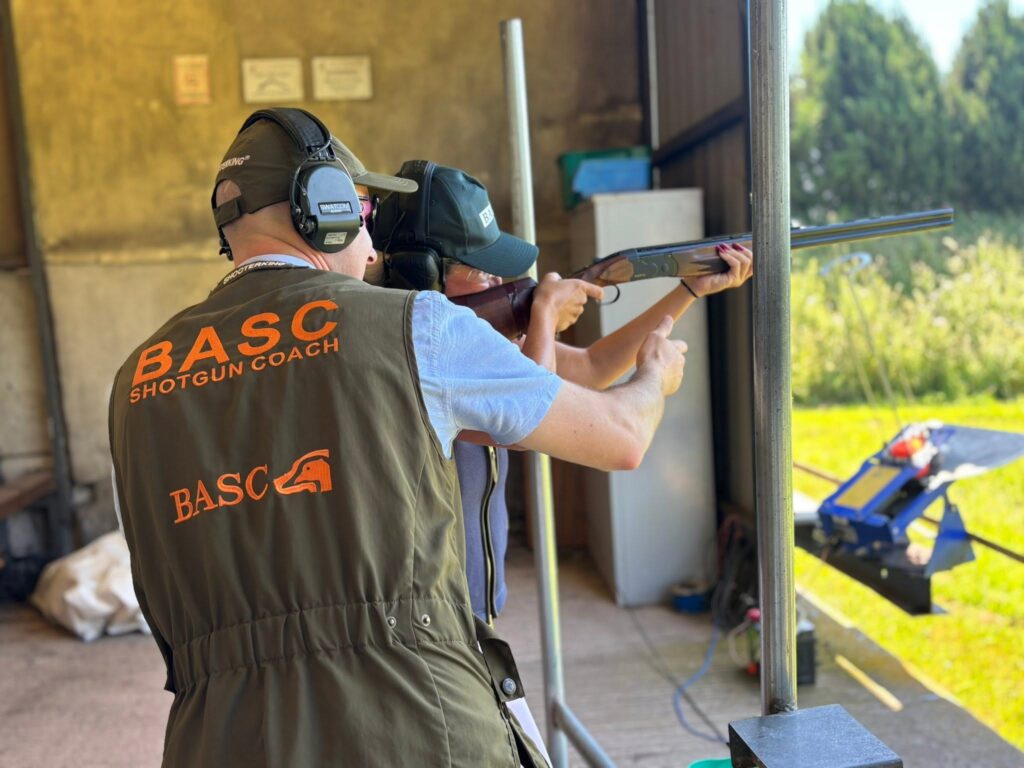
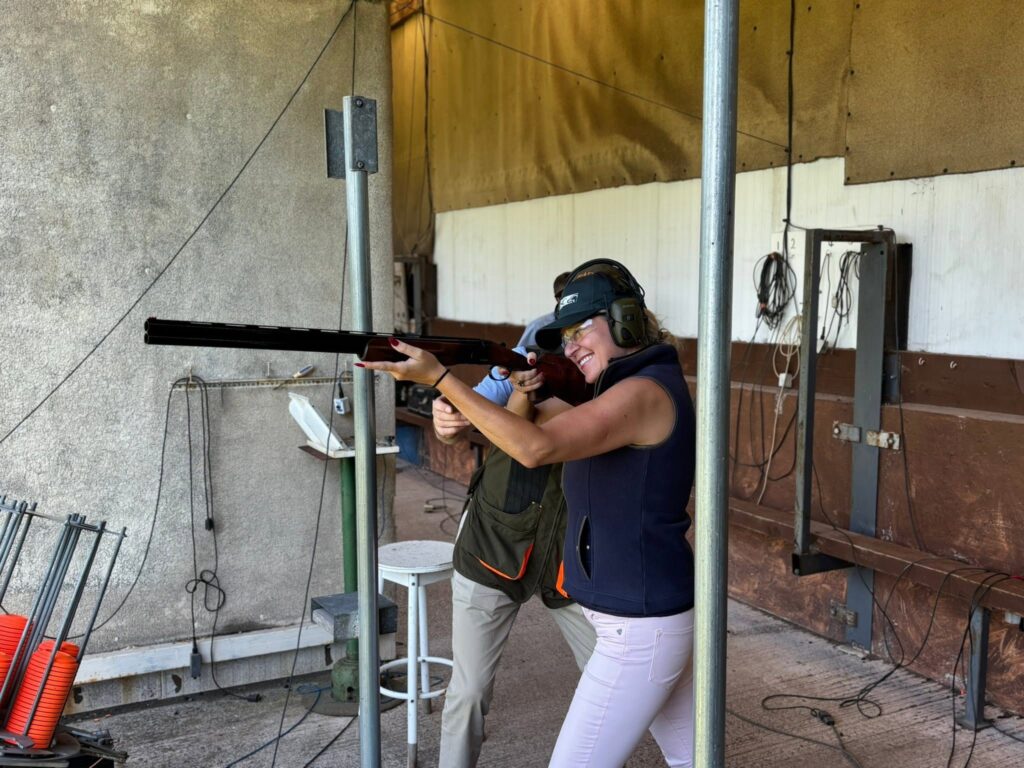
Laura Anne Jones MS, Shadow Minister for Food, Farming and Rural Affairs, shared her opinion following a visit to Keepers Lodge Farm near Chepstow to enjoy a session of clay pigeon shooting.
Following her visit, which took place along with pro-hunting British Association for Shooting and Conservation Wales, she wrote: “It was wonderful to meet with BASC – The British Association for Shooting and Conservation Wales in Monmouthshire today, and not only do some clay pigeon shooting, which I love, but to also talk about and acknowledge that shooting is an integral part of the cultural, economic and environmental fabric in Wales, that contributes £190 million annually to the Welsh economy every year and supports approximately 3,000 jobs.
“Shooting activities support tourism and hospitality businesses throughout Wales all year around – an economic lifeline for some of our rural communities in the Winter months.
“In addition, the management practices associated with shooting play a pivotal role in protecting ecosystems and helping wildlife to recover and thrive. Shooting and its associated habitat creation and management provided £26.8 million of benefit through carbon sequestration, £1.2 million in public health benefits, £15.1 million in recreational value for those involved in shooting and the wider public, and £4.2 million in food, farming and forestry value for the country.
“In Reform UK Wales we would like the new Welsh Government to recognise shootings invaluable contribution to rural life in Wales and to our environment, and also commit to establishing ’species action plans’ to protecting species, agricultural crops, forestry and native flora and fauna here.”
Past controversy
The former Conservative MS apologised previously for historical comments on social media about shooting “chavs” which were brought to light in 2021.
Laura Anne Jones MS was not an elected politician at the time she posted the comments on her Facebook page.
In the posts, Ms Jones said: “I would like to do a spot of Chav shooting” and added it is “a shame that isn’t legal.”
She also joked about shooting the then UK Labour leader, Ed Milliband, saying she would become the “perfect shot” if she had “ol’ Red Ed to aim at.”
In a statement shared by the BBC at the time, Ms Jones said: “I apologise for this post that was made on my personal Facebook page nearly 10 years ago.
“I do not condone the use of violence in any form, and my flippant use of language was unacceptable and inappropriate, which I deeply regret.
“They do not represent me, or my views, and I’m very sorry for any offence I have caused.”
Jones also made headlines in 2025, when she was suspended from the Welsh Parliament for 14 days without pay after being found to have breached multiple elements of the Senedd’s code of conduct, including using a racial slur.
The watchdog concluded that Jones had brought the Senedd into disrepute and failed to uphold expected standards of leadership, conduct, and non-discrimination.
Animal welfare issues
Millions of game birds are released into the UK countryside every year – with government figures showing nearly 50 million non-native pheasants are freed every year simply so they can be shot.
Multiple investigations by wildlife protection charities have found that birds of prey (also known as raptors) across the UK are still being illegally shot, trapped, and poisoned often on land managed for gamebird shooting despite legal protections. These crimes threaten some of our rarest and most vulnerable species, like Golden Eagles and Hen Harriers.
According to the League Against Cruel Sports, investigations, undercover filming, scientific research and economic analysis have all revealed that the perceptions of commercial ‘game’ bird shooting in the UK are deceptive. The financial benefit to the economy is exaggerated, whilst animal welfare is compromised, and our environment and landscape are put at risk.
In Wales, it is estimated that between 800,000 and 2.3 million non-native pheasants and partridges
are released into the countryside annually. Many of these ‘gamebirds’ are bred on an industrial scale
in intensive units made up of raised, battery-style cages constructed with metal walls and wire mesh
floors and roofs.
The League share: “The industrial scale breeding of pheasants and partridges produces a lot of waste, odour and noise. This waste attracts flies and rats, as well as contaminating local water sources and the soil in the areas that they are released.
“The total biomass of these released captive-reared birds is greater than all of the wild UK birds combined. The large number of these birds released into the UK countryside has shown to influence native wildlife. Pheasants will prey on invertebrates, adders, and other reptiles, which has been shown to decrease their numbers.
“In order to reduce predation on these non-native game birds, British wildlife such as birds of prey, crows, and foxes are persecuted to manage game bird numbers.
“Gamekeepers will also use rat poisons to target rats, but this will also affect the local populations of wood mice, shrews, and voles.”
Pheasants and partridges released for shooting often come from breeding birds confined to metal cages. This raises several animal welfare concerns as the birds are exposed to the elements, are unable to escape attack from those they’re caged with, suffer from injuries whilst trying to escape, and suffer from stress.
Additionally, ‘sub-standard’ chicks and eggs are ground to death in a macerator as they are not considered useful.
Only around one third of released pheasants and partridges are actually shot, and many of these are not killed outright, leaving them struggling to survive with their injuries. As these birds have been farmed, those that are not shot are at risk of being hit by cars, killed by predators, or dying of starvation or disease.
The League Against Cruel Sports argue that there are currently ‘low animal welfare standards’ involved in breeding the tens of millions of pheasants and partridges that are shot for sport every year in this country.
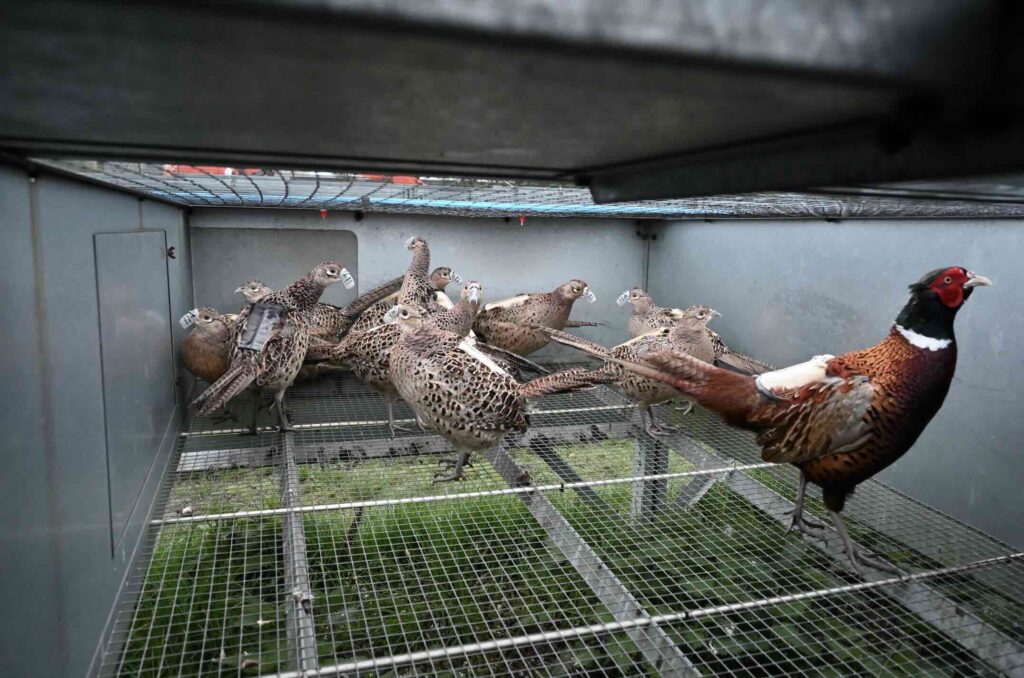
Breeding groups of pheasant, and pairs of red-legged partridge are kept in cages that are only the size of an A4 piece of paper and endure immense suffering, including stress and breeding-related injuries and death.
The League is lobbying the Senedd for caged game bird breeding to be made illegal, and hopes by showing law-makers how truly cramped and cruel the cages are when scaled up to human-size, they will understand the urgent need for these cages to be outlawed.
Emma Slawinski, the League’s Chief Executive, said: “These cages are tiny, they are bleak, and the birds suffer immensely. They are injured by attempting to fly out, and the females are injured by the male’s talons repeatedly pulling out her back feathers. All of this is so eggs can be produced in their tens of millions to provide birds that only exist to be shot.”
Emma added: “Currently no specific legislation exists to protect the breeding and rearing of game birds and while the Welsh Government’s outdated Code of Practice states that game birds should have access to enough space to avoid stress, the reality for breeding birds is that they suffer appallingly.
“It is time for change and it is time for the government to ban these cruel cages.”
Support our Nation today
For the price of a cup of coffee a month you can help us create an independent, not-for-profit, national news service for the people of Wales, by the people of Wales.
Get more trusted Welsh news
Choose Nation.Cymru as a preferred source in Google News to see more of our journalism.



Shooting birds is not integral to anything in the UK. Never has been, it has been made into a business that imports millions of birds every year just to blow them to bits and makes the land useful for that one endeavour killing and destroying UK wildlife for £££. Clay’s, crack on. Raptors vanish near estates, few are prosecuted.
What milage can she claim to visit this place?
Promoting a cruel blood sport shows how evil she is.
Credit to Aerosmith (almost) for this line. ‘LAJ has got a gun. Target groups had better run’. Shooting clay discs, ok, but with a double barrelled weapon, even with the specialised cartridges for that purpose, which can END LIFE. This self dehumanised hate unit displayed a dearth of basic human intelligence, no matter how long ago it was, by typing and sending and then attempting a reconnection to humanity by spewing a false apology just five years ago which contained a clear LIE, ‘Do not condone the use of violence in any form’ LIE. (The CV will say ‘Loves ending… Read more »
I’m not sure a person whose contempt for working class people is so strong that she thought joking about “chav shooting” was inappropriate should be allowed to pretend to represent our best interests. Maybe I’m old fashioned in that regard.
I must be old fashioned too then. The entire career story here is previous membership of a party dedicated to working directly against the interests of the people then defecting to a PLC dedicated to directly harming the lives of the people. Barely any difference but much more brazen and unashamed.
Nothing like showing your constituents that you have absolutely zero grasp on reality.
Presumably as part of their secretive Project 51 plans we’d get a right to bear arms and the BASC would become a chapter of the NRA.
Yes and then ‘chavs’ (that’s most of us in the opinion of the one individual in this story), selected named MPs to suit, pupils, their parents and teachers will then have something to worry about.