

Why Ireland’s presidency of the EU spells bad news for Welsh rejoiners
Luke James, Brussels
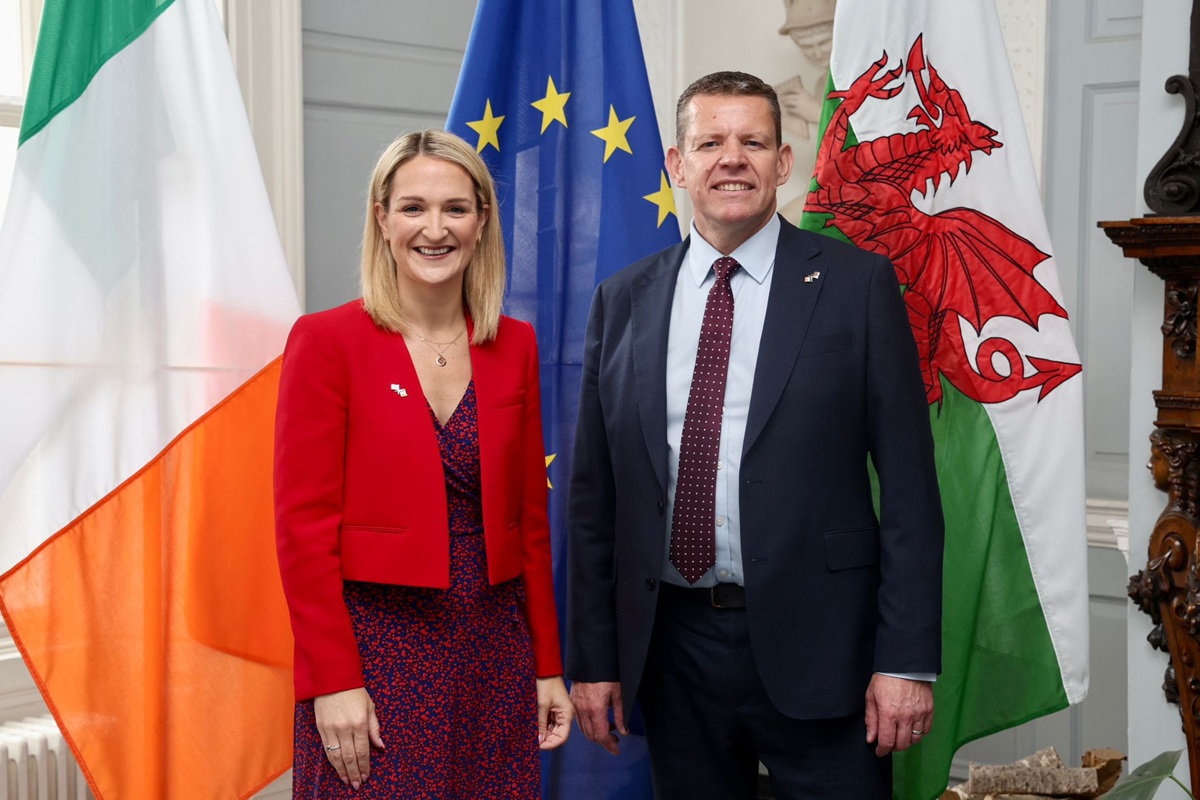
The day after the tenth anniversary of the Brexit referendum, the First Minister posted a photo of himself standing in front of the European Union flag with the Irish Foreign Minister.
The image sent a clear message about where Rhun ap Iorwerth sees Wales’ future and the visit to Dublin came just days before Ireland took on the presidency of the EU.
But many of the things Wales likes about the EU have been under attack since the last European elections and that looks set to intensify over their six month term.
Ireland’s eighth turn in the chair of the Council of the EU, and their first for thirteen years, comes at a difficult time. “Lots of people will be unhappy…we have to be ready for that,” an Irish diplomat told Politico as they took the reins.
That’s primarily because Ireland has been landed with responsibility for concluding negotiations on the EU’s next long-term term budget and nothing is more contentious than money.
The first draft of the budget proposed by the European Commission increased EU spending to over €2 trillion but included a real terms cut to the Cohesion policy dedicated to reducing economic disparities across the EU of which Wales was a major beneficiary.
Devolved governments would also have to fight harder for their share of the smaller pie because, as Nation.Cymru has previously reported, powers over how to use EU funding are being removed from devolved and local governments and centralised at member state level.
That replicates the controversial power grab carried out by the last Conservative UK Government after Brexit when decisions over regional aid spending, which were previously made by Welsh ministers, were centralised in London through the UK Shared Prosperity Fund.
Resistance has led to some concessions but the change looks set to reshape EU funding for at least the next seven year budget cycle and set a precedent that means Wales may now be in the same situation when it comes to regional aid whether we are in or out of the EU.
The debate during Ireland’s presidency will be whether Cohesion funding will shrink even further. Whereas the Commission draft included 218 billion in support for poorer regions, the Council’s last counteroffer cut that down by 25 billion.
The Council also wants to cut funding for the Horizon Europe research and innovation scheme, which Wales is still part of, by the same amount.
‘Honest broker’
Irish diplomats have promised to be an “honest broker” in negotiations but their centre-right coalition government have positioned themselves among a group of wealthier ‘frugal’ member states which support cuts to social spending.
Lined up against them are seventeen countries in the ‘Friends of Cohesion’ group who say it remains the EU policy with the most visible impact for EU citizens.
The debate is part of a shift away from the EU’s traditional priorities to economic competitiveness and defence.
In an article for Wales Online about his trip to Dublin, the First Minister wrote it is important for Wales to “keep pace with Europe’s world-leading standards in areas including environmental protection, public health and food standards.”
But a major part of the EU’s competitiveness agenda is a deregulation programme which is watering down those standards.
Through ten ‘Omnibus’ bills, a range of existing legislation – from environmental protections to food standards and consumer safety – is being rewritten without going through the full legislative process.
The Irish presidency is tasked with getting the ‘food and feed’ Omnibus, which notably weakens protections against pesticide use by farmers, over the line during the next six months.
The European Consumer Organisation recently joined with environmental NGOs to warn that the proposal “significantly weakens EU protections for human health, biodiversity, water quality, and food safety from hazardous pesticides.”
Competitiveness initiative
Ireland’s Commissioner, Michael McGrath, is also responsible for another controversial competitiveness initiative, called ‘EU Inc’ after the name of the venture capital group that proposed it, that would create a parallel EU-wide corporate regime alongside national systems.
The Commission says it will help companies scale up and compete globally, but experts have warned it will “fundamentally undermine the European social model” by incentivising corporate regime shopping and creating a race to the bottom.
One area on which the Welsh and Irish governments certainly agree is linguistic rights. Irish has been a fully official language of the EU since 2022 and their government supports the campaign to expand the number of official languages.
But Irish diplomats have already conceded it won’t be able to end the Council’s block on Catalan, Basque and Galician becoming official languages of the EU despite Spain having promised to fully fund any additional costs. It leaves little hope for Welsh if we rejoin as part of the UK.
Trade surplus
Whatever happens during the next six months, the EU remains a huge market with which Wales had a large trade surplus.
But Jacques Delors, the President of the Commission under which the Single Market came into being, recognised that “you don’t fall in love with a Common Market, you need something else.”
That something else was the idea he developed of a ‘social Europe’, which aimed to ensure that economic integration was matched by progress on workers’ rights, consumer protection and the environment. A major part of that was the creation of the Cohesion policy.
This remains the version of Europe to which the First Minister and the majority of supporters of rejoining the EU in Wales subscribe.
While many will no doubt look on with envy at the international leadership role that Ireland is taking, the policies that our Celtic cousins are overseeing will do them few favours.
Support our Nation today
For the price of a cup of coffee a month you can help us create an independent, not-for-profit, national news service for the people of Wales, by the people of Wales.
Get more trusted Welsh news
Choose Nation.Cymru as a preferred source in Google News to see more of our journalism.



Perhaps the Irish can sort out associate membership.
Thank you a detailed concise commentary on the challenges Europe faces. The UK has already lost or will in the future significantly lose protections for human health, biodiversity, water quality, and food safety as its regulation is poor look at the water industry and also infrastructure and energy costs compared to Europe, not to mention health networks and the safety nets against child poverty. Europe is rejecting the kind of AI promoted by Palantir, it uses immigration to build economies and bring in labour and skilled talent recognising aging populations cannot assist but need to be cared for. Europe… Read more »