


A bus is no solution for Wales’ ruinous north south connectivity
Stephen Price
Usually, thank the Welsh gods, the vast majority of my opinion pieces to date have landed well with Welsh audiences, with two notable exceptions – one daring to find fault with Wales’ chapels which were founded and paid for by Welsh communities being sold to escapees to the country to gain a new life as grand post-Brexit chateaus, and another where I called for an end to the use of north Wales and south Wales.
For one, I’m also a bit bored of the ‘south Wales Welsh’ ‘north Wales Welsh’ conversations too – it’s the same language with a spot of beautiful variation between different accents and dialects, in the same way any other language works, but I digress.
Reading the south Wales room only, I hadn’t counted on a very vocal contingent from the north who seemed very anti-the idea.
Perhaps missing the point, while shouting out about how Cardiff/the south gets everything and how north Wales is ‘better’, I got the message loud and clear – there is most certainly a divide, and there is most certainly resentment.
There was also much resentment from the ‘forgotten’ folk of mid-Wales – most of whom seem to reflect rural Wales’ population exchange, but I’m going off on a different tangent there again…
With a new Government at the helm, however, and with better representation from all corners of Wales in the Senedd than ever before (geographically that is), hot on the agenda is, naturally, better connectivity between the two worlds.
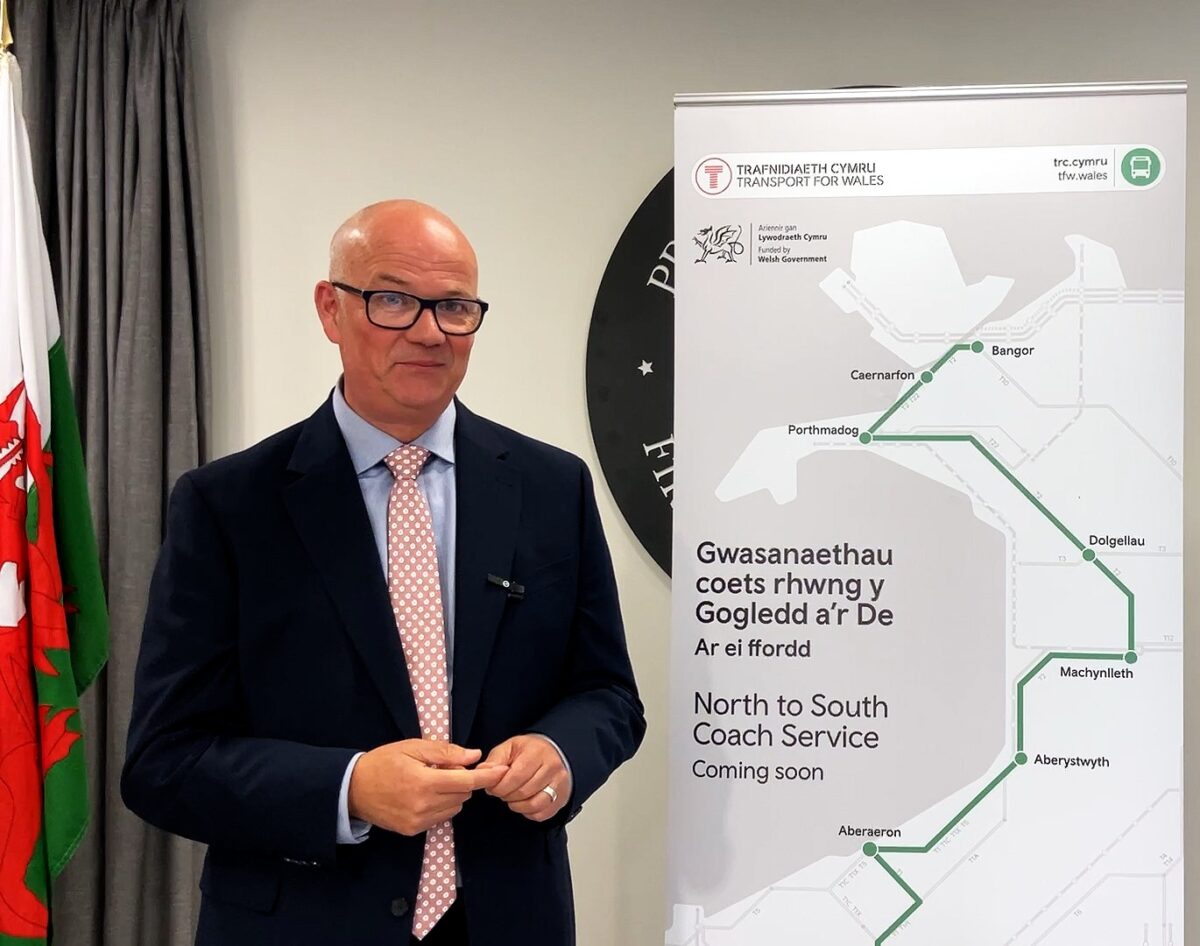
In an announcement to the press on 30 June, the prayers of a handful of folk I have yet to encounter were answered with the news that a new coach service linking (a very particular take on) north and south Wales will launch this autumn and is expected to cut journey times by more than an hour.
The long-distance coach will operate daily between Bangor and Carmarthen, linking communities along the west coast. The Welsh Government said the service would improve access to jobs, education, healthcare and tourism.
The service will stop at Bangor Rail Station, Caernarfon, Porthmadog Rail Station, Dolgellau (Eldon Square), Machynlleth, Aberystwyth University, Aberystwyth Bus Station, Aberaeron and Carmarthen Rail Station.
Notably, however, it’s not really doing what people want is it?
Cardiff.. Wrexham.. Swansea.. It’s another connection or two for those.
Deputy Transport Minister, Mark Hooper said: “We promised in our 100-day plan that we would prepare to launch a new coach service linking the north of Wales with the south of Wales and I’m delighted to confirm that plans are well underway to introduce this service in the autumn.
“For decades, many rural communities have been ill-served by public transport, but this new coach service is the first step in improving connectivity between the north and the south of Wales.
“The service will connect key regional centres, running alongside and enhancing existing services, including TrawsCymru, the rural bus network, and Fflecsi to deliver an integrated, multi-modal transport network across Wales.”
As well as improving connectivity the service will also open-up sustainable tourism to destinations, including Eryri National Park, the Llŷn Peninsula and Cardigan Bay, while providing a low-carbon alternative to the car.
A £2m investment has been confirmed in the Supplementary Budget which will cover the cost of running the service for one year, developing an online booking system and promotion around the service.
Eight coaches have already been purchased to run the service.
Transport for Wales will use the coming months to develop the service in line with the wider ‘T Network’ – an integrated transport network for Wales.
Lee Robinson, Executive Director for Regional Transport & Integration, said: “This new coach service is the result of a huge amount of work by teams across Transport for Wales, working closely with partners and drawing on insight from our Network North Wales programme to design a service that truly meets the needs of communities.
“By linking key towns and communities along the west coast, we’re creating faster, more reliable connections for work, education and leisure.
“The new service is a key step in building the T Network, Welsh Government’s vision for a fully integrated public transport system for Wales, strengthening the TrawsCymru network, helping to deliver a more joined-up, multi-modal offer and making it easier for people to travel sustainably with seamless connections to rail and local bus services.”
Funding for this service was announced in the First Supplementary Budget last week, alongside £8m for extending the £1 bus fare for all young people aged 5-21 years.
This funding will extend the scheme for a further seven months allowing more younger people to access cheaper bus fares until 31 March 2027.
‘Bus what, you say?’
Back to reality, most of us aren’t using the bus. We haven’t generally wanted to use the bus since our school days (but judging by queues of cars outside schools nowadays, even the kids are done), and little can be done to change that.
I’m slightly too old to have caught The Inbetweeners when it first aired, but even I know their affectionate term for those who ride the bus.

Looking back to my post-school days of part time retail jobs while at university, I’ve blocked out memories of circulars taking the long route to drop Mrs Jones off at the top of the estate, or sitting next to someone’s Turin shroud style hair grease imprint next to me on the window.
A recent trip to Sheffield to see a friend saw me back on the bus again, though – in the pouring rain, crowded out with school kids, pensioners and *how shall I put this* – those with a penchant for an early drink of a morn’.
Thick wet air, condensation, dripping brollies, phone notifications, music on speakerphones and a distinct feeling that this is not exactly aspirational.
For those who need to use the bus, this new west Walian service is perhaps perfect – but I can’t help but wonder who will be taking the full journey ‘on the reg’.
Beyond the headlines, it’s not even a sticking plaster for those of us who want to see better connectivity and community between Wales’ north, south, east and west.
So what do we need?
Road and rail
As penalised as we might feel every time we get in the car, for most of us in rural Wales it’s the only option. For now.
I’ve driven ‘up north’ in Wales plenty of times, but my favourite journey by far was when taking a holiday in sunny Llandudno via the train – enjoying the spoils of the line all the way across to Ynys Môn.
Compared to the arduous drive through Builth, Rhayader and beyond, it was quick, convenient and not too pricey all in all.
It did, however, involve a detour into England – make of that what you will.
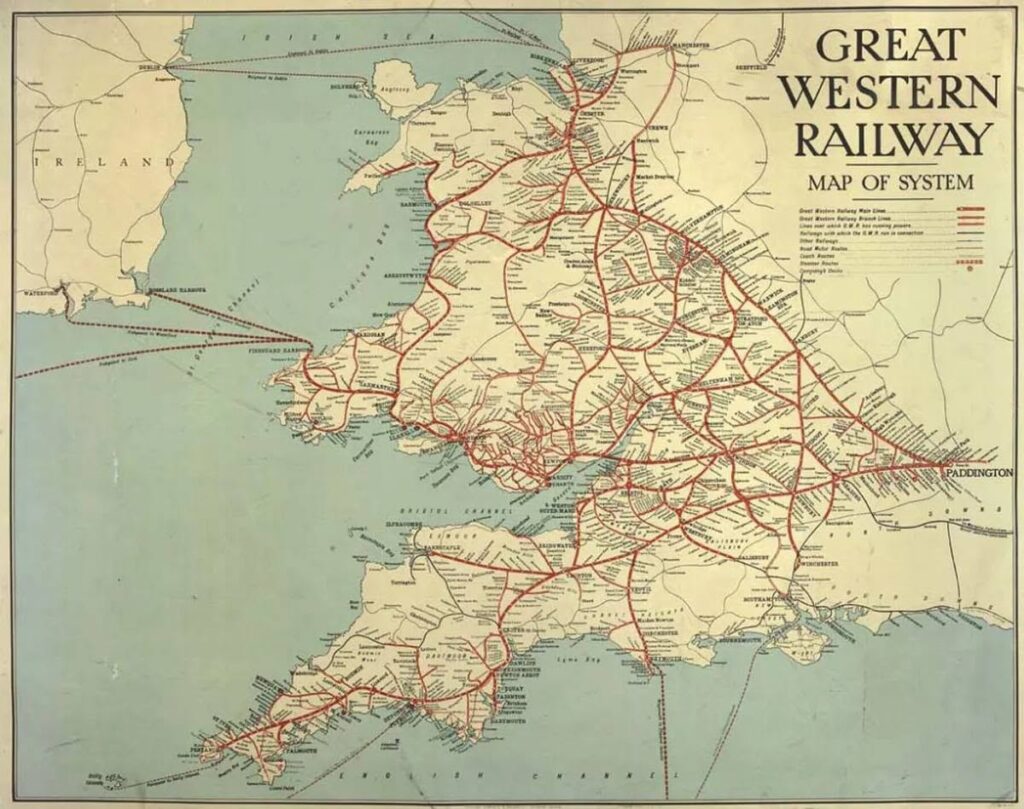
Looking at the map of Wales’ railway lines in the good ol’ days before Beeching’s cuts, one can only wonder at how easy, and how beautiful even, a commute to work or play might be today if things had been done differently, and with our nation not another in mind.
Compare and contrast how things look today.
With an ageing population, shamefully inadequate services for both bus and trains for anyone who doesn’t live in a major hub, and reliability that simply wouldn’t wash anywhere else but here, what are we to do?
We drive.
Simply looking at my own square mile on the outskirts of Abergavenny, where NHS services have been decimated and we’ve now got an out-of-town hospital near Cwmbran instead – a bus isn’t an option in a life or death situation or, for anyone with sense or finances, any situation.
A train? Of course not. The car is here to stay.
And if I’d like to hop on the train to Aberystwyth at present? A ‘little’ detour to Shrewsbury it is.
The likelihood of road improvements north to south is slim at present (we might need independence for that), and also isn’t going to go down well either, so what are we left with?
We’re left with having to make the case to reinstate a non-extractive railway system that benefits Wales as it stands today – a wider approach than the admirable years-long campaign from Traws Link Cymru and others.
In September 2025, Plaid Cymru renewed calls to devolve rail infrastructure to Wales, in line with Scotland and northern Ireland, following the release of statistics showing that Wales has the highest train cancellation rates of all UK nations.
A Plaid Cymru MS attributed our nation’s high rate of cancellation to the historic underinvestment of Welsh railways, over ‘decades of consecutive UK Governments, both red and blue’.
Several different sources, including the Welsh and UK Government, have admitted an underinvestment of several billion pounds into Welsh railway enhancements.
Plaid Cymru’s transport spokesperson, Peredur Owen Griffiths said that Wales had been underinvested in ‘for decades, without even mentioning the £4billion from HS2’.
Mr Owen Griffiths went on to say that Welsh railways would never operate as effectively as the people of Wales deserve, until powers over rail infrastructure were devolved to Wales.
Plaid Cymru transport spokesperson, Peredur Owen Griffiths MS, said: “These statistics will come as a disappointment, but not as a surprise to the thousands of people in Wales that rely on our trains here in Wales. Too many of them have stories of cancelled trains and days ruined.
“The UK Government should hang their heads in shame about the dire state of Welsh railways. The connection between the billions of pounds of historic underinvestment, of the lack of electrified railways, and the sky-high cancellation rate is as clear as day.
“Despite the obvious impact the UK Government’s snubbing of Welsh infrastructure has on our railway services, they continue to deny us of the £4billion we’re owed from HS2, and won’t even start to undo the damage of underinvestment in decades gone by.
“The powers over rail infrastructure must be devolved to Wales – the UK Government has shown itself incapable of investing adequately in Wales, and it’s time we were allowed to do it ourselves.
“Both Tory and Labour Governments have kept this scandal going, proving that all the Westminster parties don’t care about Wales. Only Plaid Cymru are serious about investing in Welsh communities to improve the services available to the people of Wales.”
“We could revolutionise our railway and transport systems”
As part of their manifesto, Plaid Cymru wrote: “We believe that rail infrastructure should be devolved to Wales, as it is in Scotland and Northern Ireland, allowing rail infrastructure planning for Wales to be decided in Wales.
“Only 1% of UK Government capital spend is on railways in Wales, reflecting both current and historical underspend. While London and major cities in Scotland were connected by electrified railway more than fifty years ago, it is only in the past decade that Wales has even had a single mile of electrified track.
“With that £4,000,000,000 additional funding, we could revolutionise our railway and transport systems, including properly connecting north and south Wales for the first time within Wales, reopening major railway lines closed under Beeching, electrifying the North Wales Main Line, improving existing railway services, and increasing and improving services west of Swansea.
“To do that, Wales needs an ambitious travel plan that also considers public transport connections in the south Wales Valleys and other areas of Wales which do not have existing rail connections – including by use of trams or light rail.”
Before their seats at the Senedd were even warm, Plaid made in-roads with Starmer to call for a better, fairer deal for Wales, but with Westminster in yet another self-induced chaotic phase, they’ll have to wait before they can make another call to beg for the basics from Andy Burnham.
Thankfully, Plaid Cymru themselves know that a ride ‘ar y bws’ isn’t where things end – or for most of us, even where it begins.
Dr Beeching’s story might not be over yet.
Support our Nation today
For the price of a cup of coffee a month you can help us create an independent, not-for-profit, national news service for the people of Wales, by the people of Wales.
Get more trusted Welsh news
Choose Nation.Cymru as a preferred source in Google News to see more of our journalism.



Excellent article and I quite agree.
Well the new bus service is welcome, but really will probably be more useful to tourists. I hardly think it will be hourly to help people access work more easily.
University students, Bangor Aberystwyth and Trinity St Davids, Caermarthen. Not just tourists.
While I agree with the thrust of the argument please do not run buses down, there has not been proper investment in this mode of transport in decades. TfW has been making some progress just by branding, some new more modern vehicles, the electric buses are a step up in comfort for a passenger and ticketing. Frequency of service is probably one of the more important aspects for potential passengers. The new coach service is important for many people having used the T buses and regularly seen the numbers changing buses in Eldon Sq, a number with luggage. But also… Read more »
The answer to those who argue that there’s no justification reopening the Carmarthen to Bangor railway line because there’s no demand for it is an express coach service playing this route that turns out to be wildly and unexpectedly popular.
*plying
And the Carmarthen line, so you could get a train from Aberystwyth to Swansea and Cardiff. It’s a poor state of affairs that people can no longer do this. It’s now a long and expensive journey.
If the new express coach service is popular it’ll help make the case to restore the railway. So don’t forget to give it a try in the autumn.
How frequently does that express coach run? Because it seems somewhat successive to invest in a train for a grand total of about 50 people each way (so one coach going out, one coach coming in). For the investment to work (on a public scale) you would be looking at getting rid of say six coaches a day minimum. Which, could be entirely the situation and if so, I’d support said train line. Transport is a devolved matter so if there’s enough interest between the two regions and anything in between, it could be re-opened… fair warning, taxes would need… Read more »
It hasn’t launched yet and no schedule has been confirmed but it could be 8 services a day in each direction. But your assessment of demand for rail link based purely on bus or coach usage isn’t appropriate because of induced demand.
Even if for the sake of argument the £4 billion were forthcoming. Spending it on a north south rail connection would be a terrible use of the money. Would probably cost double that and take more than a decade to take barely an hour off a journey that most people will never take.
The Carmarthen to Aberystwyth leg was costed at £0.8bn in 2018, and would create new journey opportunities including a direct connection from London to Aberystwyth and Lampeter, allowing the latter to become a new focus for west Wales economic development.
You’re discounting the chicken and egg factor. Travel eastward is the general thrust because conditions are in place making it easier. Habits form, and the cycle perpetuates.
It’s the same flawed logic as viewing London as some inherent economic miracle as though it doesn’t have everything thrown at it in terms of investment and transport connections that produce such results, to be furthered by an equivalent ‘virtuous’ circle.
Like only watering the greenest part of your garden and wondering why the rest is barren.
I have traveled from Cardiff to Anglesey, I can assure you a direct route would be much much easier. The current direct road route basically dissolves into farm tracks. With that said, North Wales and South Wales needs many more connections. If Wales is going to go independent (signs are increasingly positive) it is going to need that infrastructure pronto, not least because it will give Powys a much needed economic boost. Whether that’s buses, better roads, trains, tunnels, planes I am not overly concerned but at this point it would be quicker for me to get on a boat… Read more »
The A470 needs incrementally dualling by each council but a brand new rail link is for the birds. It’s more realistic to move the border east to incorporate the existing line.
Any railway building needs to address future needs and not what we had in the mid-1960s. Milk churns and 30mph trains won’t cut it. Someone really needs to ask what connectivity we want, and then deliver it, rather than reflexively calling to reinstate a previous set-up that has disappeared. All transport is personal – what you want may differ to what I want. But we need to know where the real endpoints need to be. Hint: it’s not Carmarthen – but it might be Glangwili. Same for Swansea/Morriston Hospital. Cardiff centre will always be a target – but how about… Read more »
You missed the part about there being THREE universities along this corridor then? Everyone else seems to in these sorts of discussions for some unknown reason.
No, not at all. But Bangor, Aberystwyth and Carmarthen all have rail connections eastwards – where most students will be coming to/from. I’m not sure there’ll be huge student traffic on a north-south train – a coach might be more successful though, as it’s much cheaper generally.
It’s not just about getting undergrads to their 9am lectures. That’s not why they’re spending billions of our money on a rail link between Cambridge and Oxford. It’s also about fostering collaborations between universities and enterprise to generate economic growth. A direct rail link between Aberystwyth and Cardiff via all the campuses in between is a foundation on which to build a Welsh “Golden Triangle”.
See my other comment about chickens and eggs.
2.
No, three – Bangor, Aber and Lampeter. A quick Google would have saved you embarrassing yourself here.
I tend to agree and feel that people have very idealised thoughts of the Carmarthen-Aberystwyth railway, which was single track, twisty and very slow. Although it would theoretically be possible to reinstate it, as per the very successful Borders Railway in Scotland, it would never be an “express” route, even with modern diesel units.
It doesn’t need to be an express route. It just needs to be faster, more reliable and more comfortable than the bus.
That requires vision and delivery of timescales in the order of decades or half centuries. Electoral cycles happen within 5 years so….
It’s going to take years to connect north and south Wales properly – and that can only begin in earnest after independence. The UK government will continue to under invest, we all know that. Divide and conquer is still the motto and it does not want to spend on an area outside of England. So long as the tracks, pipes and cables all run east out of Wales – the UK government doesn’t give a toss about how connected our country is. All we can do before independence is start acting more like a united country and stop this north/south… Read more »
I’ve been many times on the north to south Wales train. It’s a good service, it of course it could be better and cheaper but not going through England (the Welsh marches) doesn’t make any sense. Mind I do get the felling there are a few cymraegs bach’s (apologies for the Welsh I don’t even know if such an expression even exists) who would advocate passport control just past Abergavenny.
It makes a lot of sense if you’re travelling from Aberystwyth to Swansea or Holyhead. And the Common Travel Area exists.
I must admit not reopening the Carmarthen Aberystwyth line doesn’t make sense to me
The coach service is a start. If it’s popular it’ll help justify better transport links that could eventually result in a rail link.
Not only that, it’s taken less than two years to deliver. Rail takes a lot longer.
Yes, but, a bus….
That map shows what unspeakable acts of vandalism have been inflicted on our railways. We need to rebuild as much as possible. Every town of 10k plus population should have a connection as a first priority in infrastructure investment, barring insurmountable geographical constraints. The next phase over the coming decades should be to extend the provision to as many settlements of 5k people plus.
I’d have a hard block on new housing eatates over 100 homes without a railway connection.
The sanctimonious soundbite-spitters at once handwring over the ‘climate emergency’ but put the kibosh on rail reopening schemes (even relatively modest ones like reopening from Southampton to Hythe, a route already in situ requiring some work to bring up to passenger carrying standards), or see to it they’re an absolute bureaucratic nightmare to deliver. A pox on them all!
Most places in Cymru of 10,000 population or greater are already on rail route
Caernarfon, Porthcawl, Tredegar, Gorseinon, Caerleon, Mold and Blackwood are some big gaps. This list could be expanded to include settlements that would expand to over 10k with a railway link.
I think this is a step in the right direction. A lot of comments here correctly reflecting this service would potentially be used by students, considering that Carmarthen, Lampeter, Aberystwyth and Bangor all have a significant student population. The issue is these areas are very isolated, and there’s not much to keep young people around. Once students graduate, they head off to England to find better job opportunities, and the same goes for a lot of local young people. That leads to a brain drain which Wales seriously needs to address as well as the detriment to the Welsh language.… Read more »
The topography of Wales is somewhat like Switzerland. The Swiss view their rail network as a primary engine of economic productivity, innovation, and national identity. We need that sort of holistic thinking in Wales.
I… don’t quite agree with the premise, but I agree with the underlying principle. Trains are designed to carry masses of people… well Wales doesn’t exactly have said masses of people. This is where buses fit in, but the infrastructure is extremely poorly designed. Take the South Wales Valleys. Getting from say Maerdy to Aberdare takes a stupid amount of time considering the distance. Yet… no one, but no one has thought to just tunnel through the mountain. Now I appreciate these are two relatively small areas and honestly the traffic from Aberdare to Maerdy is minimal (though is this… Read more »
Most of your complaints are solved by bus regulation that’s already happening so services run where and when they’re needed, not only where’s profitable for private firms. And the other answer, also happening, is metro integration of bus and rail plus combined ticketing. More generally, trains aren’t just for mass transit in dense urban areas, they offer advantages over bus that attracts more onto public transport that helps offset the higher per mile cost of rail. The ideal network has both, with buses feeding into a rail backbone.