


Getting to the heart of Delilah – Wales’ most problematic song
Daniel Newman
Murder ballads are songs about death and killing. These emotive topics – at once universal and particular – occupy artists from place to place, and across generation to generation. And no wonder. These dark and unpleasant topics of mortality challenge us, titillate us, compel us – even when we don’t want them to.
Ballads are a type of narrative folk song, which emerged in Europe in the late Middle Ages. Much of the surviving music from this era was preserved in notation as a matter of status for the higher economic classes and prominent religious groups. In contrast, ballads can be seen as having popular origins, born from their communal role and lasting due to their place as a popular cultural form for the masses. We can use them as a historical resource to understand how everyday people saw their world.
Such ballads are a means of storytelling in song. These stories include fables, histories, jokes, legends and romance. But ballads tended to focus on the sensational and salacious so had unrepresentative levels of crime within them, not least crimes that would attract wider attention such as those involving women.
These murder ballads form a significant subset of the ballad tradition that teach us about the place of death and killing in society.
Murder ballads tend to be rich in moralising. They often revolve around a sense of right and wrong, there will be lessons that must be learnt and consequences that need to be faced. Here we mean the morality of an eye for an eye: vengeance. We may get a narrator feeling they have been wronged and setting out to balance the cosmic order or narration of an action leading to its inevitable result – a sense of natural justice.
A gendered reading of murder ballads reveals that the most common moral lesson we find is a deeply bigoted one writ through with misogynistic violence. The murder ballad has long held femicide as a central concern where the listener is invited to sympathise with the man who murders a woman because she has been unfaithful.
Women appear objectified in these songs, and are plot devices to be used and abused at will. Murder ballads will often follow the murdered sweetheart pattern, where a young woman is murdered by her male lover for some perceived deviation form what he expects of her – evidenced in a wide array of traditional ballads such as Down in the Willow Garden, The Knoxville Girl and On the Banks of the Ohio.
But murder ballads have continued to be written into the era of popular music as stories of death and killing still fascinate songwriters. For a more recent example of a bigoted modern murder ballad, we can look at Delilah.

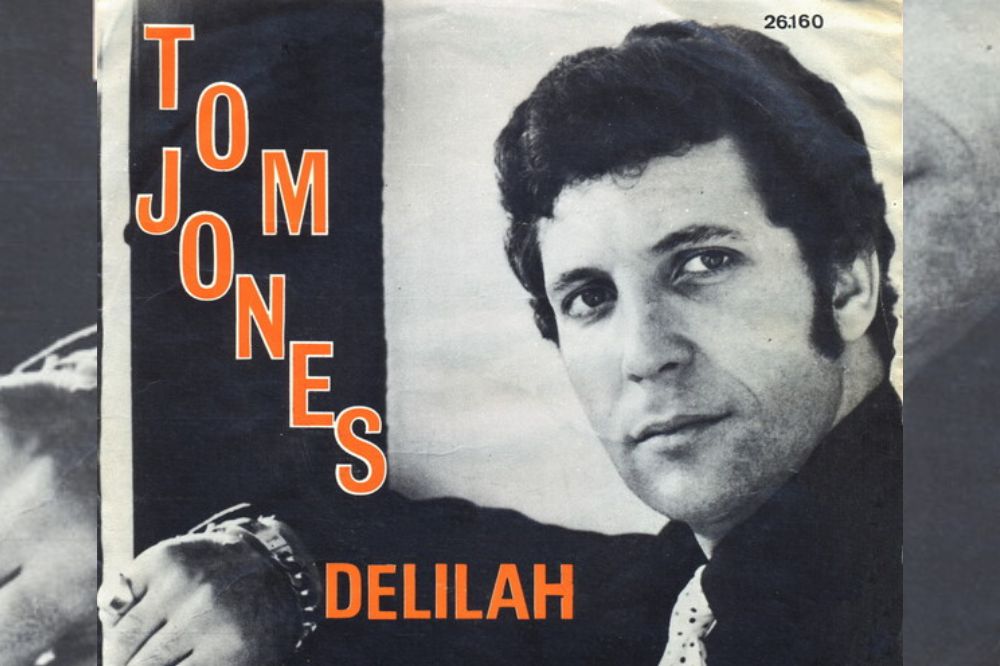
First released as a single by Tom Jones in 1968, Delilah follows the trope of the promiscuous woman and the man driven by passion to kill her. Provocation forms a major element of it. While the story has no explicit link to the Old Testament tale of Samson and Delilah, both are grounded in an ostensibly innocent man being betrayed by a cunning woman who took advantage of him. The name Delilah has become synonymous with supposed female treachery, and the song makes full use of this association.
The song was successful – it went top 10 in the UK, top 20 in the US. It is one of the most well-known murder ballads we have and has taken on a life of its own in Wales for its role in sporting culture. While the singing of Hen Wlad Fy Nhadau before the rugby is a big deal, Delilah has also traditionally been played also taking on status as a secondary, rugby, anthem.
However, in the week before the Six Nations started in 2023, the news broke that Delilah would not form part of the official festivities – neither the recording being aired nor the guest choirs singing it on the pitch. The decision got sucked into the reactionary culture wars that have grown to consume public life in the UK over the decade.
Every major news outlet covered the story and consistently used the word “ban” in their headlines. Jones himself was angry about the decision and hit out at a gig later that year in Cardiff Castle. Before playing Delilah, he wound up the crowd, ‘Who was the man who didn’t want us to sing Delilah? You can’t stop us singing Delilah.’

The dropping of Delilah did not happen suddenly. The issue was raised in 2014 by Dafydd Iwan, writer of Deliliah’s football equivalent, Yma O Hyd. He wanted to get people talking about whether they thought it appropriate that a song about femicide should be sung with such gusto at the national stadium. For Iwan, it ‘trivialises the idea of murdering a woman’. He sought to question what this says about Wales as a country, that a song rooted in gender-based violence has such an elevated standing in Welsh national identity. Iwan was criticised by Jones for taking the lyrics too literally and taking ‘the fun out of it’ by flagging the problematic themes.
The wider context for this debate can be found in long-standing associations between domestic violence and Wales matches. Incidents double on international rugby days, quadruple if Wales are beaten and multiply by eight if Wales lose to England. While Delilah is not responsible for such violence, the morally ambiguous stance it takes on gendered violence is an uncomfortable fit against such a background. Reflecting on the Welsh Rugby Union’s decision, police chiefs agreed that, ‘it’s time to sing something else’. However, that did not happen, with sections of the media stirring the issues as part of the moral panic around wokeness. And fans still sing the song at every international match.
What we have with Delilah, then, is a murder ballad of the most bigoted variety that has been elevated to a cherished status in Wales. Shored up by concerns over cancel culture, it endures despite increased awareness of the woman-hating detail of its lyrics and rugby’s associations with domestic violence. Murder ballads such as Delilah can be used to tell us how society understands death and killing – not only in the past when these ballads emerged but also today when some remain prominent in our national consciousness.
The inescapable fact remains – it will continue to be sung and it will continue to divide opinion.
In his new book, Law and Justice in Song, Daniel Newman explores Deliliah further – alongside many other murder ballads
Support our Nation today
For the price of a cup of coffee a month you can help us create an independent, not-for-profit, national news service for the people of Wales, by the people of Wales.



Banning it was a reaction, debatable but understandable. The point that’s missed is that it’s a rousing tune with an easily remembered chorus, a combination that is ideal for a crowd emotionally stirred.
I like singing it but I would never dream of hurting a female, or anyone else for that matter. It’s Simplistic to imagine it encourages DV.
Tom is a serial offender. The Green Green Grass of Home is also about a murderer.