

Is Wales a principality? No – and it never was one
On the weekend when plugging a story about the current parlous plight of Welsh rugby, Sunday Times’ chief sports writer David Walsh made the grave error of referring to Wales as a principality.
He must surely wish he hadn’t given the post on X was inundated with irate Welsh people setting him straight.
However, it is shocking to think that we are in 2026 and the uninformed and let’s be honest, ignorant, are still referring to our beautiful country as a principality.
You would think the chief sports writer at The Sunday Times of all people would not make such a schoolboy error.
Enjoy reading the comments on the X post below and then have a read of this wonderful piece from Nation Cymru founder Ifan Morgan Jones on why Wales was never a principality.
We’ll be sure to pass it on to David Walsh so he can educate himself.
Wales is a proud rugby nation lost in hurt and confusion. What now?
As Ospreys fans protest amid fears that club will close, former Wales players Alun Wyn Jones and Anthony Buchanan worry for game’s future in principality
By @DavidWalshST ⬇️
— Times Sport (@TimesSport) February 1, 2026
Ifan Morgan Jones
Is Wales a principality? No – and it never was.
Wales is often referred to as a principality in the media. And the fact that there is a Prince of Wales, and the national stadium is sponsored and named after the Principality Building Society, does rather encourage that interpretation.
But not only is Wales, as we know it today, not a principality, but it has never been one.
You may be already familiar with the argument that Wales is no longer a principality. It stopped being one, the argument goes, in the 16th century at the time of Henry VIII’s Laws in Wales Acts, when Wales was officially incorporated within the Kingdom of England.
This did reunite Wales as one unit and gave it a set border, and it was still referred to as a principality – as it is up to the present day.
However, it was not a principality as it wasn’t a territory run by a prince (there wasn’t even a Prince of Wales to run it between 1509 and 1608).
It was run by the same authority as the rest of the Kingdom of England – the King or Queen of England. And until the end of the 19th century, it had no form of ‘national’ institutions of its own.
What it did have was a Council of Wales and the Marches. This was a regional administrative body that operated out of Ludlow Castle.
But this council didn’t just cover what we now know as Wales but also, at various times, Shropshire, Herefordshire, Worcestershire, Cheshire and Gloucestershire, before being abolished in the 17th century.
Although its authority did cover the present-day Wales we know today, what this council definitely wasn’t was a prince governing a principality.
United
Between 1301 and 1536 however, something called the Principality of Wales did exist, which was a principality, as it was given to the first non-native Prince of Wales, the future Edward II, son of Edward I.
However, this Principality of Wales was not the Wales we know today. In practice, it was made up of parts of the north-west of the country, Ceredigion, the north of Carmarthenshire, and Flintshire, which at that time included parts of the present-day county of Wrexham.
The rest of Wales was divided up among various marcher lords.
But just because, for some two hundred years, what we now know as Wales had a principality as part of its territory, doesn’t mean that Wales was a principality. It had a principality, called the Principality of Wales, within it.
This principality didn’t have the same borders as present-day Wales and, if it was reimposed today, only about 700,000 of Wales 3.2m population would find themselves living within its borders.
You could argue that Wales was a united principality for those brief moments when various native Welsh princes held most of its territory.
But having one Tywysog Cymru was always more of a 13th-century policy than something that was actually realised.
In practice, those that declared themselves Tywysog Cymru depended on a patchwork quilt of other leaders up and down the country to defer to them, and this quilt never did quite cover the whole present-day body of the country from head to toe.
They also didn’t consider themselves mere princes subservient to a king as the translation of ‘Tywysog’ to ‘prince’ would suggest today. Tywysog (tywys = guide) meant leader.
Survivorship bias
We always have to be careful when looking back at the past that we don’t project our own modern understanding of what Wales is and the territory it covers back through history.
Both those who would like to consider Wales a Principality, and those who consider it a nation and country in its own right, would sometimes rather think that something called Wales with the exact present borders has always existed.
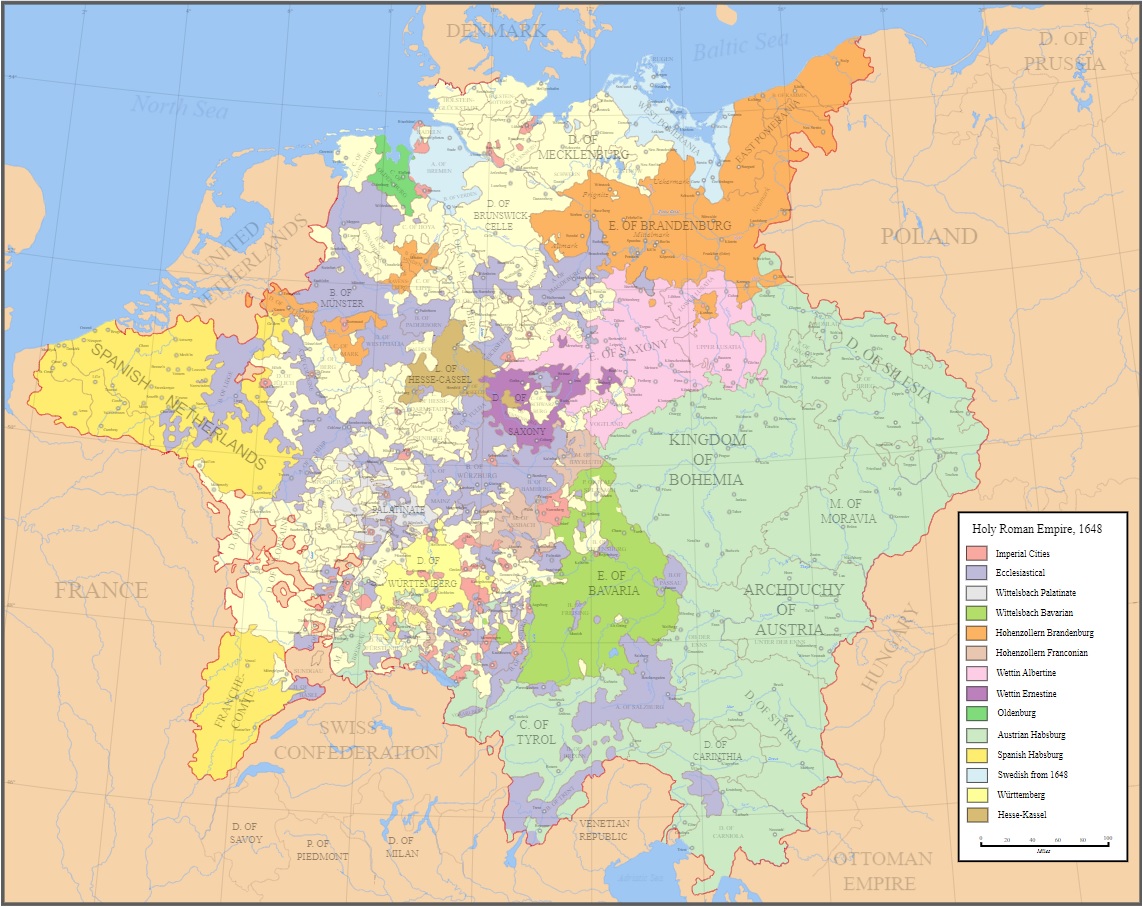
But that’s not the case for any modern country. If you look at any map of Europe from just a few hundred years ago you will see that the borders are very different. A 17th-century map of Germany illustrates this point quite well:
Going back to before the industrial revolution, people didn’t really think of themselves as belonging to a country in the way we think about countries in our own present day.
An illiterate people who rarely ventured beyond the gate at the end of the valley didn’t have as much of a sense as we do today of belonging to a nation of people, and the feudal lords were part of a supra-national elite that often didn’t speak the same language as the peasantry.
People did have a sense of belonging to a communion of other people – medieval poets did think of themselves at ‘y Cymry’, a people who were Welsh.
But it was a much hazier sense of national identity than we have had since the industrial revolution, where – as the recent dispute between Chester FC and the Welsh Government over Covid rules showed – we can measure our borders to the millimetre.
Going back before the early modern period, especially, it wasn’t entirely clear where borders stopped, and they kept moving as various medieval leaders won and lost territories.
There is also an element of survivorship bias when we look at the histories of present-day nations. We think that because a nation exists now it must have always existed or it must have been inevitable that it would exist.
In reality, the arbitrary lines on a map we recognise as countries or nations today are largely accidents of history and could have turned out any number of different ways.

Yma o hyd?
But this isn’t something to get defensive about – the important thing from Wales’ perspective isn’t whether Wales existed before – as a principality or a country – but the fact that it exists now.
Wales today has its own parliament, government, laws, national media, national museum, library, sports teams, and other institutions that make up a country.
It has also been recognised as a country by the International Organisation for Standardisation (ISO), meaning that it is also officially recognised as such by almost every other nation-state.
Wales, as we know it today, has an interesting and varied history that tells us a lot about where we’ve come from and where we’re going.
We can’t pretend that Wales was always united in the way it is now, or that its present shape was somehow predestined. Rather, we can take pride, perhaps, that a nation called Wales did emerge – against the odds – out of this difficult and fragmented history.
We’re not as much Yma o Hyd (still here) as something new made out of the past – and even today, we’re in a constant process of reinvention and re-creation.
The Wales we know today was never a Principality, and shouldn’t be referred to as such.
But it is a country – now – and it’s the now that matters, because we have it make it work.
Support our Nation today
For the price of a cup of coffee a month you can help us create an independent, not-for-profit, national news service for the people of Wales, by the people of Wales.



Thank you for this “explainer”.
Time the BS found a new name.
You are right. History is important but what’s more important is the here and now. Now we are and are recognised as such – a country. A country with it’s own fragmented history but a well established language, culture and identity. Regardless of the fact there is a seamless border between us and England – that identity is still strong and different to our neighbour. We should be proud of that, considering the odds against it.
Come clean and acknowledge that we are a colony, one of the last dirty words of history. Abused and exploited, a land that has suffered several rounds of extraction.
Wales is not a Principality because it is jointly ruled by the Senedd and Westminster Parliament – not by Prince. Indeed, Wales was officially recognized as a Country by the influential United Nations
“International Organisation for Standardisation” in December 2011.This Organisation (founded on 23/2/1947) is under the auspices of the United Nations and is composed of 165 UN states. Its HQ is in Geneva, Switzerland.
With both the Tories and Labour refusing to devolve, airport departure tax, refusing to devolve policing and the justice system, refusing a day off for St David’s Day, I feel sometimes more like a colony, than a country. If I’ve left any refusals out, please correct me.