

Remember the Heart of Wales?

Jane Eynon
Back in 2022 I was one of over 20,000 signatories to a petition to the Welsh Senedd calling for the Cambrian Mountains to be designated an Area of Outstanding Natural Beauty (AONB), a designation term that recently changed to ‘National Landscapes’.
As a native of Gower, Britain’s first-ever AONB designated such in 1956, I’ve always been acutely aware and deeply appreciative of the protection afforded by AONB status, which has largely preserved Gower from inappropriate development that would have disfigured it for ever.
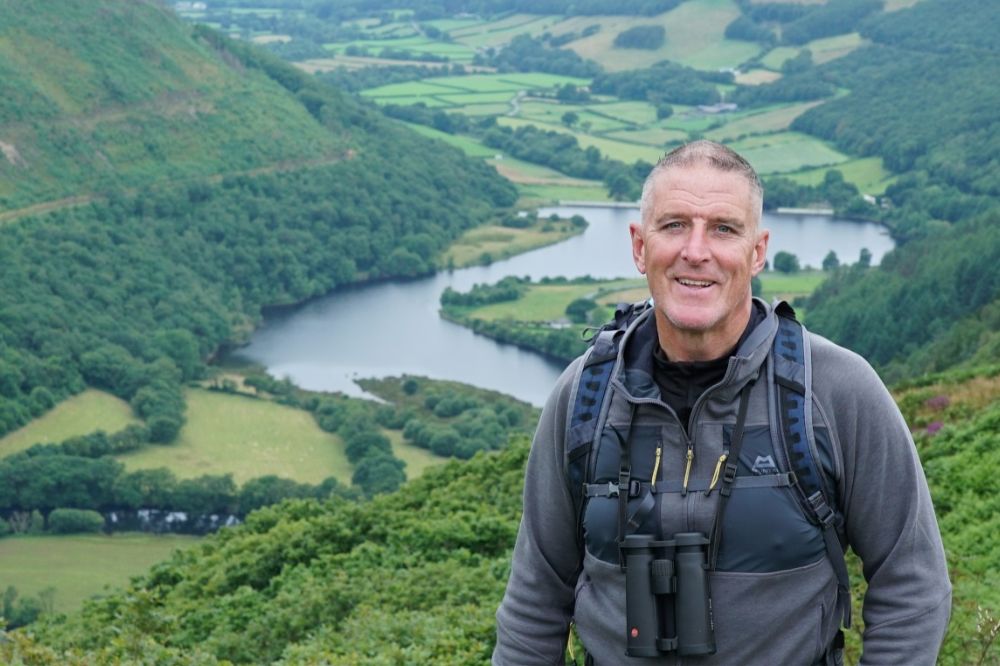
The campaign for AONB designation was run by the Cambrian Mountains Society and publicly supported by the likes of Iolo Williams, the naturalist and broadcaster, writer Neil Ansell, author of the wonderfully evocative Deep Country: Five Years in the Welsh Hills, and Sir Simon Jenkins, former Chair of the National Trust.
Describing the lack of protection given to the Cambrians as a tragedy, Jenkins remarked further that “nowhere in Britain better qualifies for AONB status as a matter of urgency than the Cambrians.”[1]
For those not familiar with the Cambrian Mountains—and relatively few people actually are—they form a rough trapezoid shape of uplands that runs right through the heart of Wales, from the tips of Ceredigion and Powys in the north to Carmarthenshire in the south, covering about 467 square miles in total.[2]
The eponymous railway, the Heart of Wales Line, traces its way up the south-eastern edge of the Cambrians, connecting Llandovery in the south with Llandrindod Wells further north. There are few settlements within the Cambrians; the mountains are instead mostly home to scattered isolated farmsteads and the range is criss-crossed by just a few roads: the A44 between Llangurig and Aberystwyth is the main artery while most of the other roads are single-track. The landscapes of the Cambrians include glaciated plateaux, blanket bog, heather moorland and lakes, with the uplands culminating in Pumlumon Fawr (752m) in the north. Gushing streams and rivers course through the wooded valleys below.
Wilderness
The Cambrians, or the Elenydd in Welsh, are the closest that Wales has to a wilderness. President of the Cambrian Mountains Society, Iolo Williams, whose documentary series The Last Wilderness of Wales was broadcast on BBC Wales in 2020, points out that “The Cambrians are the last true wild area of Wales, one of the last places in our land where you can truly lose yourself in nature.”[3]
The Last Wilderness of Wales explored the flora and fauna of the Cambrians, which feature fifteen ‘Priority Habitats’ included in the UK Biodiversity Action Plan and on the List of Habitats of Principal Importance in Wales. The Cambrians are also home to over fifty Sites of Special Scientific Interest (SSSIs) and at least seven Special Areas of Conservation.
These habitats host a variety of species in jeopardy, including the golden plover (nearly all of the Welsh population are now found in the Cambrian Mountains), black grouse, otter, the climbing corydalis weevil and several rare fungi and upland lake water plants (Cambrian Mountains Society). Neil Ansell underlines that the Cambrian Mountains “have their own range of specialist plant and insect species, as well as being a valuable home to our declining breeding waders, such as curlew, golden plover, and snipe.”[4]
The area, Ansell notes, “is also home to perhaps a greater range of birds of prey than anywhere else in Britain; perhaps the highest density of ravens and buzzards, good numbers of peregrines and merlins. And, of course, it is the remoteness of the area that preserved the red kite from being persecuted into extinction, and enabled it to be brought back from the brink.”[5] There are also pine martens and red squirrels, Mid Wales being home to one of only three significant red squirrel populations in the whole of Wales according to the Wildlife Trust of South West Wales.[6] This is but a small snapshot of the importance of the Cambrians in terms of habitats and species.[7]
Sensory experience
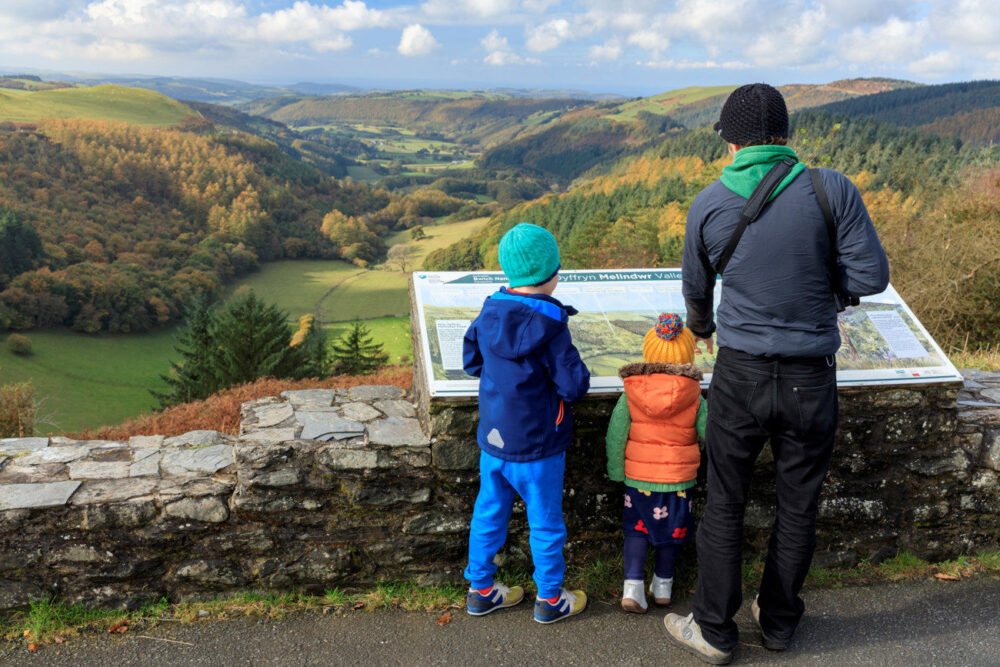
For us humans, the sensory experience afforded by the Cambrians is invaluable, with Natural Resources Wales lauding the area’s visual and sensory profile: “This extensive, windswept, upland area is notable for its sense of vast emptiness, on either side of gentler landscapes. It is not generally a landscape of steep, high peaks but more of a smooth and undulating, very exposed upland plateau, moulded by glaciation. Its sweeping open panoramas are on a grand scale.
Although moorland dominates the plateau, it is interrupted in a few places by peaks and knobs including Plynlimon. It offers some of the longest distance views in Wales—endless vistas, occasionally with small lakes in the foreground.” It continues: “There are many low-angle views across summit ridges, where the topography of the intermediate valleys is hidden. Some of these include ‘borrowed’ backdrop from uplands in other areas, notably Eryri and Y Berwyn to the north and Brecon Beacons to the south. The visual effect is one of vast, uninterrupted extents of rolling moorland.”
NRW concludes its visual and sensory analysis by noting that “this is one of the most tranquil areas in southern Britain, devoid of light pollution and with little noise. It offers a glorious solitude and represents an increasingly rare and fragile resource.”
Besides the views and its flora and fauna, the Cambrians are of course important historically and culturally and a stronghold of the Welsh language. Dotted with prehistoric cairns, standing stones and stone circles, they contain some eighty individual Scheduled Ancient Monuments while a third of the area is registered in the Register of Landscapes of Historic Interest in Wales.
The Cambrians are home to Britain’s only extant Roman goldmine at Dolaucothi near Pumsaint, while their remoteness attracted Cistercian monks in the twelfth century, when Ystrad Fflur (Strata Florida Abbey) was founded in the foothills near Pontrhydfendigaid.
In 1401, Welsh Prince Owain Glyndŵr won a famous victory over the English in the Battle of Hyddgen in the Pumlumon area, the familiarity of the Welsh with the boggy terrain having given them the advantage despite being outnumbered. ‘Bryn Y Beddau’ (‘The Hill of Graves’) on the slopes of Pumlumon perhaps bears witness to the human cost of the battle. The Cambrians are also criss-crossed by ancient Roman roads, including Sarn Helen, and by several drovers’ roads, as meticulously documented by Shirley Toulson and Fay Godwin in their superb 1978 book The Drovers’ Roads of Wales. While droving itself has long gone, farming, along with tourism, remains a mainstay of many livelihoods in the area.
Wales has recently implemented a raft of legislation and policies to protect nature and biodiversity, the 2015 Well-being of Future Generations Act being a case in point. In 2015, the Welsh Government also published its Nature Recovery Action Plan, which it updated in 2020-2021, promising “action to build resilient ecological networks across our whole land and seascape to safeguard species and habitats and the benefits they provide, addressing the root causes of biodiversity loss, and targeting interventions to help species recover where necessary.”[8]
2016 Environment Act
The 2016 Environment Act is supposed to make enhancing biodiversity “an integral part of the decisions that public authorities take in relation to Wales”. Given all this, I thought it was practically a done deal that the Cambrian Mountains would be regarded as meriting protection and put firmly on the path to being granted AONB status.
How naïve I was: no protection—or even small steps towards it—has been forthcoming.
Indeed, the Senedd debate of 30th November 2022 was distinctly lack-lustre and non-committal, lasting barely more than twenty minutes. Clearly, the Senedd was just going through the motions; the petition had received more than 10,000 signatures and therefore had to be debated. Tepid support for AONB designation was expressed by Joel James, for the Welsh Conservatives, while Plaid Cymru’s Mabon ap Gwynfor stated that the Party of Wales opposed it, bizarrely arguing that “setting a designation such as AONB is not going to benefit this area”.
It was telling that at the heart of what the Rural Affairs Minister at the time, Lesley Griffiths, had to say lay renewable energy generation—“we are committed to increasing renewable energy generation”, before she swiftly passed the buck and stated that Natural Resources Wales was the body responsible for undertaking the AONB designation process, as if the Welsh Government has no influence whatsoever over the body that it funds and whose remit includes safeguarding Wales’s biodiversity. (NRW’s name implies rather different priorities of course, which indeed came to the fore in Lesley Griffiths’s brief intervention.)
In fact, the Welsh Government’s plans for the Cambrians amount to little less than their wholesale desecration through wind turbine parks. Once you’re aware that Future Wales. The National Plan 2040 states that “Applications for large-scale wind and solar will not be permitted in National Parks and Areas of Outstanding Natural Beauty” (Future Wales. The National Plan 2040, p. 94),[9] the reluctance of the Labour Government and its cooperation partner Plaid Cymru to undertake in the course of the Senedd debate to do anything concrete towards affording protection to the Cambrian Mountains becomes self-explanatory. This latest failure to protect the Cambrians comes after the rejection in 1973 by the Secretary of State for Wales at the time of a proposal to designate them a National Park.[10]
That this destruction is now slated to go ahead has become glaringly and grimly apparent since that 2022 debate, with a raft of wind turbine park now in the pipeline, along with the accompanying pylon routes, and a plan for another one seemingly popping up every week. The Welsh Government has bent over backwards to facilitate the approval of wind turbine parks, trumpeting its aspirations to be a world leader in renewable energy technologies and promising to ensure that the planning system provides a strong lead for renewable energy development. (Numerous commentators have also pointed out that the there seem to be rather cosy links between Welsh politicians and Bute Energy.[11]
The former Future Generations Commissioner and former Labour Councillor Sophie Howe has even just been appointed a director[12]).
Through its Infrastructure (Wales) Act of 2024, the Welsh Government has made achievable its other ambition to be “the fastest country in the UK to determine infrastructure applications.” The Infrastructure Act strengthens compulsory purchase rights for developers and delegates Development of National Significance (DNS) decisions to inspectors for projects up to 50MW, thereby removing democratic accountability from the process: unelected civil servants will have the final say on this type of project instead of the relevant government minister.
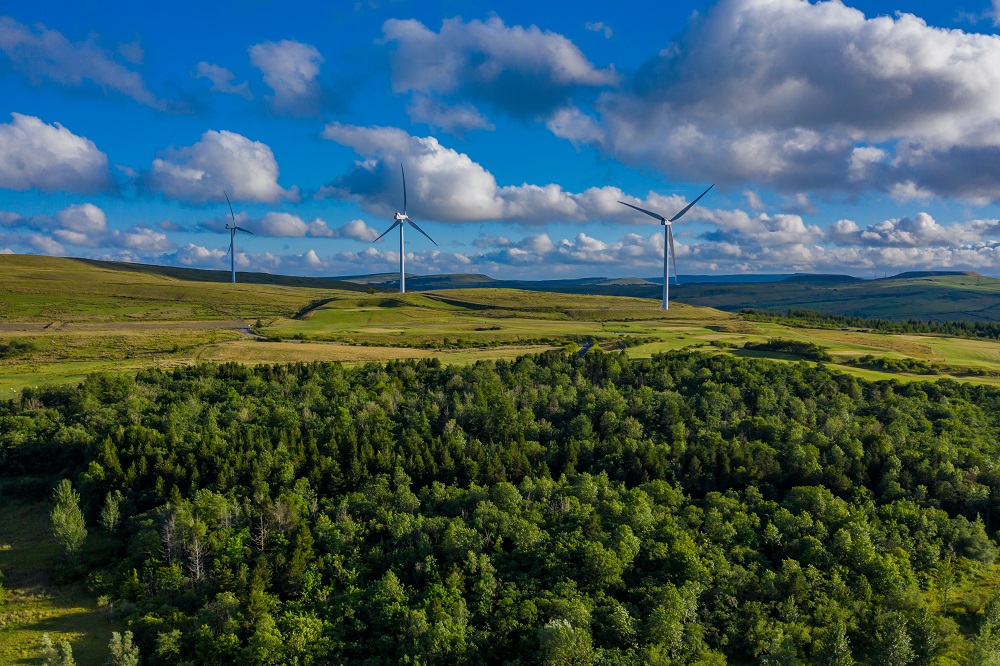
Some time ago the Welsh Government identified a number of ‘Pre-Assessed Areas for Wind Energy’,[13] areas in which they claim to have “modelled the likely impact on the landscape and has found them to be capable of accommodating development in an acceptable way.” In a Pre-Assessed Area there is a presumption in favour of large-scale wind energy development.
Despite the fact that these Pre-Assessed Areas exclude most of the Cambrians, there are at least six large-scale wind turbine parks in the planning pipeline for this area. It seems that, apart from National Parks and National Landscapes/AONBs, the rest of Wales is considered easy—and doubtless very rich—pickings by rapacious renewable energy companies, whose principal motivation is profit and all of which are based outside Wales (Bute Energy is Scottish, but most of the other companies are from overseas). These companies are flocking to Wales in their droves; indeed, to coin another image, they’re now circling like vultures around the Cambrian Mountains.
Interlude
Before I go any further, I should declare an interest: although I can hardly be accused of being a NIMBY (I am based in the Gower constituency), I have a great love of the Cambrian Mountains and am a member of the Cambrian Mountains Society, though I am writing this in a personal capacity.
In 2008-09 I was seriously ill and unsure whether I would recover. During this difficult time, the Cambrian Mountains sustained me and helped me to heal.
They offered me the solitude and tranquillity that I craved and the clean air and environment that my body needed to recover. Whenever I was able—and when, especially during the summer, I needed more peace and quiet than Gower or Bannau Brycheiniog (the Brecon Beacons) could offer me—I would head north into the Cambrians.
Before then, I hadn’t spent much time there, though I do remember Sunday drives as a child with my father to Llyn Brianne and Abergwesyn Commons, and that feeling that I’d been transported to another world.
In winter the landscapes would offer up a rich patchwork of deep russets, brown, gold, pale and conifer-green, and sometimes there would sometimes be snow and a frosting of ice, which would add to the magic. The sense of remoteness and space was palpable.
Over the years since I fell ill, I have spent a lot of time in the Cambrians and have got to know and love them in all seasons.
I have ascended Pumlumon Fawr countless times and in all manner of weather: through dense fog and in lashing wind and rain to find refuge at the top in the enormous, partially collapsed cairn. More rarely, I’ve been lucky enough to enjoy blazing sunshine and able to take in the stupendous views in every direction. I have waded through vibrant purple heather, through irredeemable bogginess, and many times gone off-piste, laboriously negotiating treacherous clumps of molinia grass, jungles of bracken and hidden rocks; I have made pilgrimages to the sources of the Severn and the Wye, the former a squelch of watery peatiness and the latter a small trickle beside a rock, both of which begin their lives on the flanks of the Pumlumon massif.
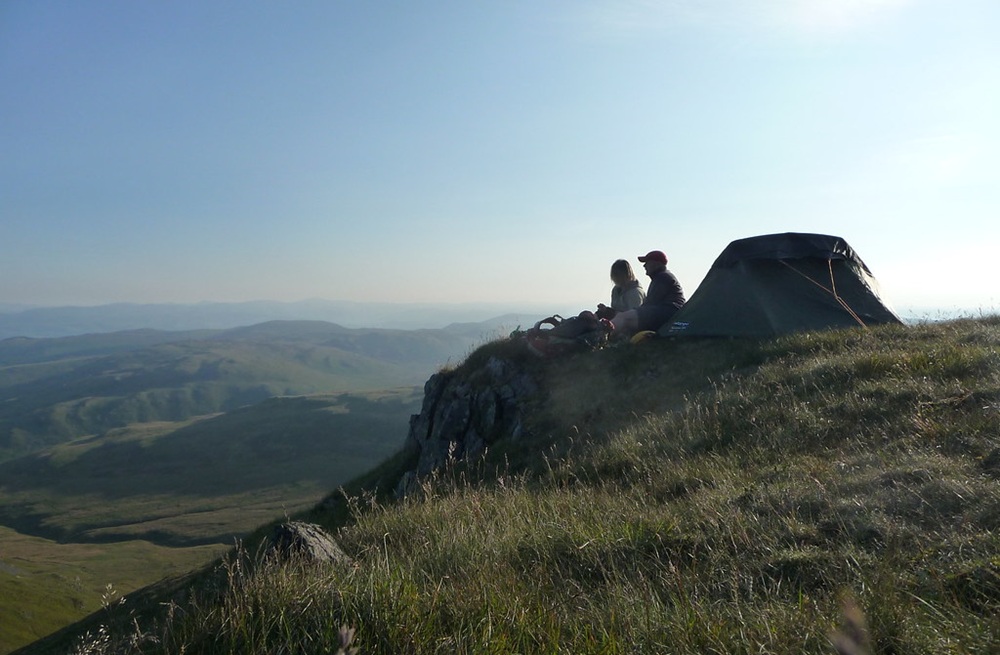
Elsewhere in the Cambrians, I have tracked down cairns, stone circles and standing stones and wondered at their meaning. I have slipped while fording streams and sunk almost-knee deep in mud. I have sat on Moelfre above Cwm Gwidol in the northernmost reaches of the range, the silhouette of Cadair Idris etched against the clear sky to the north, and watched the sea-fog below me inch its way up the Dyfi Estuary, gradually engulfing every side-valley like an irresistible cloud of candy-floss, while I basked on top of the world in the sunshine.
I have got lost and had to resort to map and compass to find my way again. I have swum in mountain lakes, savouring the peaty taste of their waters. I have marvelled at the sky reflected in the glassy stillness of Glaslyn lake. I have spent the Cambrian nights in tents, vans, bothies, hostels and holiday cottages. I have followed a young badger as it trundled through hillside heather the evening sunshine, unaware I was there. I have unwittingly startled red grouse, sending them squawking into the sky, watched skylarks threading their melodious way upwards, dared hope to sight a red squirrel.
I have stopped dead in my tracks, a kestrel perched on a rock just before me surveying the valley below, oblivious to my presence, its colours and markings ablaze in the sunlight; admired the sharp cutout of red kites soaring above me. I have stooped over unknown flowers, mosses, lichen and fungi, explored the ruins of abandoned farmhouses, fantasizing about bringing them back to life, trodden ancient drovers’ roads. I have marvelled at the annual unfurling of ferns, picnicked under the lush canopy of the beech trees in the graveyard at Capel Soar-y-Mynydd, relished the vibrant bluebells at Dinas Nature Reserve, watched dippers rock-hopping.
I have walked miles and miles in the Cambrians, often without seeing another person all day. I have lain on my back drinking in the sight of the stars, and the Milky Way, in what are some of the darkest skies in Wales. I have dreamed of living in the Cambrians…
Well being
There is growing recognition of the importance of immersion in nature for maintaining and restoring physical and mental health and well-being. Its lack has been dubbed ‘Nature Deficit Disorder’ (Richard Louv). In troubled times like ours, we desperately need places like the Cambrian Mountains, a vital ‘natural resource’ for reconnecting with ourselves, each other and with the natural world; they are a ‘thin place’ where evidence of human activity is less apparent and where it is still possible, in our small country in this small island, to experience immense solitude, tranquillity and a sense of wilderness. With our National Parks overcrowded these days, it is in the Cambrians where one often gets the closest to this in Wales.
A sacrifice zone
Does our government have no heart, no sense of the sacrosanct? Do they have no care for our countryside? Or for our vulnerable flora and fauna? Has the minister signing off these projects, Rebecca Evans, ever set foot in the Cambrians for that matter? How can our own government be sanctioning this land grab and the destruction of treasured landscapes and habitats, damaging our heritage, disrupting livelihoods, riding roughshod over opposition and harming the mental health and well-being of local rural communities?
Well, I regret to say that the Welsh and UK Governments seem to consider the Cambrians (and much of the rest of Wales that is not designated a National Park or Landscape) as a ‘sacrifice zone’. Greenpeace notes that sacrifice zones are “geographical areas which are knowingly destroyed in the name of power and profit. They are generally ‘out of the way’ places, and the people who reside in them tend to be poor and lacking political power.”[14] Let’s not forget that Wales is home to some of the most deprived areas in Western Europe and that community opposition to large-scale wind schemes has so far carried little weight in recent planning determinations on such developments in Wales. It’s yet another case of the “skint little people” being ignored and disenfranchised, as Alan Bates succinctly put it in the ITV drama Mr Bates vs the Post Office.
In Slow Violence and the Environmentalism of the Poor, Rob Nixon distinguishes vernacular landscapes from official landscapes, noting that a “vernacular landscape is shaped by the affective, historically textured maps that communities have devised over generations, maps replete with names and routes, maps alive to significant ecological and surface geological features.”[15] This is of course particularly the case in Wales, where place names very often reflect their topography or the flora, fauna or legends associated with the site in question.
‘Pitilessly instrumental’
An official landscape, notes Nixon, “writes the land in a bureaucratic, externalizing, and extraction-driven manner that is often pitilessly instrumental.” Entirely appropriate terms for describing the approach of the wind energy companies to the Cambrians. A case in point are Galileo’s maps of its proposed Bryn Cadwgan Energy Park, which it has elected to submit to PEDW in greyscale, further flattening and diminishing the characteristics and contours of the land in question. Lines on maps drawn by wind developers also hold nearby homes hostage to their proposed wind turbine parks, even though these dwellings might technically not be sited within the developments in question. In addition, Galileo made much in its initial publicity of its chosen site being in “a very rural, sparsely populated area within the Cambrian Mountain Range”, as if the relative lack of inhabitants meant that it was simply fine to sacrifice this area as if its some sort of wasteland.
Nature writer Robert Macfarlane has described sacrifice zones as places that are “forfeited in order to enable thriving elsewhere”,[16] and it’s clear that much of the electricity generated in Wales through these wind schemes would be exported to England, with Wales already exporting twice as much electricity as it generates.[17] Last year, PM Keir Starmer let the cat out of the bag, stating on a visit to a Welsh wind turbine park that “Wales is at the very heart of our mission to make Britain an energy superpower, with renewables powering homes right across our country”[18]—the ‘country’ in question being for the most part England.
So we find the Welsh Government sanctioning the brutal colonialist, extractivist plundering of our country in order to facilitate thriving—not to mention vast profit-making—elsewhere.
One-eyed focus
The Welsh Government seems to have acquired a one-eyed focus on reducing carbon emissions and reaching renewable energy targets at the expense of everything else. As environmentalist Paul Kingsnorth calls them, the technocratic “Quants” (ie carbon-counters) have well and truly won out over the “Poets” (ie those with a concern for nature, aesthetics and anything else): “The fear of carbon has trumped all other issues—so much so that so that it’s now common in popular culture to see ‘green’ ideas represented simply as arguments about carbon emissions.
Everything else has been stripped away. All that matters now is cutting carbon.”[19] Other matters, such as the well-being of our precious habitats and wildlife, the beauty of our irreplaceable rural landscapes, the preservation of our ancient heritage, the well-being of our rural communities and people’s deep connection to the land they inhabit have in effect all been stripped away.
And this has indeed become evident in recent determinations by the minister in charge, Rebecca Evans, who has shown no compunction whatsoever about going against the advice of her government’s own civil servants. As Nation.Cymru has pointed out, she gave the go-ahead to the Twyn Hywel wind turbine park in South Wales despite the fact that the Welsh Government’s Peatland, Soil, and Agricultural Land Use planning team had formally objected to the project, arguing that it would contravene the Welsh Government’s peat conservation policy.[20]
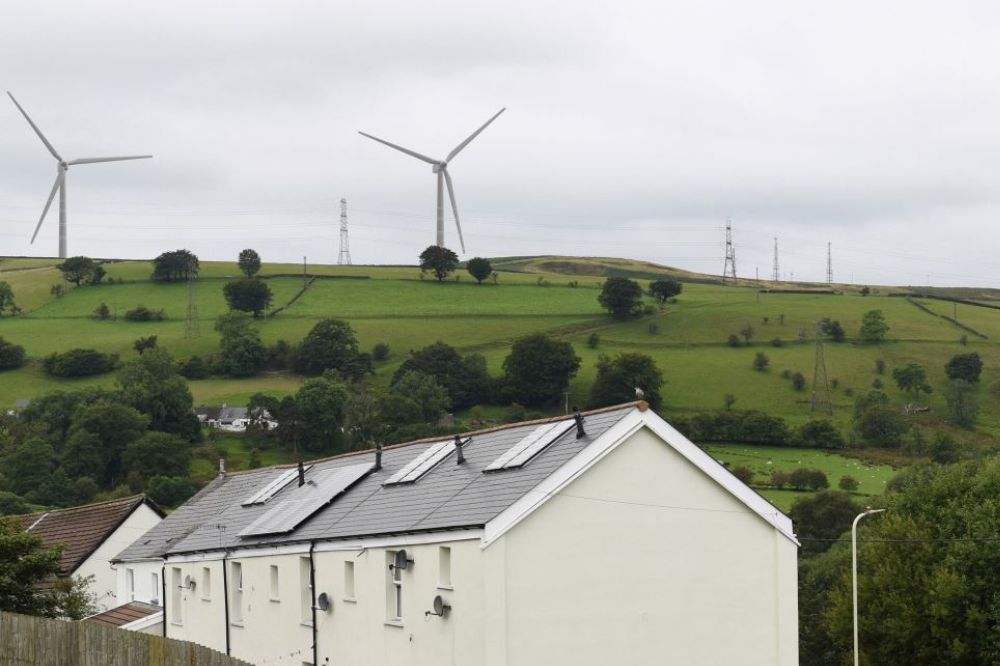
Ms Evans also approved the Garn Fach wind turbine park in Powys in the face of objections from government officials and the environmental regulator over its potential impact on peatland. The project was allowed to proceed due to “wholly exceptional circumstances”, which included its contribution to meeting the Welsh Government’s renewable energy targets in spite of the destruction of the acknowledged “irreplaceable” peatland that the scheme would entail.[21]
UK peatlands and blanket bogs, as conservationist Mark Avery points out, are “important on an international scale, and blanket bogs are important for the UK as they store carbon (if treated well), maintain important wildife populations (if treated well), regulate waterflows off upland areas and therefore regulate flood risks (if treated well), provide clean water supplies (if treated well), and look rather pretty too.[22] These benefits are reflected in the Welsh Government’s National Peatland Action Programme to restore peatlands in Wales. Yet on the other hand it continues to endorse their destruction through projects like wind turbines…
Clearly, the Welsh Government’s burnishing its ‘green’ credentials and reaching net zero justifies all and any means, however destructive these may prove to be. Such an ‘end-justifies-the-means’ lack of consideration of other aspects of well-being (cultural, social, environmental and economic) is hardly compatible with Wales’s Well-Being of Future Generations Act or with the ‘five ways of working’ enshrined in it (collaboration, integration, involvement, long-term and prevention). It also demonstrates a worrying disregard for due democratic process, public participation and the importance of obtaining true consensus and consent.
No doubt the “exceptional circumstances” justification will be wheeled out again by Rebecca Evans before she leaves office next year. While many may hope that a change of government will bring about a change of policy and put a stop to this sanctioned devastation, Plaid Cymru has a similarly narrow focus to the Welsh Labour government on cutting carbon and achieving net zero as soon as possible (2035) , presumably also at any cost.
Although their 2024 manifesto stated, “We will insist on alternative methods to avoid the un-necessary destruction of our beautiful countryside for large industrial scale solar farms and pylons”[23], there was tellingly no mention of wind turbine parks, as if these inflict no harm on our countryside. Without a change of tack, if Plaid Cymru gets into power, either alone or in coalition with Labour, then we count on this proposed desecration of the heart of Wales going ahead.
Big Wind
The planning determinations for the wind turbine parks within the Cambrians will be made by the relevant minister because of the gargantuan height of the proposed turbines and the predicted energy they would be expected to generate (in excess of 50MW). The turbines planned for the Cambrians would surpass anything else on land in the UK so, on top of everything else, Wales would serve as a laboratory for what is essentially an unproven technology. (Scotland last year granted consent for onshore turbines of 251m but these have yet to be built.)
Let’s take a closer look at a couple of the energy parks proposed for the Cambrians. The Waun Maenllwyd Wind Energy Hub, proposed by Belltown Power for a site overlooking the small village of Llanddewi Brefi, would involve installing ‘up to’ six turbines ‘up to 230m’ (754ft) in height. That’s taller than Portsmouth’s Spinnaker Tower at 170m, with the London Shard, the tallest building in the UK, measuring 309m. England’s tallest onshore wind turbine, it should be noted, currently stands at a ‘mere’ 150m.[24] (England, of course, had what amounted to a ban on onshore wind parks until last year. As a result, our neighbour over the border has an awful lot of catching up to do in terms of numbers of onshore wind turbines per million people, for example. Perhaps they should be made to shoulder their fair share of the burden before any more onshore wind parks are allowed in Wales.)
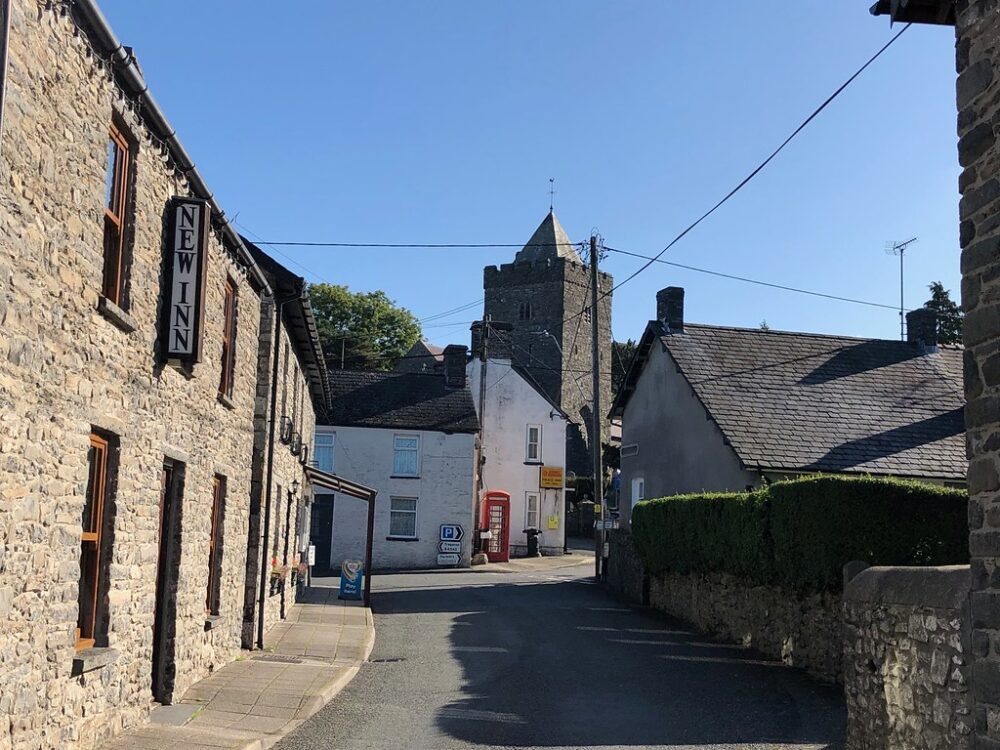
The location for Waun Maenllwyd is just sited within Pre-Assessed Area 6, which makes an unwelcome incursion into the Cambrians on their westernmost flanks—no doubt yet another factor in the Welsh Government’s refusal to designate the Cambrians an AONB. What is certain is that turbines on this high plateau right on the edge of the Cambrians would ruin the majestic, uninterrupted views that currently sweep from the Preseli Hills of Pembrokeshire, out towards Cardigan Bay, and up to Eryri and Cadair Idris in the north.
To the north, Bute Energy has recently announced plans for more wind turbine parks: Waun Hesog Energy Park, north-east of Aberystwyth, would include turbines with a blade-tip height of 220m and industrialise a vast area of beautiful uplands, farmland, woodlands and forest between Nant-y-Moch and the A487 and also abut, not to say dominate, the UNESCO Dyfi Biosphere.
Lan Fawr Energy Park would adjoin Belltower’s Waun Maenllwyd, again with blade tips of 220m, and is proposed by Bute for exquisite Cwm Twrch and the uplands above it east of Lampeter. Nearby prehistoric cairns along the ridge of Bryn Mawr to Bryn Bawd would be dwarfed by the towering turbines, and the remote tranquillity of neigbouring Llyn y Gwaith ruined. Nearby, Bryn Rhudd would also loom over the village of Llanddewi Brefi, with up to 15 turbines with a blade tip of 220m. Statkraft and Eco 2 have plans for up to 12 150-180m high turbines in the Lluest y Gwynt wind turbine park near Ponterwyd east of Aberystwyth, where they would be sited in close proximity to Pumlumon Fawr, the highest summit in the Cambrian Mountains.
Cothi Valley
Further south, Galileo, a Swiss-based company, is seeking permission to construct Bryn Cadwgan Energy Park, planned for the uplands, woods and forestry above the picturesque, winding Cothi Valley in the southwest corner of the Cambrians. Bryn Cadwgan would involve the construction of 19 wind turbines ‘up to’ 230m (754ft) tall, along with ground mounted solar photovoltaic modules (numbers unspecified) and a battery energy storage system (the size of an unspecified number of shipping container units) and a substation.
According to Galileo’s own scoping documents, the development would also require borrow pit(s) to source stone and aggregate required for construction proposes along with ancillary infrastructure works including underground cables, boundary treatments, security equipment, lighting, landscaping, access tracks, earthworks, surface water management—and “any other works identified as necessary to enable the development.”
The forested area, Bryn Arau Duon, that forms part of the scheme is one of only three sites in Wales that are still home to red squirrels. The Mid Wales Red Squirrel Partnership has been running for over 20 years and is concerned that the Bryn Cadwgan development will destroy red squirrel habitat, pushing this population of red squirrels to the brink of extinction. The MWRSP points out that the proposed mitigation of the development is insufficient as red squirrels rely on mature conifers, and it would in any case take decades for any new trees planted to become viable habitat.
Red squirrel habitat
No less than four of the proposed colossal wind turbine parks mentioned above impinge on red squirrel habitat and the focal area defined by the MWRSP (see map below), and would almost certainly seal the fate of this highly vulnerable species in Mid Wales. The MWRSP underlines the fact that “Wales is in a biodiversity crisis with 1 in 6 species at risk of extinction. We can’t afford to lose another iconic species from our landscape.”[25]
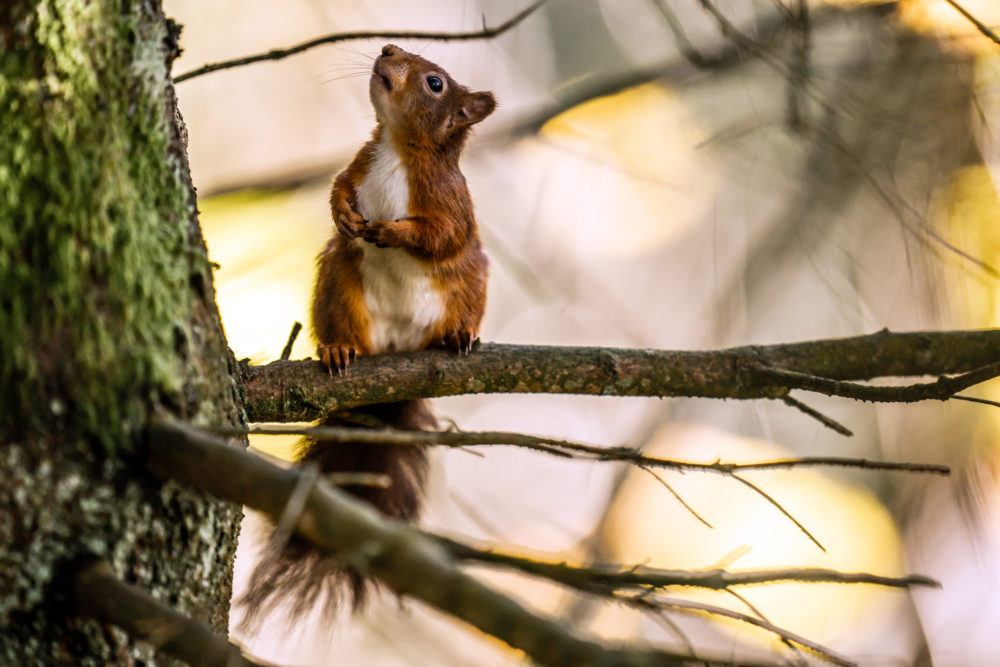
Besides red squirrels, pine martens are also to be found in Bryn Arau Duon and I am reliably told by locals that many bat species are present too. On top of the environmental destruction that would be wreaked were this scheme—and the others—to go ahead, the tranquillity of the nearby stunning Doethie Valley would be ruined.
Galileo’s scoping document also euphemistically refers to its construction requiring “off-site works to facilitate the delivery of abnormal loads (e.g. construction of over-run areas and temporary modifications to street furnture etc).”
Most of the ‘street furniture’ in the area consists of trees and miles upon miles of hedgerows, at least some of which would probably have to be torn up in order to enable the massive sections of the turbines to navigate the considerable obstacle of the notoriously bendy A482. These would hardly be ‘temporary modifications’; in fact, they’d scar the surrounding landscape for years.
The final proposed access route to the Bryn Cadwgan site ploughs through the Pumsaint Roman Fort Scheduled Monument and its associated ‘vicus’ (settlement). The developer’s archaeological risk assessment states that “there is a potential for significant direct impacts to the Scheduled Monument and associated non-designated vicus.” The Grade II Listed Lodge and its grounds on the Dolaucothi Estate (owned by the National Trust), making Listed Building Consent necessary. Sadly, it seems that the National Trust is prepared to collude in this desecration of our countryside and our heritage.[26]
Given that the colossal height of the proposed turbines would require them to have aviation lighting, one of Wales’s main Dark Sky Areas would also be compromised. The Cambrian News recently reported that “Businesses across mid Wales are looking to capitalise on the region’s growing reputation as an astro-tourism destination”, with the Cambrian Mountains and Mynydd Epynt having the darkest landscapes in Wales.[27] No doubt the tourism boom in this dark skies paradise would come to an end if the Cambrian Mountains become home to Big Wind.
‘Pity the land that needs heroes’ (Bertolt Brecht)
I could go on—and on— about the terrible impact these plans for industrialisation are having on local communities and on people’s mental health, about damage to hydrology and to people’s water supplies, about noise, ultrasound and shadow flicker from the turbines, about the vast quantities of concrete (about 2,000 tonnes) that would be poured into the land for the turbines’ foundations only to be left there for ever, about the epidemic of ‘solastalgia’[28] that the developments would probably unleash, but I think you get the picture. Immense uprooting, dislocation and dispossession on many levels would result—and indeed is already occurring. In short, the harm wreaked would be both incalculable and unforgivable.
It’s been 60 years since the Welsh-speaking village of Capel Celyn in the Tryweryn valley in Gwynedd was infamously drowned in 1965 to create a reservoir to provide water for Liverpool. The famous graffiti Cofiwch Dryweryn commemorates what former Plaid Cymru leader Adam Price has described as “the greatest act of neo-colonial vandalism in our history” (Wales: The First and Final Colony).[29]
Back then, there was no Welsh Government and instead it was the UK Government that made this decision in the face of vehement opposition and protests from communities across Wales and strident objections from all Welsh MPs.
Now, however, it is our own Welsh Government with, it seems, the full support of Plaid Cymru, that is overriding opposition from local communities, disregarding its own legislation and policies, and deciding to hand over huge swathes of our countryside for foreign corporations to despoil and exploit—and for the electricity, like the water back then, to be exported to England. If the wind turbines in the Cambrians are given the go-ahead, this proposed act of neo-colonial despoilation and extractivism might well rival Tryweryn in its historical significance for our nation.
Where Owain Glyndŵr once fought and defeated the English, the Welsh Government itself is now selling us out. We, the people of Wales, will be dispossessed of our birthright to enjoy—and bequeath to future generations—the precious rural landscapes that are so characteristic of our homeland. To paraphrase poet R. S. Thomas, there will be places in Wales we won’t go.
The planned desecration of the Cambrian Mountains is nothing less than an emergency. It’s high time the people of Wales stood up and said no. Otherwise, graffiti throughout our land may soon read Cofiwch galon Cymru.
Footnotes
[1] Chris Betteley, “Cambrian Mountains not being protected ‘a tragedy’”, Cambrian News, 31st August 2022, p. 9.
[2] https://www.thecambrianmountains.co.uk/Discovery/map
[3] Chris Betteley, “Cambrian Mountains not being protected ‘a tragedy’”, Cambrian News, 31st August 2022, p. 9.
[4] “Author backs campaign to protect Cambrian Mountains” Cambrian News, 20th July 2022, p. 41.
[5] Ibid.
[6] https://www.welshwildlife.org/red-squirrel-project
[7] See the Cambrian Mountains Society’s informative website: https://www.cambrian-mountains.co.uk/what-we-fight-for/about-the-cambrian-mountains/flora-and-fauna/
[8] https://www.gov.wales/sites/default/files/publications/2020-10/nature-recovery-action-plan-wales-2020-2021.pdf
[9] https://www.gov.wales/sites/default/files/publications/2021-02/future-wales-the-national-plan-2040.pdf
[10] There is an account of this previous failure of protection here: https://campaignerkate.wordpress.com/2023/07/17/cambrian-mountains-the-park-that-never-was/campaignerkate.wordpress.com
[11] https://nation.cymru/news/concerns-raised-over-bute-energy-links-to-welsh-labour-politicians/ ;
https://jacothenorth.net/blog/bute-energy-and-friends-corrupting-wales/ ; https://cprw.org.uk/bute-energy-and-greengen-propose-a-large-portfolio-of-onshore-wind-farms-and-electricity-transmission-lines-proposed-across-wales/ ; https://nation.cymru/news/welsh-secretary-pressed-on-links-between-welsh-mp-and-controversial-energy-company/
[12] Howe was appointed by Bute Energy Ltd on 1st September 2025 but here she is in November 2024, blogging for Bute and referring to her experience as Future Generations Commissioner: https://bute.energy/blog-sophie-howe-net-zero/ Plaid Cymru, of course, has seen fit to elevate Carmen Smith to the Lords. Baroness Smith of Llanfaes, as she’s now known, has worked for Windward, the parent company of Bute Energy and Green Gen Cymru: https://nation.cymru/news/plaid-cymru-peer-accused-of-breaking-promise-to-be-full-time-member-of-the-house-of-lords/
[13] https://datamap.gov.wales/layers/inspire-wg:ndf_preassessed_areas_for_wind_energy
[14] https://www.greenpeace.org.uk/news/sacrifice-zones-geoengineering/
[15] Rob Nixon, Slow Violence and the Environmentalism of the Poor, Harvard University Press, 2011, p. 17.
[16] Robert Macfarlane, Is a River Alive? Penguin Random House, 2025, p. 164.
[17] “In 2022, Wales generated twice as much electricity as it consumed. Wales consumed approximately 13 TWh of electricity, while electricity generators in Wales produced approximately 29 Twh. This means that Wales was a net exporter of electricity to the rest of Great Britain, Ireland and the wider European electricity network”: https://www.gov.wales/sites/default/files/publications/2023-11/energy-generation-in-wales-2022.pdf
[18] https://www.gov.uk/government/news/prime-minister-and-welsh-first-minister-together-we-will-supercharge-mission-to-make-britain-a-clean-energy-superpower
[19]The Quants and The Poets” https://www.paulkingsnorth.net/quants
[20]https://nation.cymru/news/welsh-government-approves-wind-farm-despite-opposition-of-some-of-its-own-civil-servants/
[21] https://nation.cymru/news/shocking-new-findings-about-threats-to-wales-peatlands/
[22] Inglorious. Conflict in the Uplands. Bloomsbury, 2015, p. 142.
[23] https://www.partyof.wales/cymunedau_gwledig_rural_communities
[24] https://www.theguardian.com/environment/2023/feb/09/england-tallest-wind-turbine-bristol
[25] Until 1st Otober 2025, members of the public can object to the impact of Galileo’s plans on the red squirrel population of Mid Wales: https://action.wildlifetrusts.org/page/177721/action/1 The wind energy industry, it should be noted, is very keen on biodiversity mitigation and net gain schemes, but Rob Nixon points out that “The recent turn within environmental studies towards celebrating the creative resilience of ecosystems can be readily hijacked by politicians, lobbyists, and corporations […]. Co-opting the ‘nature-and-time-will-heal’ argument has become integral to attempts to privatize profit”, Slow Violence and the Environmentalism of the Poor, Harvard University Press, 2011, p. 21.
[26] https://notanimby.substack.com/p/romans-gold-and-turbines
[27] https://www.cambrian-news.co.uk/news/business/businesses-capitalising-on-mid-wales-dark-skies-793564
[28] Albrecht G, Sartore GM, Connor L, Higginbotham N, Freeman S, Kelly B, Stain H, Tonna A, Pollard G. Solastalgia: the distress caused by environmental change. Australas Psychiatry. 2007;15 Suppl 1:S95-8. doi: 10.1080/10398560701701288. PMID: 18027145.
[29] https://nation.cymru/opinion/tryweryn-mural-destroyed-rebuilt-why-matters/
Support our Nation today
For the price of a cup of coffee a month you can help us create an independent, not-for-profit, national news service for the people of Wales, by the people of Wales.



Excellent article and sentiments, but meaningless without rejection of the colonial epithet. Same as Eryri and Bannau Brycheiniog, these mountains have but one (age-old) name: Elennydd
Elenydd bob tro. Enw prydferth ac yn disgrifio mewn gair ardal yr Elan. Gas ganddai yr enw Cambrian.
Why can’t we accept that different languages use different names for the same place? Why is using terms like ‘Cambrian Mountains’, ‘Brecon Beacons’ or ‘Snowdonia’ any different to ‘Llundain’, ‘Caeredin’ or ‘Dulyn’? Are those words to be erased from the Welsh dictionary and those cities referred to solely as London, Dùn Èideann, and Baile Átha Cliath?
An exceptional article. Thank you for taking the time and effort to discuss this highly important issue. More awareness and unity is required to face the plans which are being put in place for the future of Wales. Caru Cymru- take action. Please see the link to the proposed development of 26 wind turbines 225 meters high. This will forever change the rural landscape of the Cambrian Mountain.With the potential to affect the Headwaters of both the River Wye and River Severn, due to its proximity to the Plymlimon Mountain and Dylife Valley. https://esgairgaledenergyparkconsultation.wales/wp-content/uploads/Esgair-Galed-Viewpoint-Location-Plan.pdf. Take action to protect Wales! Sign… Read more »
Rejection of renewables plays into the hands of a growing group who want to build new nuclear (fossil) and are anti-solar farm (surprising nature benefits abd less pesticides).
Great article
It’s not a matter of rejecting wind and solar power. Human being s have worked with these for millennia. It’s about LOCATION, SIZE and INFRASTRUCTURE.
❤️
A good article, thank you. I find Plaid Cymru’s silence on this topic most surprising. The party’s 2024 manifesto said ‘We believe that the beauty of Wales’s natural landscape should be preserved. This means that large scale industrial energy generation developments should take this into account.’ I fear now that these were weasel words and, as Jayne Eynon points out, mention was made of large scale pylon and solar developments, but no mention was made of the immense turbines currently proposed. It seems amazing that Plaid seems to be content to let the landscape destruction and exploitation take place, and… Read more »
❤️
Raise awareness & take action. It means something & counts for a lot. Apathy doesn’t tick any boxes on this matter.
At last Nation Cymru is publicising the destruction of Cymru. But it is not just by wind monsters – some of the biggest in the world going ahead as being ‘of national significance’ – but associated pylons, substations, trashed hedges and lost forests. We are also being covered by millions of unrecyclable solar panels. All solar and wind energy needs immediate back-up from nuclear or gas, so we are duplicating electricity supplies. Alongside these pointless wind and solar ‘farms’ and ‘parks’, we are now seeing huge lithium-ion battery – you guessed it – ‘farms’ and ‘parks’ promising to back up… Read more »
I completely agree, not to mention the fact that the supply of solar panels, wind turbines and grid-scale batteries depends largely on a geo-political enemy who pays no regard to the human rights of its own people or the territorial integrity of its neighbours.
China is laughing at north west Europe as we close down our manufacturing industries, destroy our own economies and make ourselves increasingly dependent on them all because of some strange idea that what happens in Wales will make the slightest difference to the climate while global coal consumption continues to increase.
https://www.visualcapitalist.com/where-are-clean-energy-technologies-manufactured/
https://ourworldindata.org/grapher/coal-consumption-by-country-terawatt-hours-twh
You are right on all accounts Jane. I happen to live in Pumsaint, and I’m vehemently against this absolute destruction of the Cambrians, where Pumsaint lies at its gateway. I’ve been heavily involved with two public meetings, which have been held in Pumsaint Coronation Hall. In the first meeting, Plaid Cymru representatives were out in force. Ann DaviesMP; Cefin Campbel MS and Adam Price MS, and a host of local plaid councillors. On being asked by the evening’s chairman, Sir David Lewis (Lord Mayor of London 2007/8, about their stanceo on wind turbines in Wales; and the enormity of them… Read more »