


Reservoir safety is not about restricting enjoyment: it is about recognising risk
Alun Shurmer, Chief Strategy and Stakeholder Engagement Officer Dŵr Cymru
A recent opinion article on Nation.Cymru challenged Dŵr Cymru’s warnings against unauthorised swimming in reservoirs and described our position as “corporate gaslighting.”
That is a serious charge. It deserves a clear response – not because criticism should be dismissed, but because public safety should be discussed accurately and responsibly.
I understand why people are drawn to open water, particularly during hot weather. I also understand why warning signs can feel frustrating when a reservoir looks calm and inviting.
But the central issue is not whether people should be able to enjoy the outdoors. They should. The issue is whether unsupervised swimming in working reservoirs can be treated as if it carries the same risk as swimming in a natural lake or a managed bathing area. It cannot.
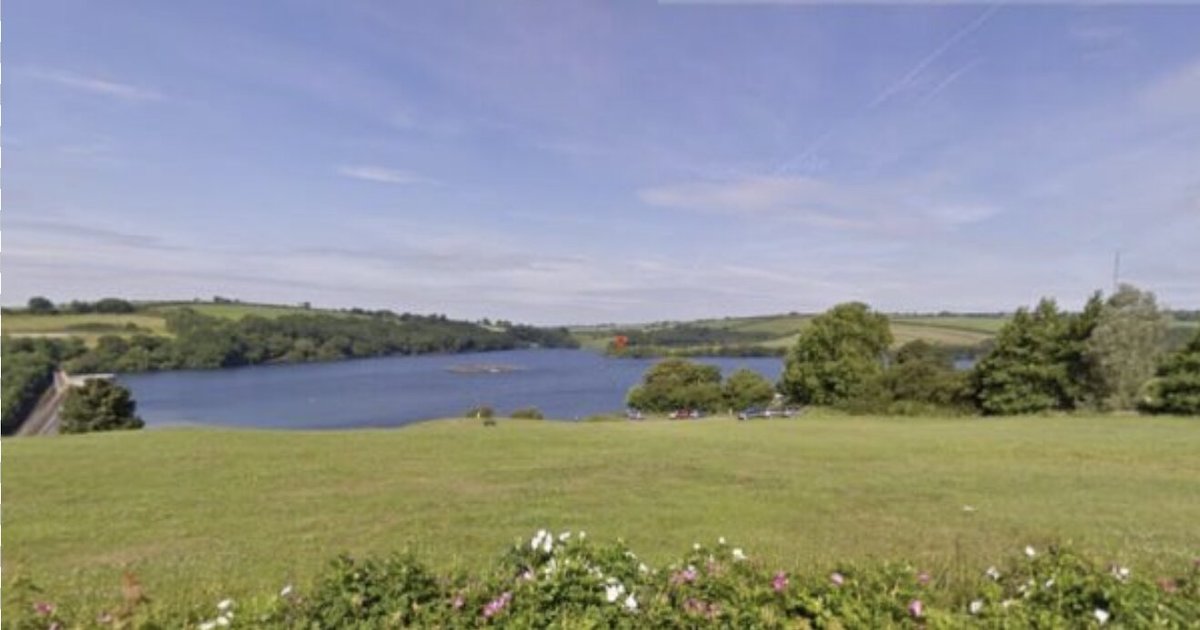
Reservoirs are not simply large bodies of water in attractive landscapes. They are working pieces of water infrastructure. They can include steep drops, submerged structures, operational equipment, intake points, changing water levels and machinery that may activate without warning. These are not risks that can be assessed from the bank by looking at the surface of the water.
The article points to Llyn Padarn as evidence that unsupervised swimming can work: pontoons, marked entry points, water quality monitoring and no lifeguard’s chair.
Llyn Padarn is a good example of managed access to open water. But it is not a like-for-like comparison with an operational reservoir. It is a natural lake with designated access arrangements layered on top of it; it does not perform the same operational role in the public water supply network.
The better lesson from places such as Llyn Padarn is that safe access can be created where the site, the underlying risks and the management arrangements allow it. That is why Dŵr Cymru already provides supervised open-water swimming and/or cold-water dipping sessions at four of our visitor attractions. We are not opposed to people enjoying water. We are opposed to pretending that every body of water can be made safe in the same way.
Cold water shock
Whilst operational risks are real, cold water shock is another risk that is too often underestimated. It is the body’s involuntary response to sudden immersion in cold water. It can cause gasping, panic, loss of breathing control and rapid loss of swimming ability. It can also trigger a sharp increase in heart rate and blood pressure, with potentially fatal consequences even for fit and healthy people. Many UK inland waters remain cold enough to be hazardous even in summer.
The consequences are not theoretical. During the recent heatwave, several people across the UK died after getting into difficulty in open water. Some incidents involved reservoirs. Others involved lakes, rivers or the sea. Each case was different, but together they underline a simple point: inland water can be dangerous precisely because the danger is not obvious until it is too late.
Unfortunately, such dangers are a very real risk at our reservoirs, and we make no apology for putting safety first. Fifteen-year-old Reuben Morgan tragically drowned at Pontsticill Reservoir in June 2006 while celebrating the end of his GCSEs with a group of friends. In the words of Reuben’s mother, Maxine Johnson:
“My son, Reuben, drowned after experiencing cold water shock. It was a beautiful, hot summer’s day, but beneath the surface the water was freezing cold. Like so many young people, he had no idea how quickly cold water can take your breath away and leave you unable to respond. Within moments, he was in difficulty. When someone is overwhelmed by cold water shock, every second counts, and the depth and sheer weight of the water make any rescue incredibly difficult.
“Because Pontsticill Reservoir is so deep and the water is dark and murky, it took three agonising days before Reuben was found. Those three days were unbearable for our family. No parent should ever have to wait, hoping and praying, not knowing where their child is.
“When people question why reservoirs have restrictions or warning signs, I would ask them to remember families like ours. These measures are not about stopping people enjoying the outdoors; they exist because reservoirs contain hidden dangers that cannot be seen from the surface.”
Reuben’s death isn’t something that we will forget.
Scotland is often cited as a different model in terms of access to water, and it is important to be accurate about that. Under the Land Reform (Scotland) Act 2003, responsible access rights apply to most land and inland water, including many lochs, rivers and reservoirs. Those rights are not absolute: they must be exercised responsibly, and public bodies and land managers can still manage or restrict access where safety, operational or environmental risks require it.
Scottish Water’s own policy reflects that balance: supporting responsible access where compatible with drinking water quality, security and safety obligations.
In Wales and England, swimming in non-tidal inland water in depends on permission, an established legal right, or a specific access arrangement. That is not a barrier invented by Dŵr Cymru; it is the current legal framework.
Nor is it right to suggest that reservoir risk can be dismissed by looking only at whether a particular national drowning statistic separates reservoirs from other inland waters. The National Water Safety Forum reported that, in 2025, 57% of accidental drowning deaths in the UK occurred at inland locations such as rivers, lakes, reservoirs, canals, quarry lakes and lochs – continuing a trend seen since 2019.
That does not mean every inland water carries the same risk. It does mean that inland water safety is a serious, repeated national issue, not a communications line manufactured by water companies.
Unsupervised swimming
Our position is therefore straightforward. We restrict unsupervised swimming in working reservoirs because the risks are real, not because we want to stop people enjoying blue spaces.
Where access can be provided safely and responsibly, we look to support it. Where a site carries operational risks that cannot be seen or controlled through signage alone, we will continue to say so plainly.
That may not satisfy those who believe the law should change, or that access to inland water should be expanded. That is a legitimate debate. But it should be a debate about law, site-specific risk, responsibility and practical management – not one that dismisses safety warnings as bad faith.
As Maxine puts it: “If sharing Reuben’s story prevents just one family from experiencing the heartbreak that ours lives with every day, then his legacy will continue to make a difference.”
That is why we keep giving the warning. Not to gaslight. Not to patronise. But because the risk is real, and because the consequences of getting it wrong can be devastating.
Support our Nation today
For the price of a cup of coffee a month you can help us create an independent, not-for-profit, national news service for the people of Wales, by the people of Wales.
Get more trusted Welsh news
Choose Nation.Cymru as a preferred source in Google News to see more of our journalism.



A ridiculous article, missing more or less every important point raised in the original article. I don’t believe anybody is claiming there are no objective dangers to reservoir swimming. Only that prohibitive signage people (especially young people) ignore.
Funny to blame this on the law as well as if it wasn’t within the gift of DC to simply grant access where appropriate.
Oh! And stop filling our rivers with c**p!
What a load of waffle.
It’s tragic what happened in the case quoted here but if I’m not mistaken, providing more information about dangerous parts of the reservoir (marking safe areas?) or putting in more safe exit/entry points might have had a greater impact on safety on tragic cases like that. Are we going to pretend that teenagers are magically going to start listening to signs?
The fact that presumably access is and was banned in Pontsticill and it still happened seems to undermine the notion they are taking the right approach?
Will those at Dwr Cymru responsible for the consistent pollution of our rivers and seas be resigning? No. Thought not. There are so many from your company who, quite frankly, should be in jail.
Having read this article, I think DCWW have a point. Reservoirs in hot weather are very dangerous places to swim, unless you are experienced and know the area. Even then they can be hazardous. There are designated inland swimming areas in Wales for this purpose and of course there are our beaches with controlled safety areas with lifeguards. Fencing off reservoirs is not viable so what exactly are they supposed to do, other than put up warning signs and use social media to warn of the dangers? I might be missing the line of debate here so please let me… Read more »
What they could do, knowing that people (such as the boy mentioned in the article) provide information about where is safe to swim.
Simply putting up signs that everyone ignores isn’t actually doing much for safety.
And it was great how they just gloss over the question of Scotland… the article they’re responding to pointed out the huge investment into swimming lessons for children by Scottish Water.
There are only four inland designated swimming areas. Dŵr Cymru charge you entry for two!
Very recognisably Chat GPT. Shouldn’t you have a junior comms officer to write stuff like this in your name?
According to ChatGPT: The piece follows a highly familiar LLM op-ed rhythm: Serious charge → balanced acknowledgement → “central issue is not X but Y” → bullet-like risk list in prose → comparison caveat → legal framework → statistics → moral conclusion. Phrases like these are especially characteristic: “That is a serious charge. It deserves a clear response – not because criticism should be dismissed, but because public safety should be discussed accurately and responsibly.”“The central issue is not whether people should be able to enjoy the outdoors. They should. The issue is whether…”“That is a legitimate debate. But it… Read more »
I am almost certain this article was written by AI
A limp response from Alan Shurmer, who cares so much about this issue that he got ChatGPT to write his article for him. Shameless. And embarrassing for DwrCymru.
Some simple and very cheap pellet buoys marking danger areas complete with remotely monitored, alarmed rescue equipment in a few places should be a nice happy medium then.
Youre clearly saving a fortune by not using a human comms officer or not carrying out your responsibility to keep our waterways clean.