


‘Welsh only’ social homes: Won’t you think of the monoglots!
Stephen Price
One of our most ‘incendiary’ news items this week concerns a north Wales council’s backing of plans for a “fully affordable” housing estate in a coastal village only if it’s reserved for people who are “able to speak Welsh”.
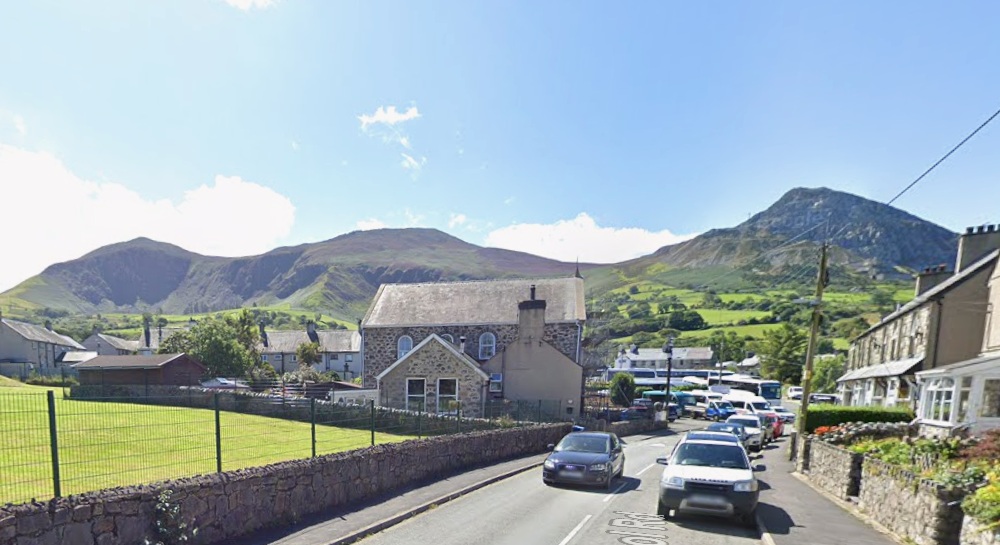
Trefor and Llanaelhaearn Community Council wants a language condition included before it gives its full approval to a bid by Grŵp Cynefin to build 15 affordable homes on land adjacent to Llys yr Eifl, in the majority Welsh-speaking Gwynedd coastal village of Trefor.
Cyngor Gwynedd is recommending that the development be approved, subject to the completion of a Section 106 agreement, or a unilateral agreement for an open spaces contribution, during its planning meeting on Monday, 2 March.
During consultation, the community council stated it had “no objection to the application per se” with two conditions. They were a Welsh language condition for any residents and it being dealt with under a Local Lettings Policy, with specific letting requirements, rather than the Common Housing Allocation Policy.
The community council, in its formal response, said: “This is a golden opportunity to be truly progressive and innovative by being the first planning authority in Wales to venture to impose a language condition on a new social housing estate, in the heartland of the Welsh language.
“We understand that the Welsh Language Commissioner has received a legal opinion, which states unequivocally that it would not be illegal to make ‘able to speak Welsh’ a condition for the letting of
social housing.
“We also understand that the Commissioner has asked Cyngor Gwynedd, along with Housing Associations operating within the county, to consider this vital issue seriously.”
The community council said it had written to Cyngor Gwynedd’s chief executive Dafydd Gibbard and council leader Cllr Nia Jeffreys, to ask if that opinion had been discussed.
Local Letting Policies , the community council said, were “usually developed where there is a desire to change the balance of a community or to achieve a balanced community at the time when new development is being let.
“Cyngor Gwynedd is often proud to announce, if not to boast at times, that it is a progressive council that leads the rest of Wales on the issue of the Welsh language.
“It is our duty to recognise that there is a great deal of truth in that and thank you for your efforts.
“It would be a credit and a precedent for the council itself and an enlightened and long-awaited lead for the rest of Wales.
“By now colleagues, you have the legitimate right, and this has been confirmed by an expert. This can give a decisive and solid start to the preservation of the soul of our nation and the few remaining fragile areas.
“We beg for your willingness to do so and to show our people that Cyngor Gwynedd’s mission for our language is genuine, sincere and uncompromising”.
It added that it was “unanimous in the view that it will have no objection to the application if the conditions set out are given due regard and support”.
It also requested deferring the application decision until there was “a definite outcome” to the discussion over what had been submitted by the Language Commissioner to Cyngor Gwynedd and housing associations.
Send in the clowns
And that is all. Fifteen small houses in a very small majority Welsh-speaking area.
Not thousands of new dwellings for anyone but those in communities who consistently protest against them as we’re seeing in Cardiff, Newport, Monmouthshire and elsewhere.
Fifteen houses to balance the obscene house prices that no local could ever afford. Just those fifteen which, mercifully, might end up allowing local people to live in their own square miles.
And yet, it’s not only national (i.e. Wales-wide) news, it’s also of interest to those outside of Wales judging by other outlets picking up the story, or those not in Wales commenting on social media.
And who are the victims in this? Of course, it’s monoglot English speakers who hadn’t even heard of the location until reading the article, and probably couldn’t pronounce Llys yr Eifl, but that’s besides the point.
Wystopia
Picture the scene. You speak the world’s number one global language. You can get by in pretty much all of the world as people bend to your ‘superior’ mother tongue.
You navigate every single detail of your life in your one and only language. Watch countless TV shows and movies, on countless television channels.
Even where your only language isn’t the native one in, say, Wales, for example, the products on supermarket shelves, the books dominating libraries and most schools still reflect your sole language.
Life is easy, you don’t even need to ‘think’ about language.
And then, all of a sudden, a community you’re not even a part of, in an area of Wales you’ve probably not even visited, has the audacity to favour indigenous (and minority) language speakers.
Maths isn’t my strongpoint, but let’s just assume the community in question doesn’t even cover the size of a pin-head on the entirety of a nicely sized UK map.
But think of the poor monoglot English speakers who are more than free to buy overpriced homes nearby that locals can’t afford should they actually wish to live there. Again, the audacity!
I won’t pick any comments that may have survived the down vote from Nation Cymru’s article lest I bite the hand that clicks us (we all love a chart-topping news item!), so cue some of my ‘favourite’ Facebook comments from posts by the BBC, Wales Online, Nation Cymru, North Wales Live etc:
“Stopping someone from having a home because of the language they speak. Absolutely appalling.
I can imagine the uproar if a housing estate was built for English speakers only, or no overseas foreign languages.”
“Discrimination at it’s [sic] best. Bet good old Plaid are behind it. I’m Welsh born but not Welsh speaking. Discriminated against in my own nation.”
“A nation of sanctuary everyone welcome apart from English speaking people.”
“Discrimination, pure and simple.”
And one suggesting that, perhaps, it’s not the Welsh speaking council that’s quite the discriminatory ones here after all: “Does that mean welsh language education for boat people will be mandatory?”
Meanwhile, another looked for a loophole, anything, anything, for a loophole: “What if they have a disability, that makes them unable to speak? Deaf, Autistic, mutism?”
If you can’t think of the English speakers, then think of the deaf, autistic mutes, please!
How very dare they!
Thankfully, much of the commentary from within and outside of Wales has also been positive, with a fair number of Welsh speakers and English speakers, Welsh people and English people alike getting the point.
Your take on whether saving Cymraeg as a living community language in its heartlands through any means necessary is telling.
A compassionate speaker of only English should actively wish to see Welsh thrive, to be happy to sit this one out, to be thankful for their lot.
Too many monoglot English speakers, and indeed majority peoples in general, cannot fathom the idea of not being centred in a world that revolves around them by default at every turn.
This is an affront. It’s to be attacked. How dare a community not bend to them, when the idea of bending the other way is unthinkable.
Atonement
While not to the liking of the geniuses of the Facebook comments section, Gwynedd’s uncompromising stance is one that the United Nations are in full agreement with, with one expert stating that the protection of minority languages is a human rights obligation.
As she presented her latest report to the UN Human Rights Council in Geneva, the UN Independent Expert on minority issues, Rita Izsák, said: “Language is a central element and expression of identity and of key importance in the preservation of group identity.
“Language is particularly important to linguistic minority communities seeking to maintain their distinct group and cultural identity, sometimes under conditions of marginalisation, exclusion and discrimination.”
According to Izsák, historical factors such as colonialism have had a huge global impact on languages, resulting in the marginalisation of and decline in the use of indigenous and minority languages, “which were often seen as backwards, a barrier to colonial hegemony, or as slowing national development”.
Ms. Izsák shared: “It can also be argued that today globalisation, the growth of the internet and web-based information is having a direct and detrimental impact on minority languages and linguistic diversity, as global communications and marketplaces require global understanding.”
And yet somehow, a Welsh council, with a few tools in their power to build fifteen measly houses for locals, is ‘racist’, and we must think of the poor English-only speakers who can (and do) live pretty much anywhere else in the world with little issue. They can (and do) even live in this rapidly anglicised hotbed of second homes.
When Monmouthshire County Council shares its 2,000 plus housing plans which are ideally located for the Bristol commute, and priced just right for the London up-sizer, these commenters have nothing to say.
But to ringfence a handful of council houses that might just allow locals to send their children to Welsh speaking schools is “racist”.
To ensure the vitality and heart of a tiny coastal community – its people and its language – thrives is “discrimination”.
To fight the tide of the rural Welsh diaspora and to ensure just one small village can remain a viable option for speakers of one of Europe’s oldest languages is “appalling”.
The negative commentary, with bully playing victim, speaks volumes, and only confirms the absolute need for the council to press ahead with their “genuine, sincere and uncompromising” mission and, when the time comes, to roll it out further.
The ongoing and pervasive threats to the world’s minority languages need addressing, and absolutely anything being done to preserve language and community is to be commended.
Let these communities speak for themselves, in their own language.
It’s the least the English-speaking world owes Wales.
Support our Nation today
For the price of a cup of coffee a month you can help us create an independent, not-for-profit, national news service for the people of Wales, by the people of Wales.



Whereas I doubt there would be any problem filling these houses with Welsh speakers anyhow this rather sneering article misses a point.
Not everyone in Gwynedd who is entitled to a council house speaks Welsh. Those that are are not able to buy the overpriced houses locally either…that’s why they’re on the list.
And given 100% of Welsh people speak English and the vast majority speak nothing else to say it isn’t a native language of Wales is lunacy.
Welsh speakers should obviously have priority. But to keep someone homeless because they only speak English is also insane.
Whilst I enjoy other points of view, some of the commentary against this has been downright surreal. You would hope that news such as this would open a meaningful and intelligent debate, but the points raised just seem to be media propaganda regurgitated to suit the viewpoint of those who think that something sacred is under attack and that they’re going to lose something.
I really can’t see how people can be against this, I remember reading negative comments here. Pen llyn is clearly a sensitive and unique part of Wales. Unless completely destitute and nothing available in say Bangor, I can’t imagine many English speakers would want to live here.