
We’ve been warned. Now Wales needs to get ready
Sam Ward, Head of Climate Cymru
Wales has been warned to prepare for unsettled weather this autumn and winter. The question is whether we will use that warning to get ready, or wait until the next flood to discover what should have been done.
The developing El Niño is one factor influencing global weather patterns, and forecasts suggest the UK could experience a milder, wetter and windier start to winter. But nobody can say exactly where or when the next flood will hit. What we do know is that flooding already threatens communities across Wales, and climate change is increasing the risks we need to prepare for. After a summer of heatwaves, much of the ground is baked and crusted, which makes it water-repellent and therefore more prone to flooding
Natural Resources Wales estimates that around 275,000 properties are at risk of flooding. Yet, according to the figures cited by NRW, only a minority of those eligible for flood warnings have signed up to receive them. That is a gap we should be closing now, before the rain arrives.
We need to check our flood risk, signing up for warnings and agreeing a household emergency plan can make a real difference. NRW advises people to prepare for the possibility of flooding even if they have never experienced it before. But individual preparation is only the beginning. Wales needs to make community preparedness as much a part of everyday life as knowing your neighbours or having a village hall.
Communities already know how to do this, in Cardigan, residents and businesses around the River Teifi have worked together on a community flood plan. By agreeing what to do when warnings arrive and how neighbours can support one another, they have turned a shared concern into practical action. The town’s mayor has even fitted a flood door and gate to her own home. In Pontcanna, Cardiff, the community has developed a flood plan to manage rising levels of the River Taff, they have also set up a useful resource page for community groups to access templates for flyers, leaflets and plans.
This is what resilience looks like: people who understand their streets, know where the risks lie and have a plan before an emergency begins.
We need to make it easier in Wales for every community to follow their example. Scotland has more than 300 community resilience groups, supported by resources that help people assess local risks, identify vulnerable residents, organise contact lists and agree what happens when an emergency strikes.
The National Flood Forum (NFF) is an established UK organisation that supports communities at risk of flooding by providing advice, advocacy and practical assistance before, during and after flood events. It has now been commissioned by the Welsh Government to develop proposals for a dedicated Welsh Flood Forum. This is great news, and Welsh communities should not have to reinvent these resources from scratch, but this needs to be rolled out quickly.
A properly funded and supported Welsh Flood Forum will help communities establish local flood groups, develop practical plans and share experience. It could connect residents with technical advice and public authorities, while giving local knowledge a stronger role in decisions about flood prevention.
But community resilience cannot be left to a handful of volunteers. It cannot depend on whether people have the time, energy, confidence or resources to organise in their spare time, often while dealing with the pressures of work, family responsibilities and everyday life. Resilience needs to be built into every community, not just those fortunate enough to have people able to lead the effort. That means providing sustained public funding, practical support, training and clear plans, alongside named responsibilities for local authorities and other agencies. Communities should be supported to prepare for flooding, but they must not be left to fill the gaps when essential services, infrastructure and flood protection fall short.
We also need to go beyond treating the symptoms; the work starts upstream. Preparing for floods is about more than knowing what to do when the water rises. It is also about reducing the amount of water reaching our homes in the first place. Tal-y-bont in Ceredigion shows what that can mean in practice.
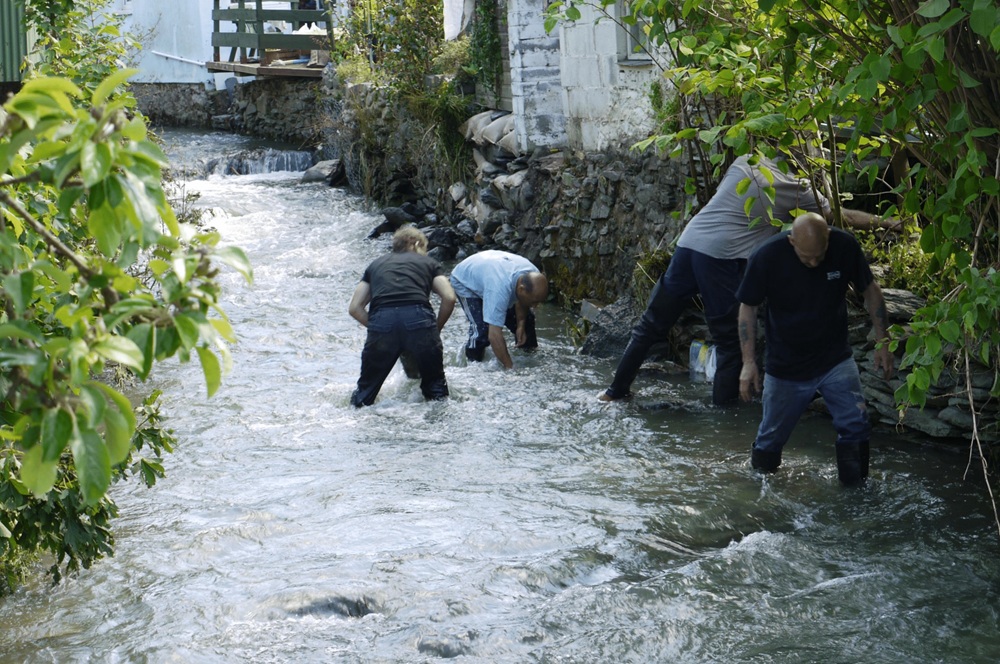
On 9 June 2012, a month’s worth of rain fell in a single day, flooding 27 homes. For those affected, the damage was devastating. Years later, with the community still facing significant flood risks, local people decided to act. The Talybont Floodees, led by Linda Denton, brought together neighbours, students, landowners and volunteers aged from 15 to 75.
Over successive winters, they planted tens of thousands of trees on the hills above the village and built leaky willow dams designed to slow the movement of water through the landscape. The aim is not to stop water altogether. It is to slow its journey downstream and reduce the peak flow reaching the village.
This is patient, long-term work. Trees take years to mature, and natural flood management cannot guarantee protection against every storm. Its effectiveness depends on the landscape, the scale of the intervention and the weather conditions.
But it can help when used as part of a wider plan.
Tal-y-bont demonstrates something important: communities are willing to contribute to their own protection when they have a shared purpose. Ceredigion County Council has welcomed the community’s efforts and has been working on a flood protection scheme with them.
That partnership is the model Wales should build on – nature must be part of the flood defence system. For too long, flood prevention has often been discussed primarily in terms of walls, barriers and drainage infrastructure. These remain essential in many places, particularly where homes, roads and vital services are at risk. But they cannot do the whole job.
Restoring wetlands and peatlands, planting trees and hedgerows, improving soil health and reconnecting rivers with their floodplains can help store water and slow runoff across entire catchments. These measures can also improve biodiversity, water quality and the health of our landscapes.
The challenge is to move from isolated projects to sustained, catchment-wide action. That means long-term public funding, proper monitoring and cooperation between councils, farmers, landowners, communities and environmental organisations. Farmers and landowners need support and fair rewards for managing land in ways that deliver wider public benefits.
Nature-based solutions are not a substitute for engineered defences where those are needed, and neither approach will eliminate flood risk. The strongest plans combine them, based on evidence about what will work in each location.
Crucially, responsibility cannot be shifted from public bodies onto volunteers. The people planting trees above Tal-y-bont should be supported, not left to carry the burden of protecting their neighbours alone.
Older people, disabled people, people living alone, families with young children and those without access to transport can face particular difficulties during an emergency. People on low incomes may struggle to afford flood protection, temporary accommodation or repairs. A warning is of little use if someone cannot act on it or has nowhere safe to go.
That requires investment in people as well as infrastructure: accessible warnings, clear information, local support networks and practical assistance for households that need it.
Wales needs four things: a properly supported Welsh Flood Forum to help communities prepare; a concerted effort to increase sign-ups to flood warnings; long-term funding for natural flood management alongside effective engineered defences; and flood plans that put vulnerable people first. None of this will prevent every flood. But it can reduce avoidable harm, help communities recover and make the next emergency less devastating.
The warning has come. We cannot control the weather, and we cannot know exactly what this autumn and winter will bring. But we can decide whether we use the time available to prepare.
Wales should not have to wait for the next flood to discover what it could have done differently. The work of getting ready starts now and it must continue long after this winter has passed.
Support our Nation today
For the price of a cup of coffee a month you can help us create an independent, not-for-profit, national news service for the people of Wales, by the people of Wales.
Get more trusted Welsh news
Choose Nation.Cymru as a preferred source in Google News to see more of our journalism.